Monthly budget
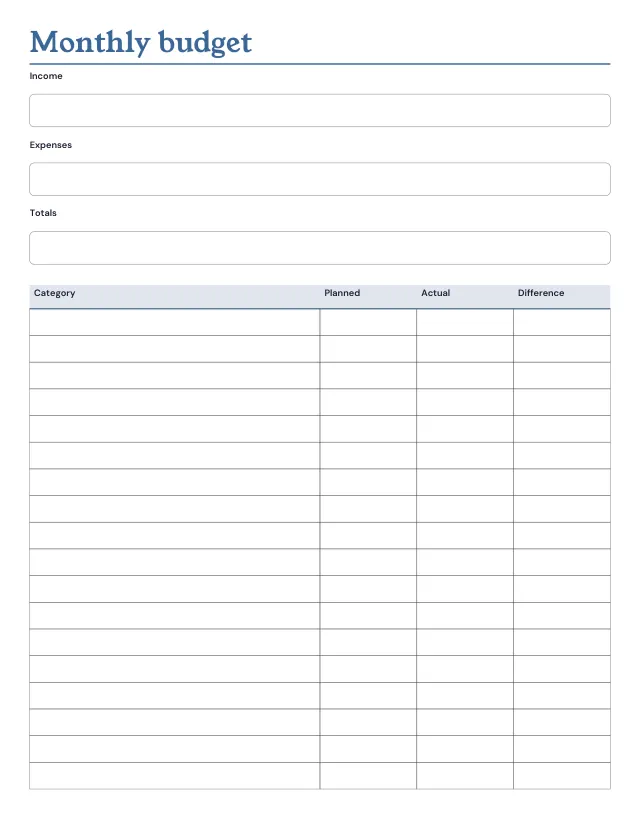
Write the month’s income, expenses and totals in the boxes at the top, then each category’s planned and actual amounts below; the Difference column shows where the month went over.
Monthly budgets, bill trackers, savings challenges and simple business forms, with columns for what you planned and what you spent.
21 sheets
Write the month’s income, expenses and totals in the boxes at the top, then each category’s planned and actual amounts below; the Difference column shows where the month went over.
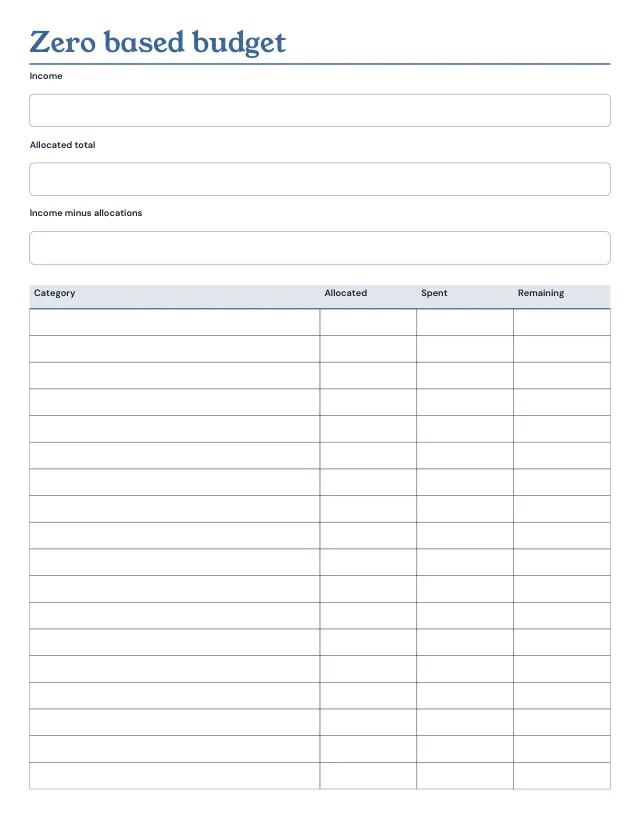
Give all of your income a job: write each category’s share, track what you spend and what remains, and check that income minus everything you allocated comes to zero.
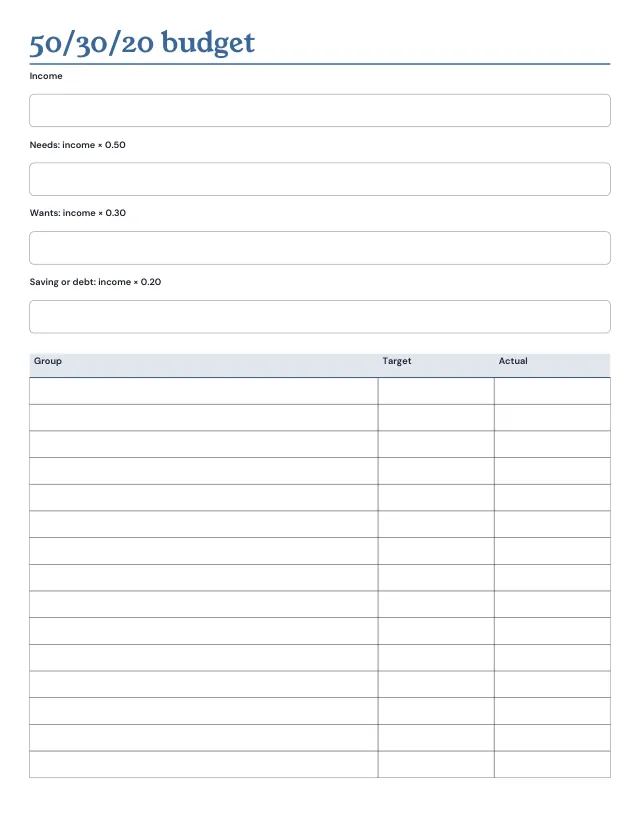
Split your income into needs (50%), wants (30%) and saving or paying off debt (20%): the sheet shows how to work out each target from your income, with room for what you actually spent.
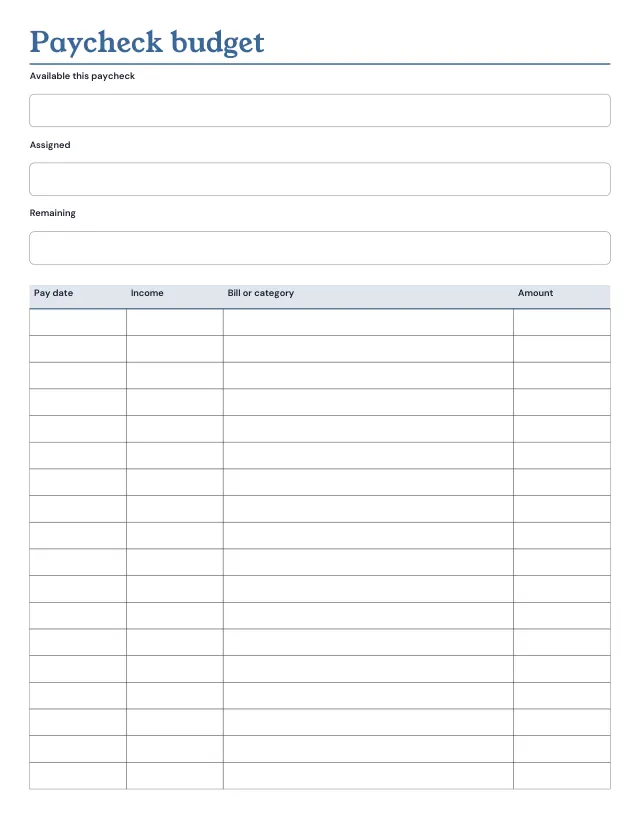
Budget one paycheck at a time: write the pay date and amount, assign each bill or category, and see what is left before the next payday.
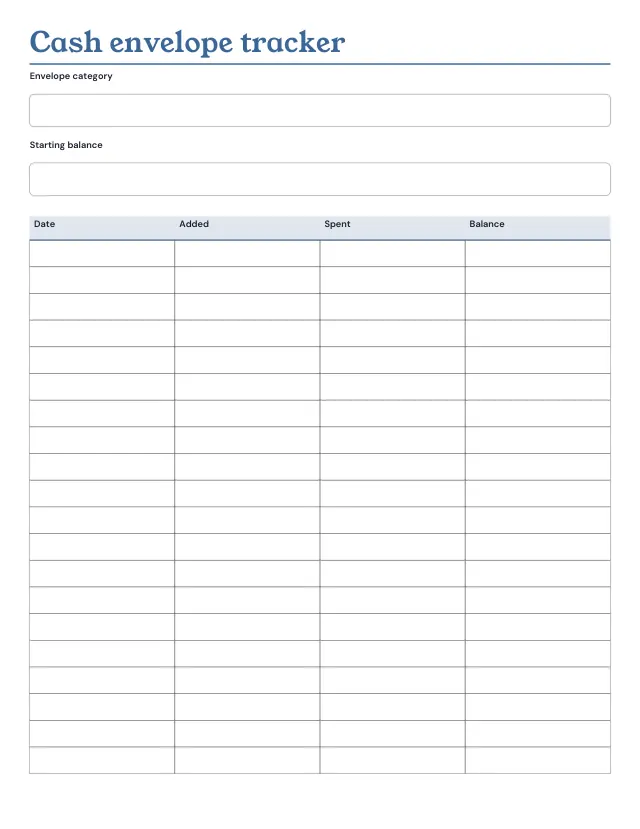
One sheet for each cash envelope: write its category and starting balance, then log every top-up and purchase with the balance left.
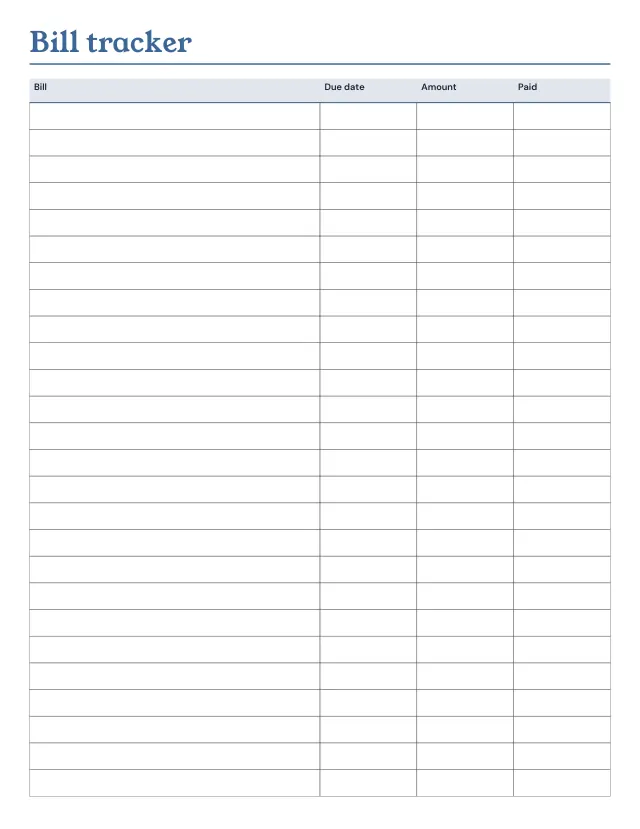
Every bill on one page: what it is, when it is due, how much, and a column to tick once it is paid.
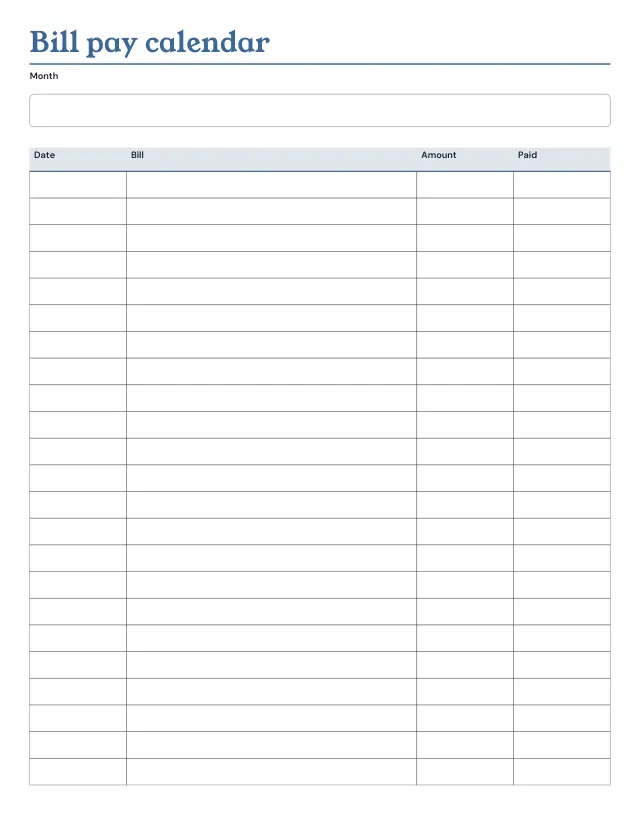
The month’s bills in date order, each with its amount and a paid column, so none slips past its due date.
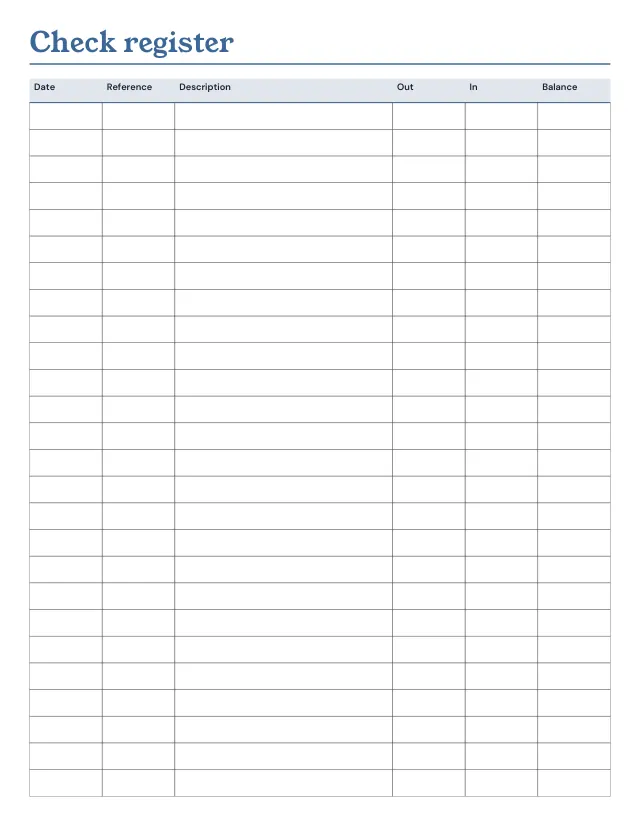
Keep your account balance by hand: the date, the check number or reference, what it was for, money out, money in and the balance after each entry.
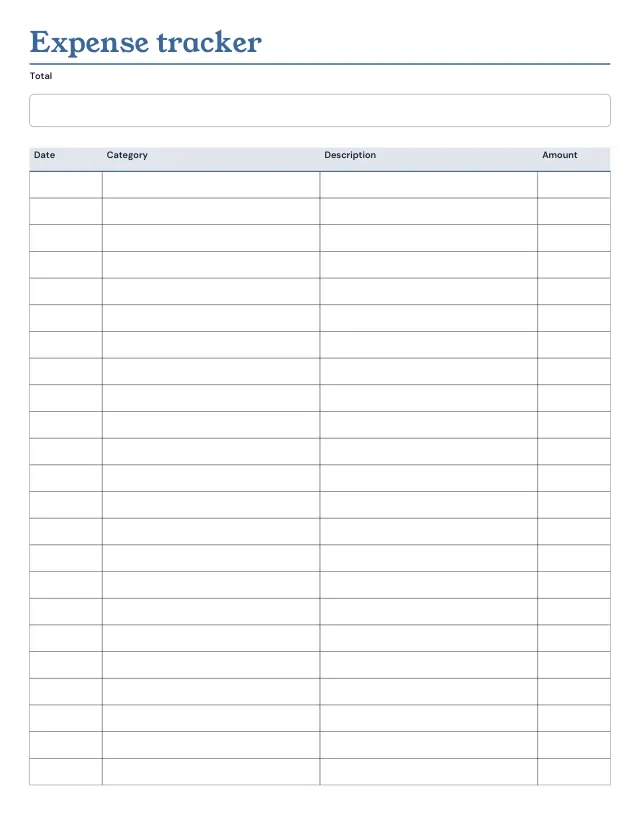
Write down each purchase with its date, category and amount, and add up the total at the foot of the page.
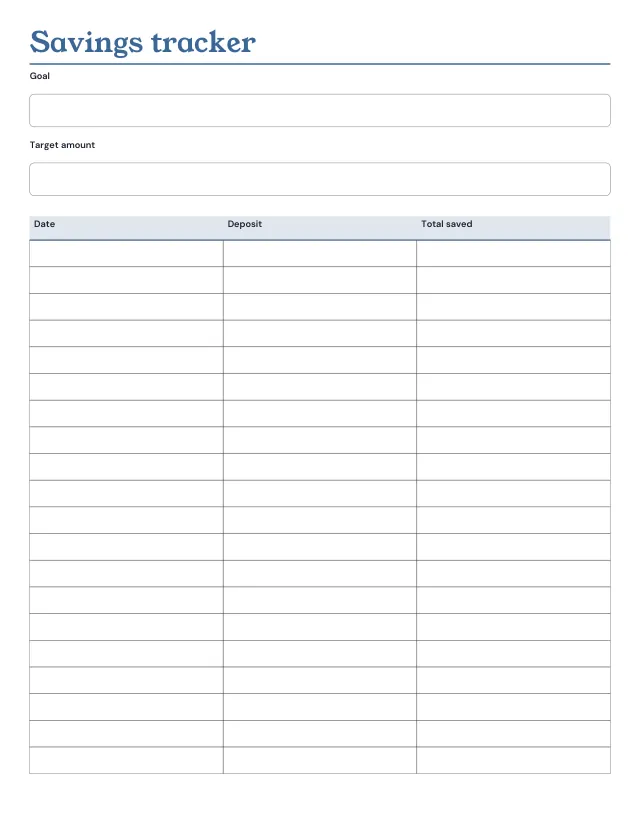
Name your goal and the amount you need, then write each deposit and the total saved so far.
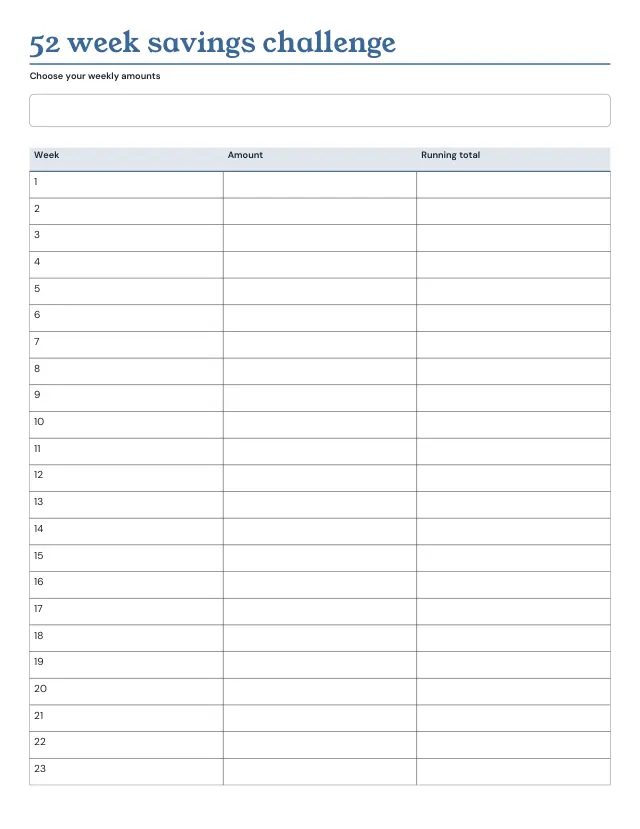
Fifty-two numbered weeks: choose how much to save each week, write it in and keep a running total through the year.
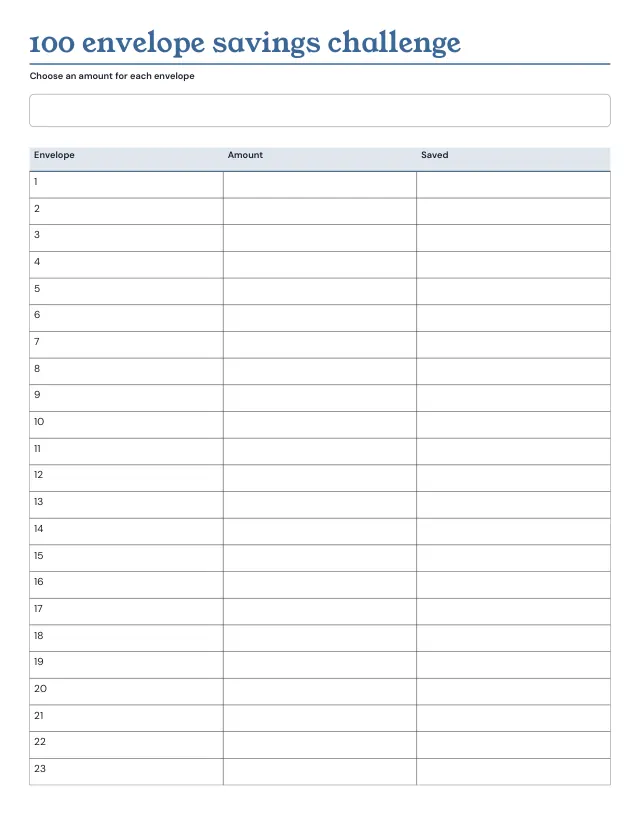
A hundred numbered envelopes to fill one at a time: write the amount for each and tick it off once it is saved.
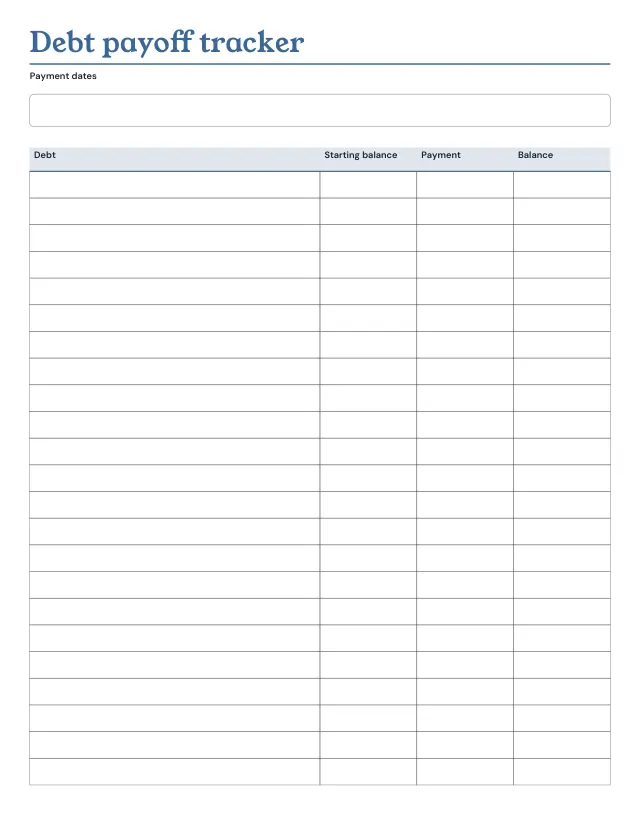
List each debt with its starting balance, then write every payment and the balance left, with the dates you plan to pay.
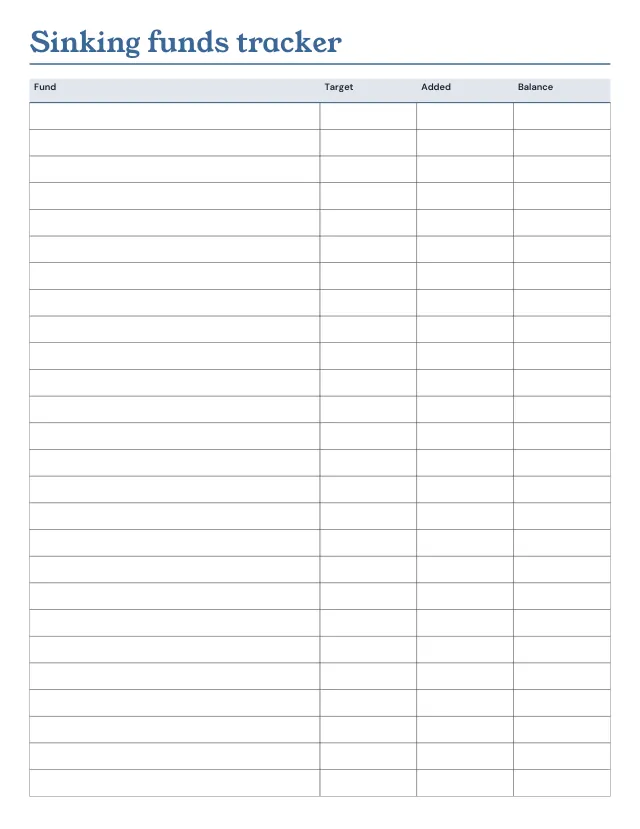
Save ahead for costs you know are coming, such as car repairs, a vacation or gifts: each fund has a target, what you added and its balance.
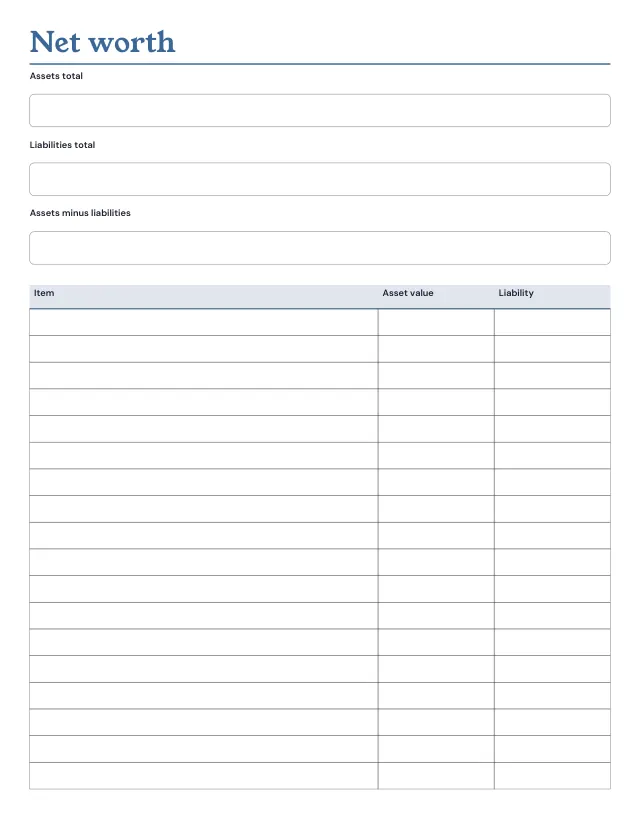
List what you own and what you owe, total each side, and take one from the other to find your net worth.
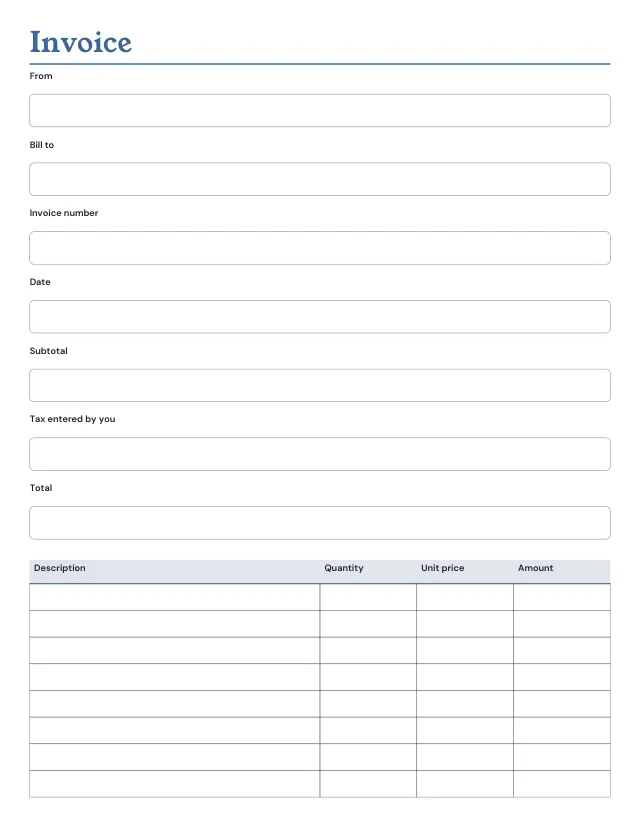
A plain invoice to fill in by hand: who it is from and to, the invoice number and date, each item with its quantity, unit price and amount, then the subtotal, any tax and the total.
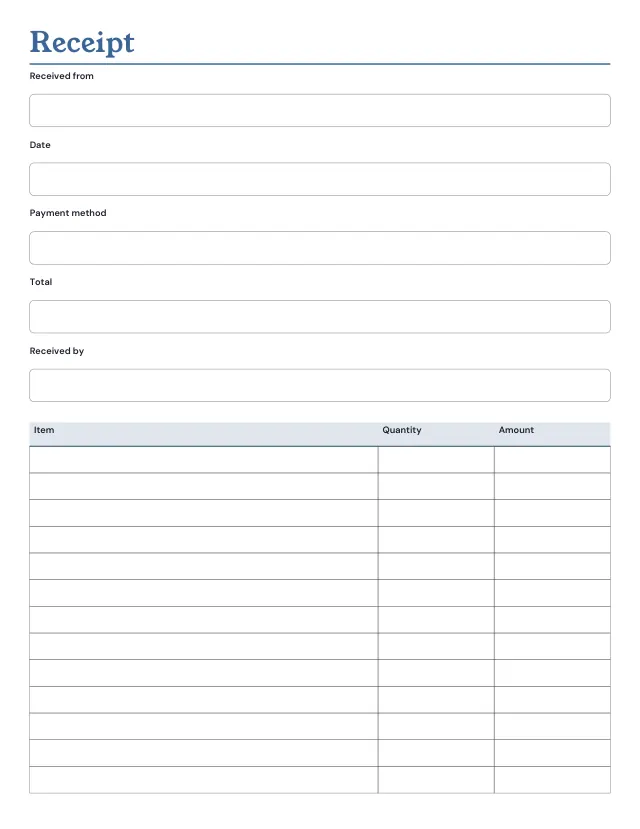
A receipt to fill in and hand over: who paid, the date and how they paid, the items and the total, and a line for the person who received the money.
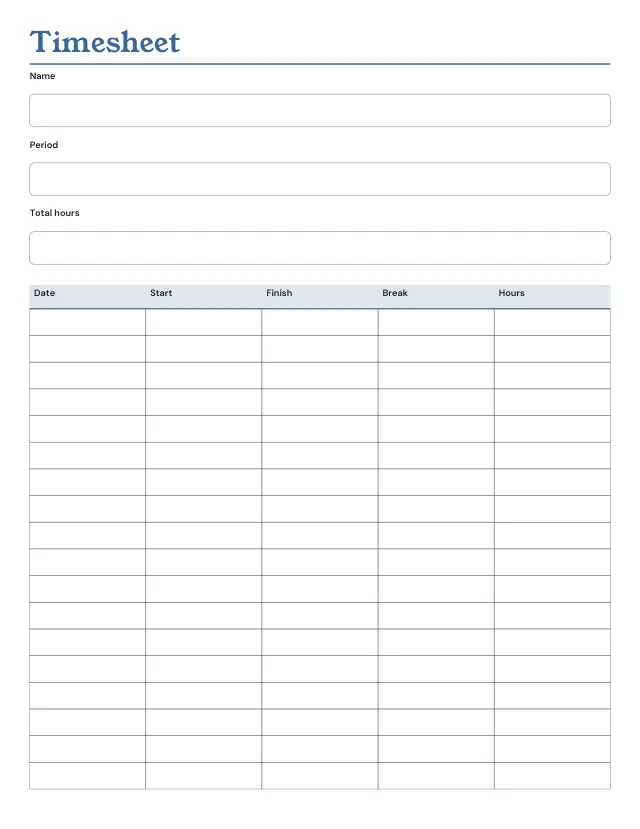
Hours worked, day by day: start, finish and break times, the hours for each day and the total for the period.
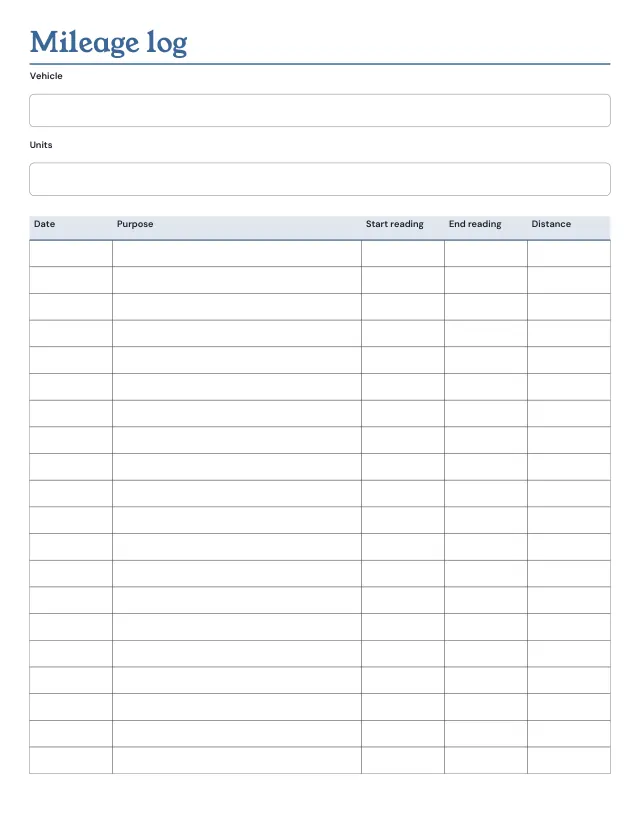
A log to keep in the car: the date and purpose of each trip, the odometer reading at the start and end, and the distance driven.
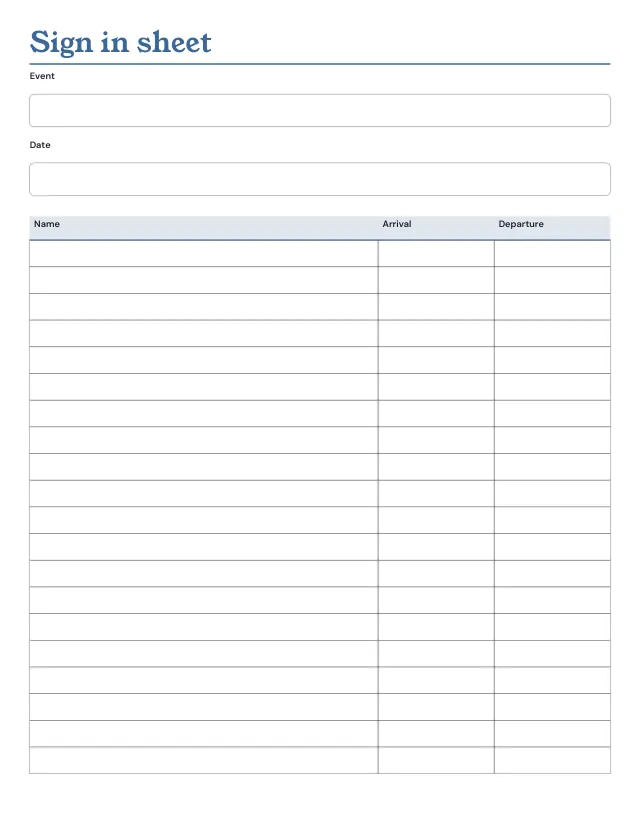
A sign-in sheet for an event, a class or visitors: each person writes their name with the time they arrived and left.
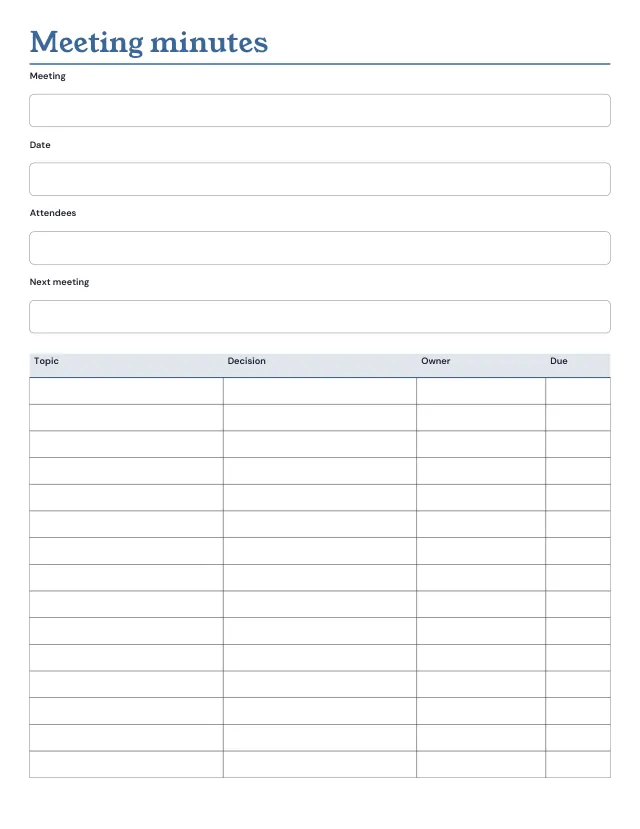
Minutes for one meeting: who came, each topic and what was decided, who will act on it and by when, and the date of the next meeting.
No sheets match that. Try a shorter word.