Multiplication chart
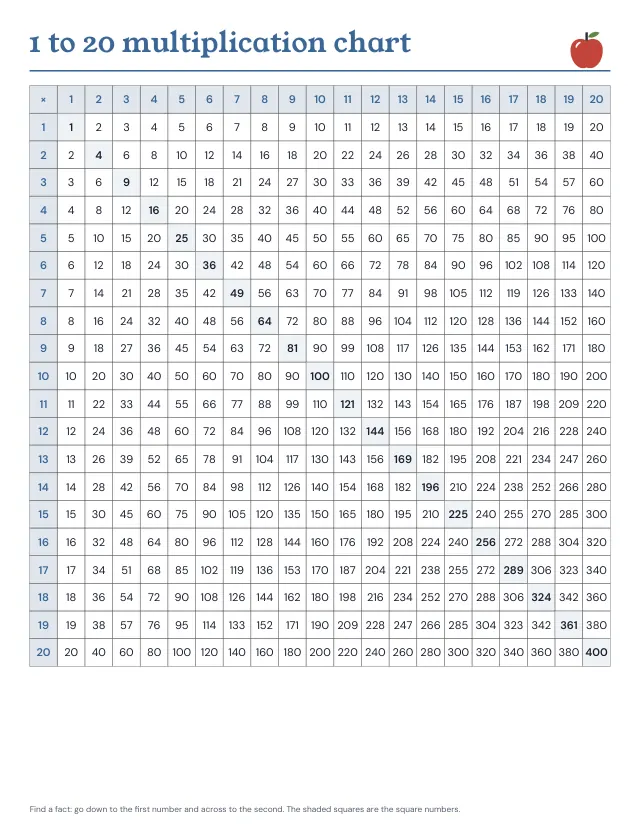
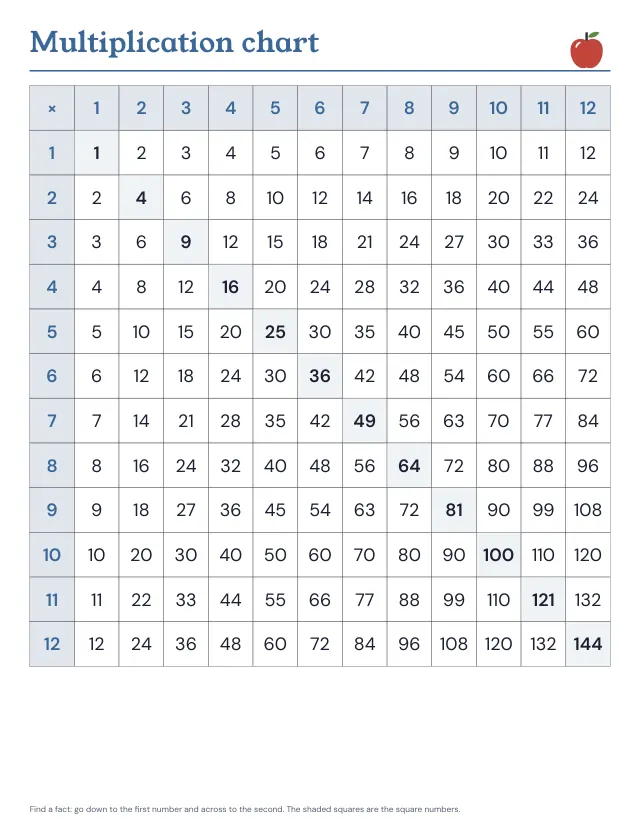
A multiplication chart: find one number down the side and the other across the top.
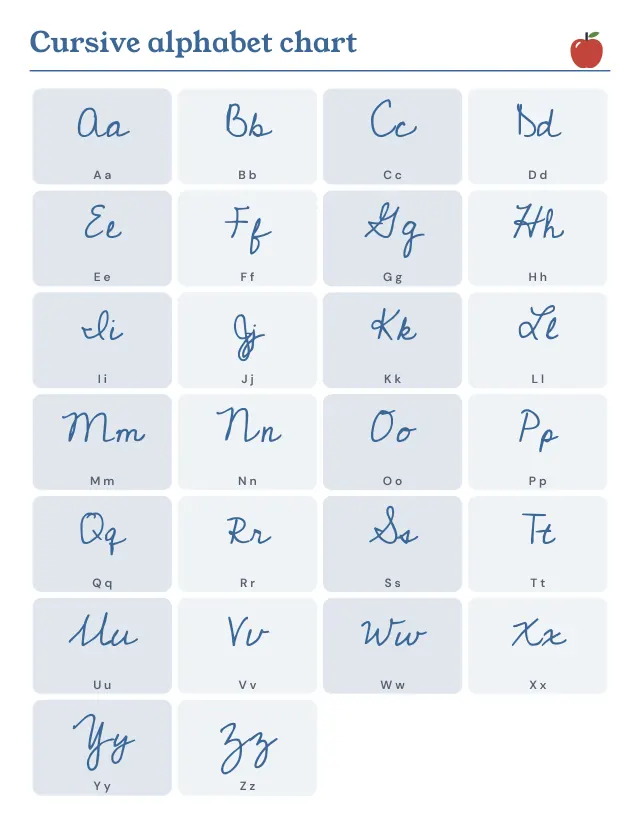
Every capital and small letter in cursive, Aa to Zz, large enough to read from a desk or a wall, with the print letters under each pair to match them.
1 page · US Letter · Portrait
Free, with no account, email or watermark. Print at 100% or Actual size.
Ready-made PDF (Letter) · Free to print and share copies · Check your print size
Keep it beside the cursive tracing sheet: find the letter on the chart, say its name, then trace it and write it. Print it landscape for a wall strip of seven letters a row.
The letters are Cedarville Cursive, a free font based on a preschool teacher’s own handwriting: a simple joined script without flourishes. School handwriting programmes differ from it and from one another, most often in capitals such as Q and Z; where a class follows one programme, its own chart is the one to copy.
A multiplication chart: find one number down the side and the other across the top.
Every multiplication fact from 1 × 1 to 20 × 20 on one page, with shaded headers and the square numbers marked.
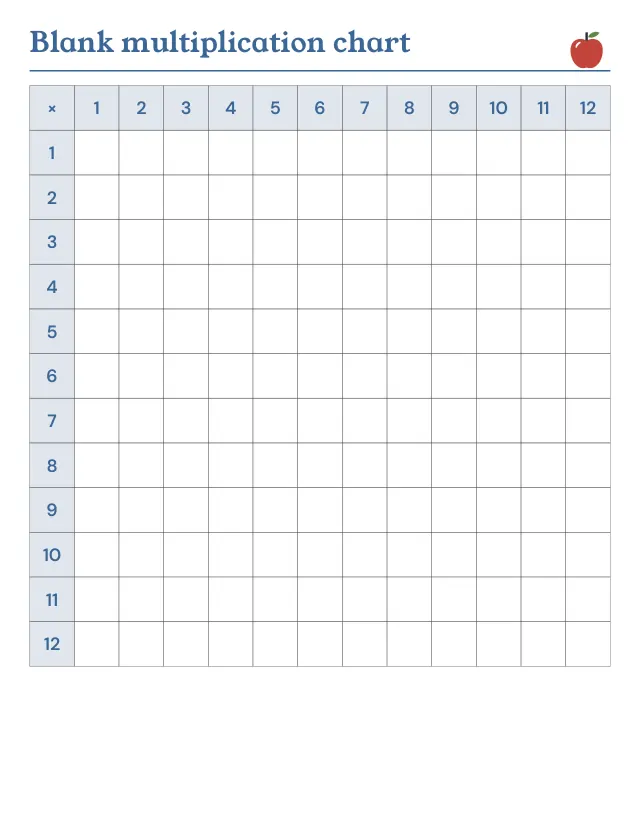
A blank 12 × 12 multiplication grid with only the headers printed, for filling in the facts from memory.
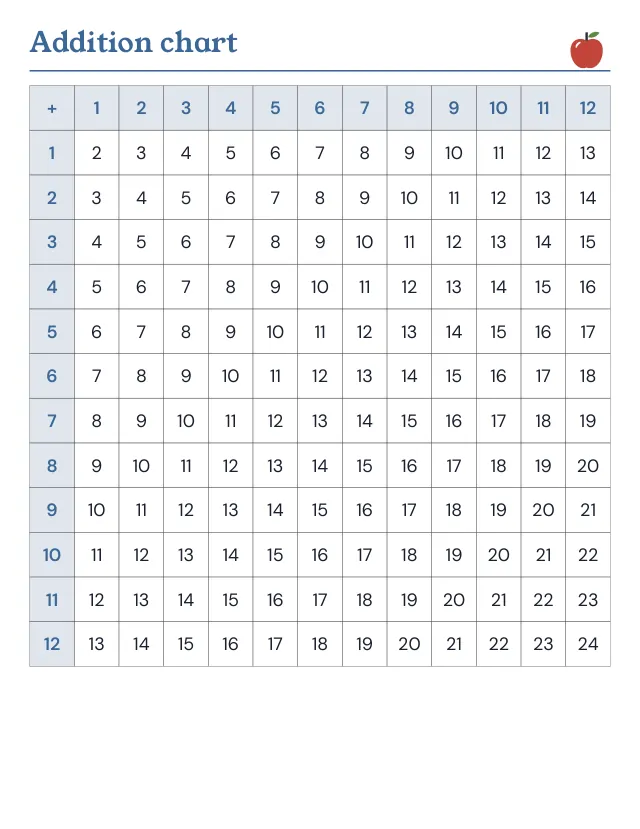
An addition table from 1 + 1 to 12 + 12: find the first number down the side and the second across the top.
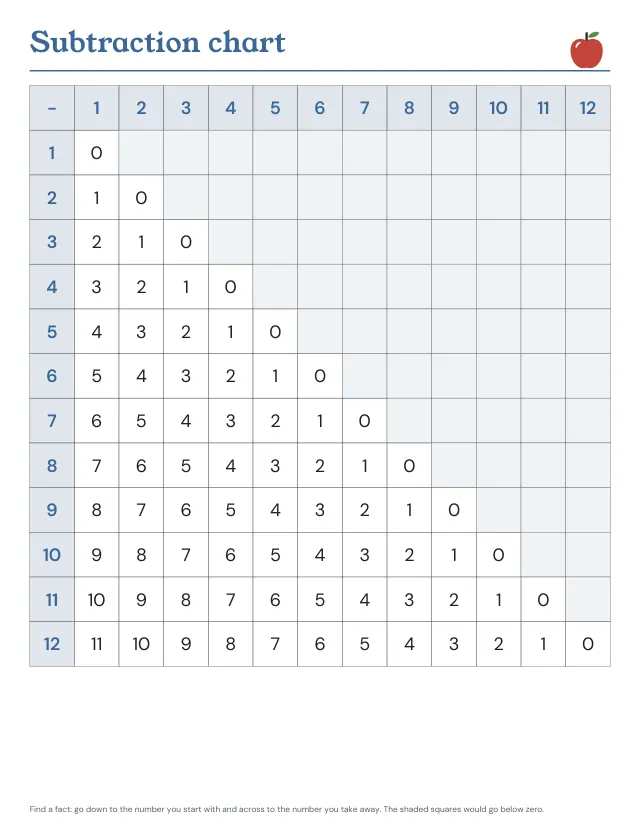
A subtraction table to 12: the number down the side minus the number across the top, with shaded headers. Squares that would go below zero are shaded and left empty.
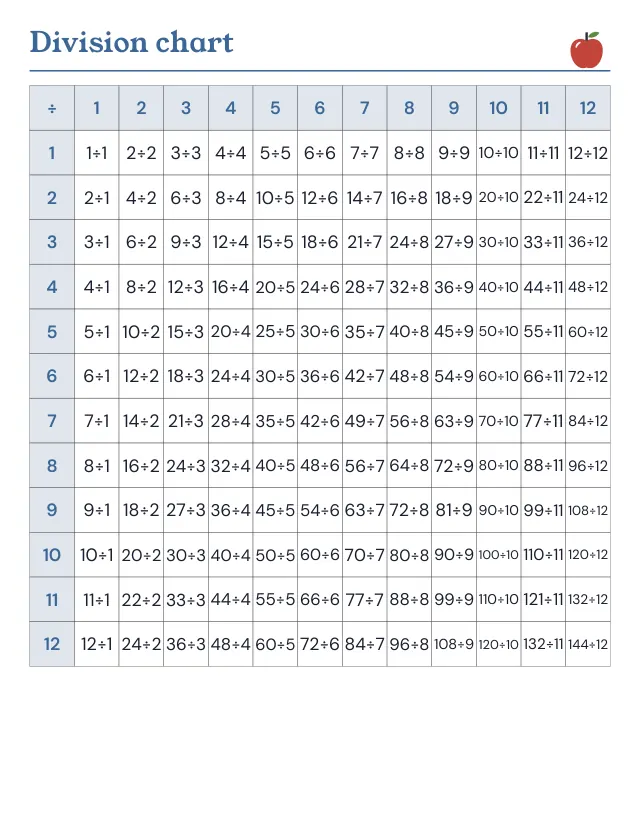
A division chart for the facts to 144 ÷ 12: each row holds the divisions whose answer is the number at its start.
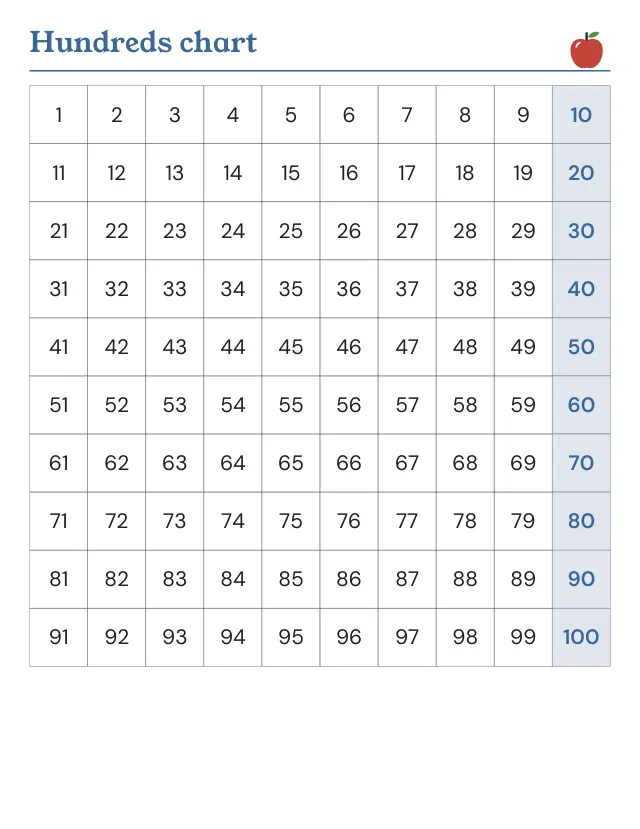
The numbers 1 to 100 in rows of ten, with the tens shaded, for counting and spotting patterns.
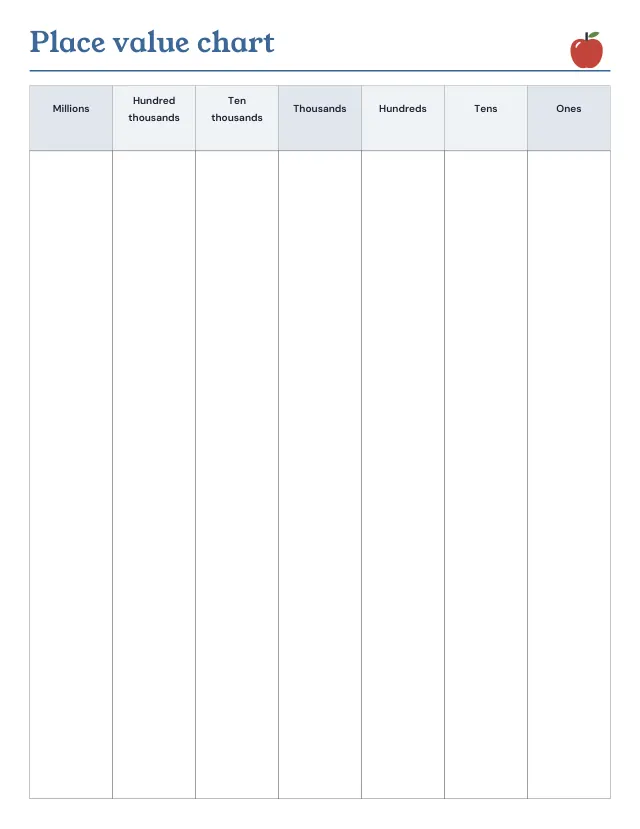
A place value chart from ones to millions, with a column for each place to write the digits in.
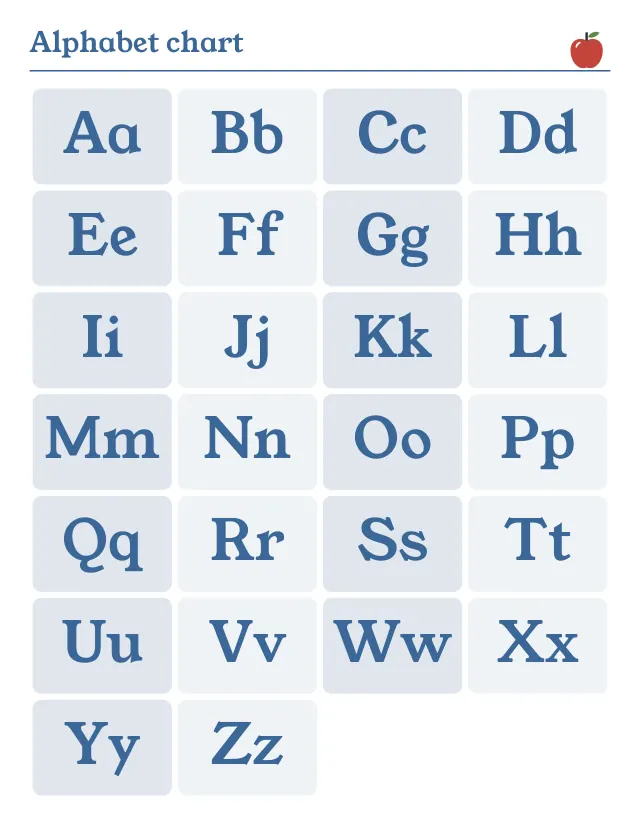
Every capital and small letter, Aa to Zz, in large print for a wall or a desk.
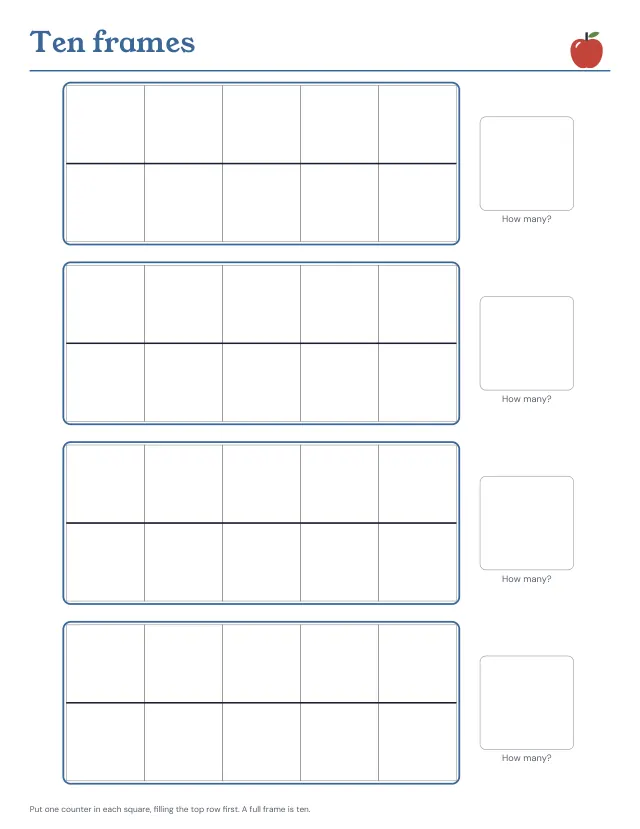
Four empty ten frames, two rows of five squares each, with a box beside each frame to write how many. Put one counter in each square: a full frame is ten. The sheet also prints as five frames, or as double ten frames for numbers to 20.
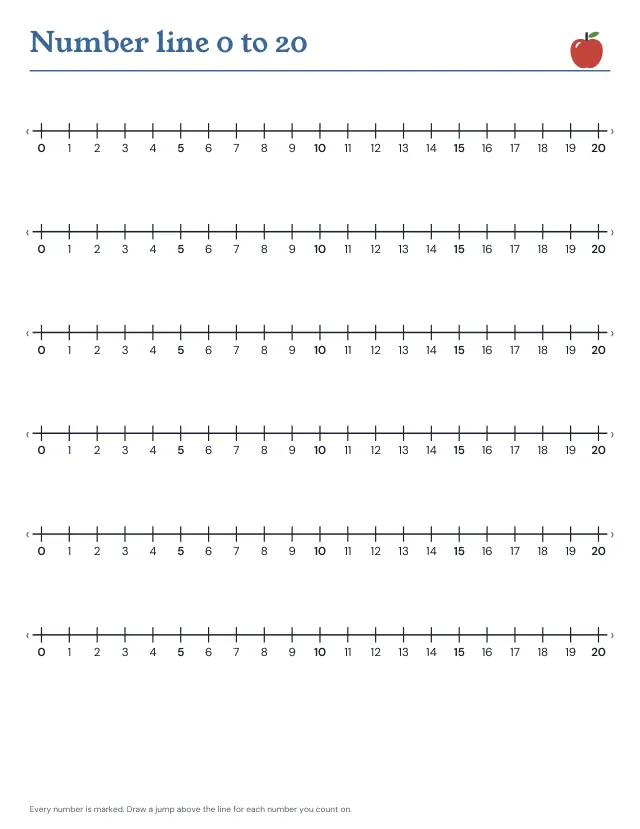
Six number lines from 0 to 20 with every number marked, for counting on, counting back and drawing jumps. Change the end number for lines to 10, 50 or 100.
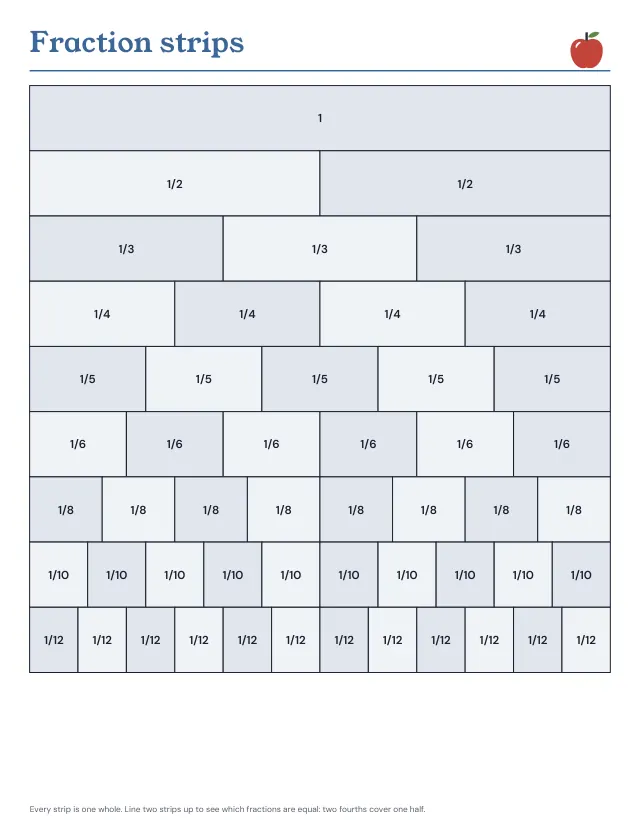
One whole, then halves, thirds, fourths, fifths, sixths, eighths, tenths and twelfths, every strip the same length, so equal fractions line up. Print, color and cut the strips apart.
No sheets match that. Try a shorter word.
Use the same paper size in the PDF and printer settings. Choose Actual size or 100%. Print a sample before making copies.