Venn diagram template
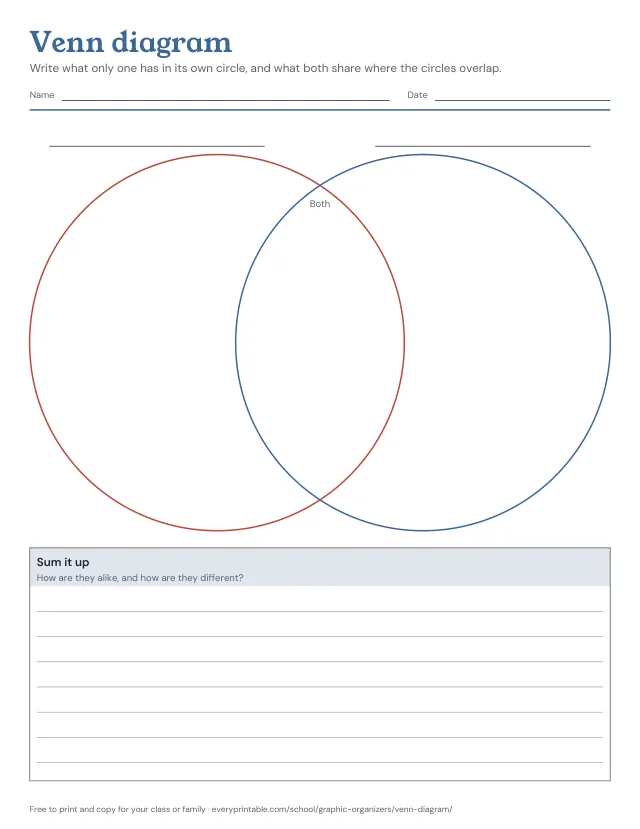
Two overlapping circles to compare two things: what only one has goes in its own circle, what both share goes where they overlap. Or three circles for three things. Type the names, or leave lines to write them on.
Blank organizers to print for a class or a child, grouped by the thinking each one helps with: comparing, putting events in order, finding causes, reading for the main idea, and learning words and ideas. Each comes on Letter or A4, with the topic typed as its title, and as a fillable PDF to type into.
All 11 organizers, one to a page, blank and ready to copy: 11 pages.
11 sheets
Two overlapping circles to compare two things: what only one has goes in its own circle, what both share goes where they overlap. Or three circles for three things. Type the names, or leave lines to write them on.
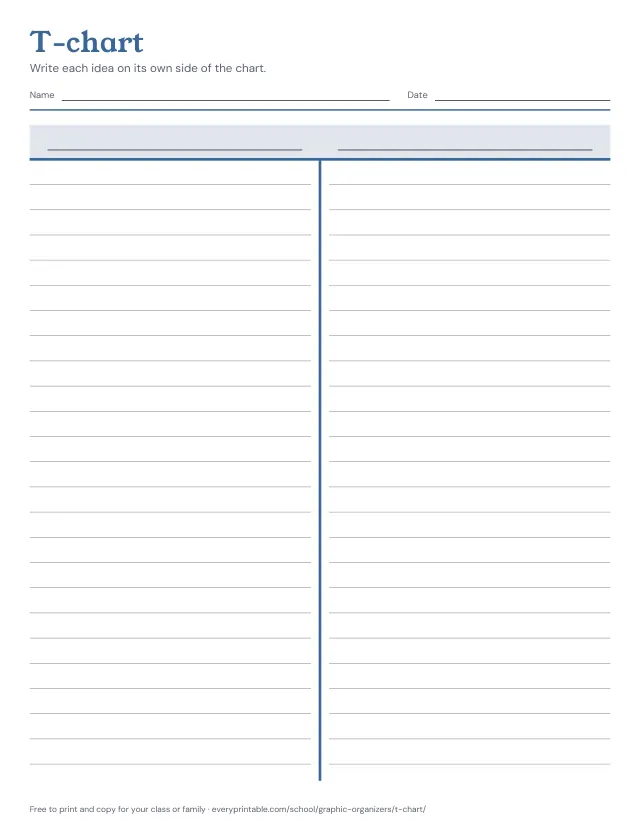
A T-chart splits the page into two columns under two headings, to sort ideas side by side: pros and cons, facts and opinions, before and after.
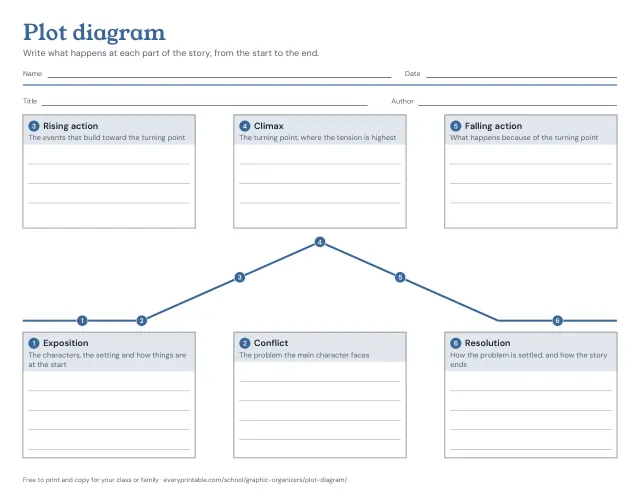
The plot of a story drawn as a mountain: the exposition and the conflict, the rising action, the climax at the top, the falling action and the resolution, each with its own box to write in.
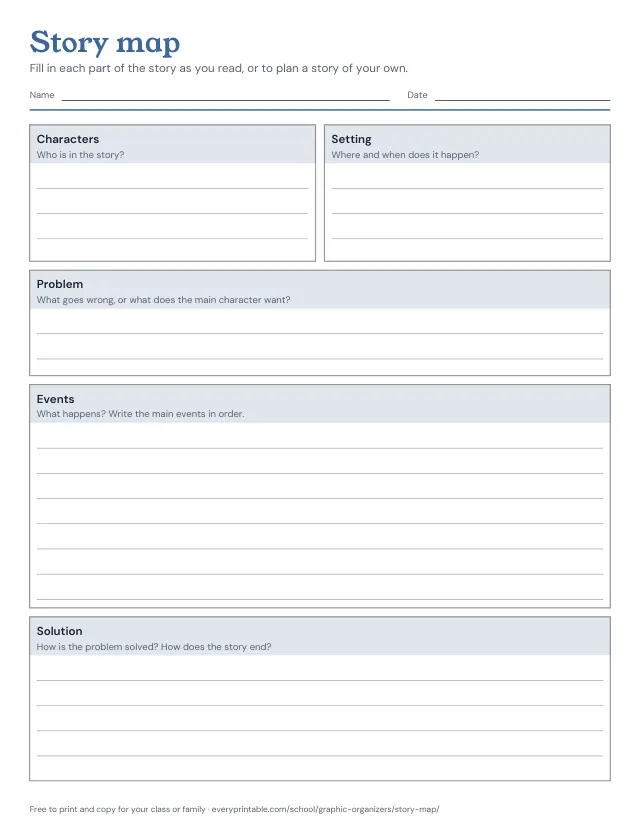
The parts of a story on one page: who is in it, where and when it happens, the problem, the main events and how it ends. For younger readers, beginning, middle and end, each with a box to draw in.
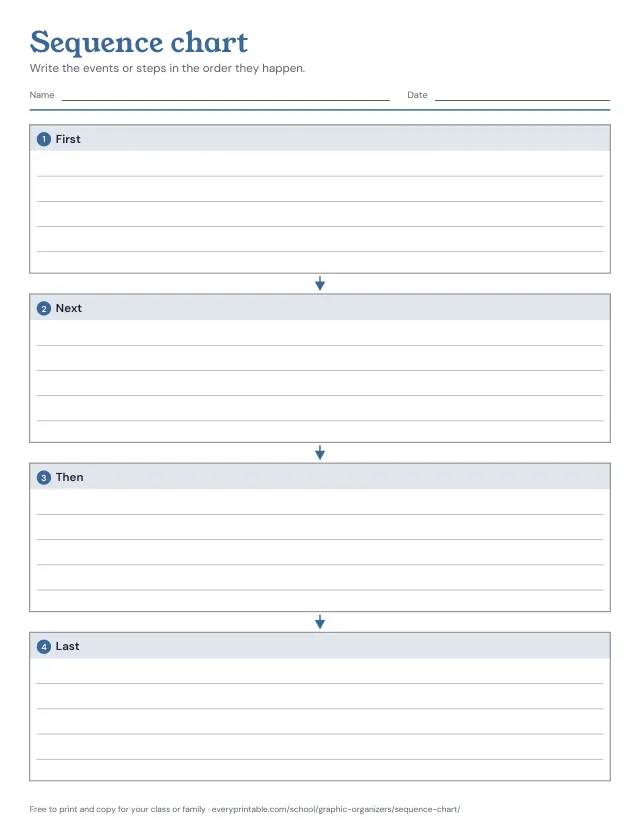
Boxes joined by arrows for events or steps in order: first, next, then, last, or five or six numbered steps.
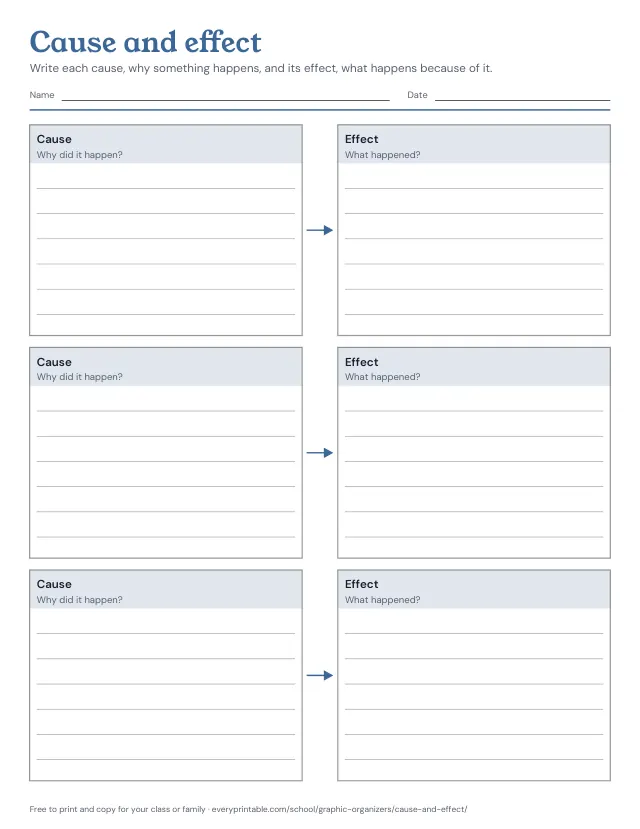
Boxes joined by arrows for what happened and why: three causes each with its effect, one cause with three effects, or three causes of one effect.
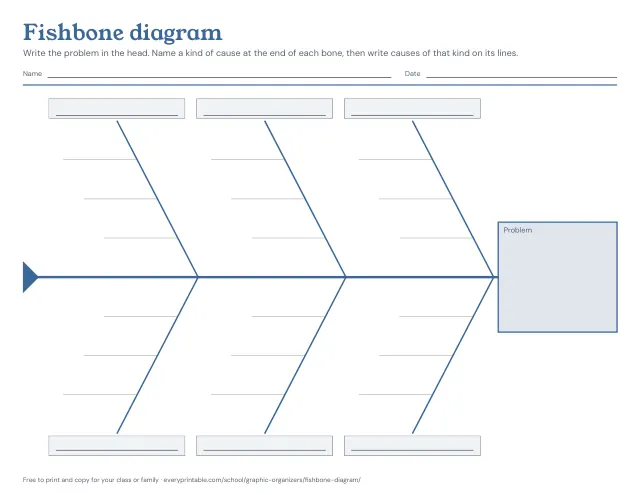
A fishbone (Ishikawa) diagram for finding the causes of a problem: the problem in the head, a kind of cause at the end of each bone and the causes along it.
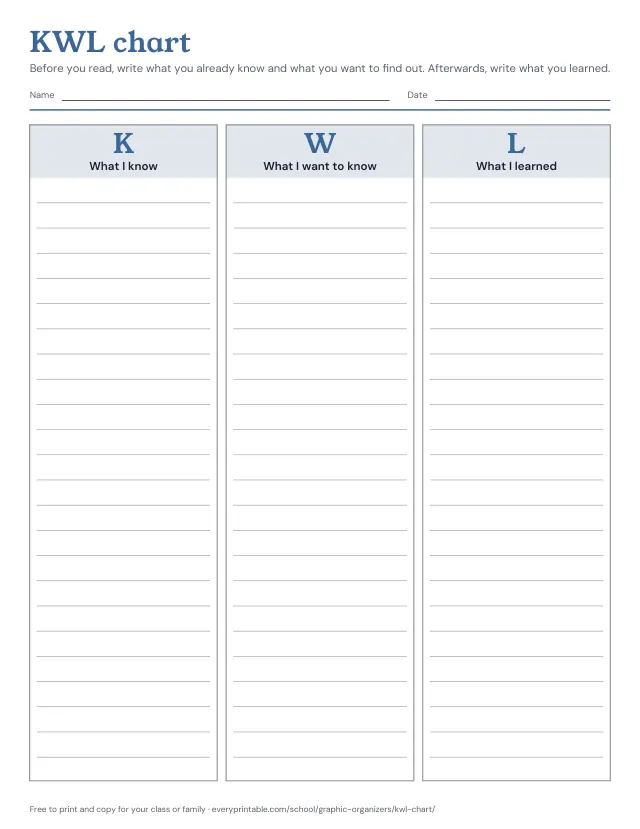
Three columns for a topic: what the reader already knows (K), what they want to find out (W) and, after reading, what they learned (L).
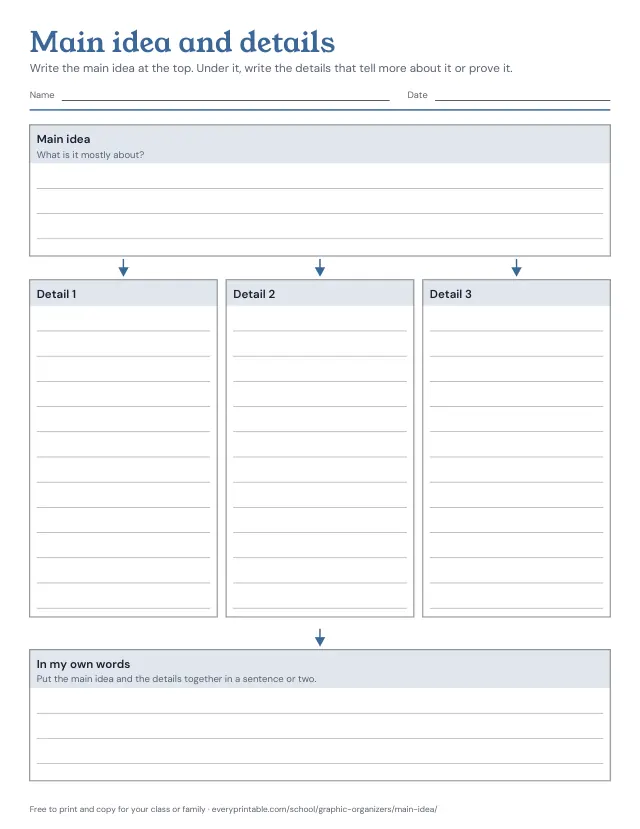
The main idea in a box at the top, the details that support it underneath, and room at the bottom to put it all in your own words.
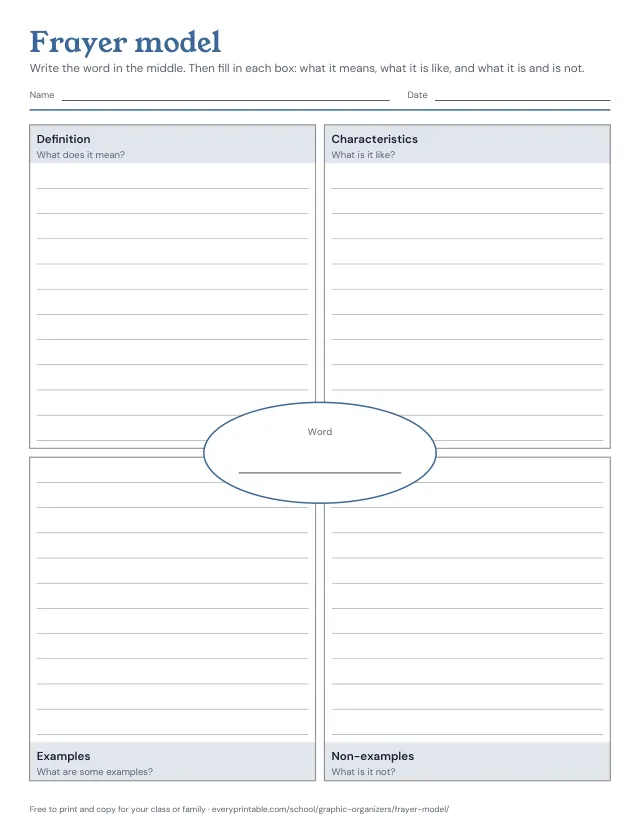
A vocabulary organizer: the word in the middle, and four boxes for what it means, what it is like, examples and non-examples.
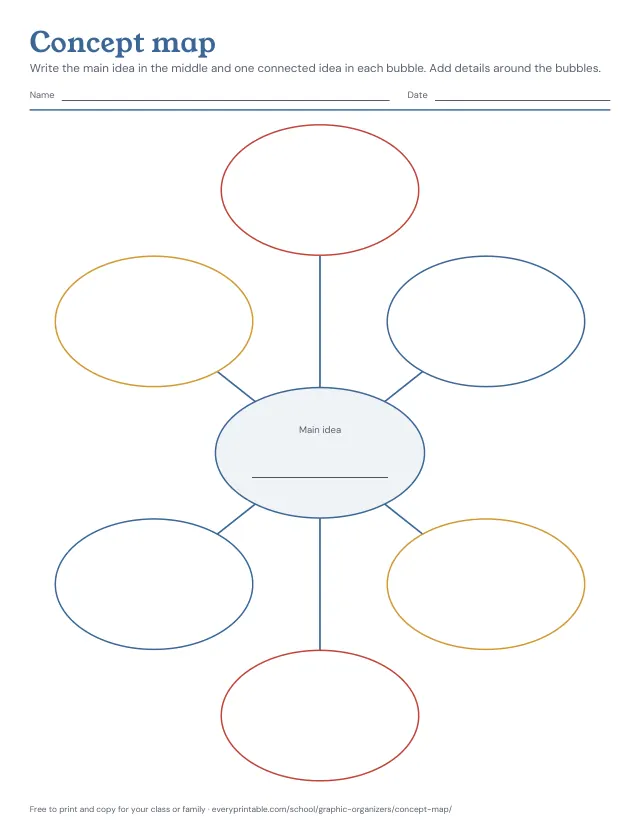
A main idea in the middle, joined to four, six or eight bubbles for the ideas connected to it: for brainstorming, planning a piece of writing or reviewing a topic.
No sheets match that. Try a shorter word.
To compare two or three things, a Venn diagram, or a T-chart for two lists side by side. To put events or steps in order, a sequence chart; for a story, a story map or a plot diagram. To show why something happened, a cause and effect organizer, or a fishbone diagram when one problem has many causes. To read for what matters, main idea and details, or a KWL chart before and after a topic. For a new word, a Frayer model; for ideas linked to one topic, a concept map.
Every organizer can be downloaded as a fillable PDF: tick “Fillable PDF” under Paper size, margins and lines, and each box takes typing in a PDF reader on a computer, a tablet or a Chromebook. Nothing typed on this site is sent anywhere.