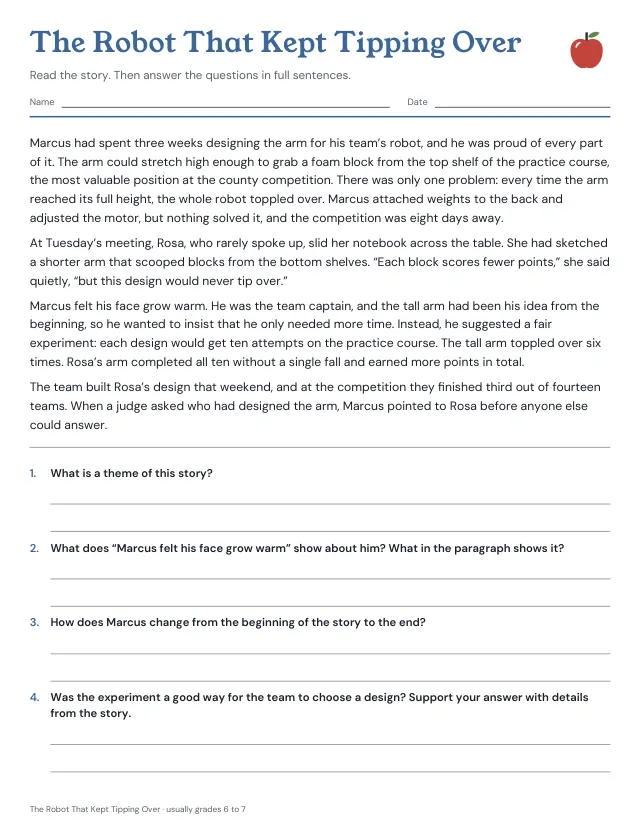
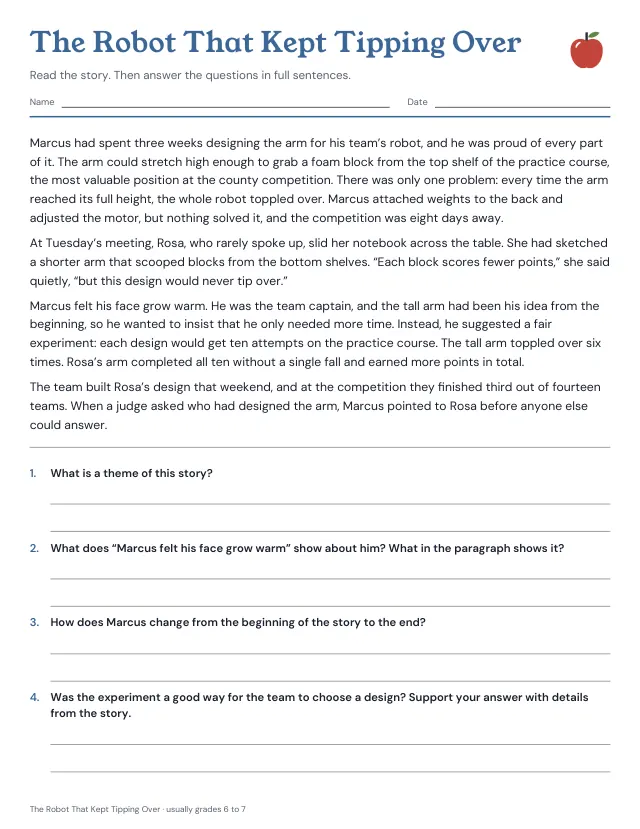
The Robot That Kept Tipping Over
A story, 236 words, with four questions and an answer key.
Common Core RL.6.1
Stories and nonfiction passages for sixth graders, each with four questions: one on the theme or a key detail, one on what a word means as it is used, one on how an idea or a character develops, and one to answer with evidence from the passage. Print one, change it on its own page, or take the whole set as one PDF with the answer keys at the back.
All 12 sheets on this page, after a contents page, with the answer keys together at the back: 23 pages.
12 sheets
A story, 236 words, with four questions and an answer key.
Common Core RL.6.1
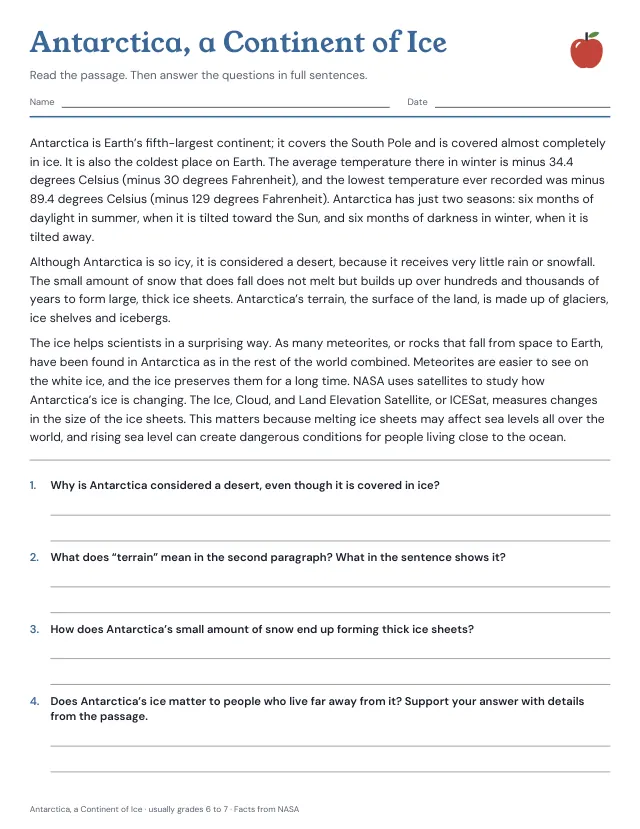
Facts from NASA, 245 words, with four questions and an answer key.
Common Core RI.6.1
Facts from the National Archives, 237 words, with four questions and an answer key.
Common Core RI.6.1
Facts from the National Park Service, 249 words, with four questions and an answer key.
Common Core RI.6.1
Facts from the National Weather Service, 252 words, with four questions and an answer key.
Common Core RI.6.1
Facts from NASA, 262 words, with four questions and an answer key.
Common Core RI.6.1
Facts from NASA, 252 words, with four questions and an answer key.
Common Core RI.6.1
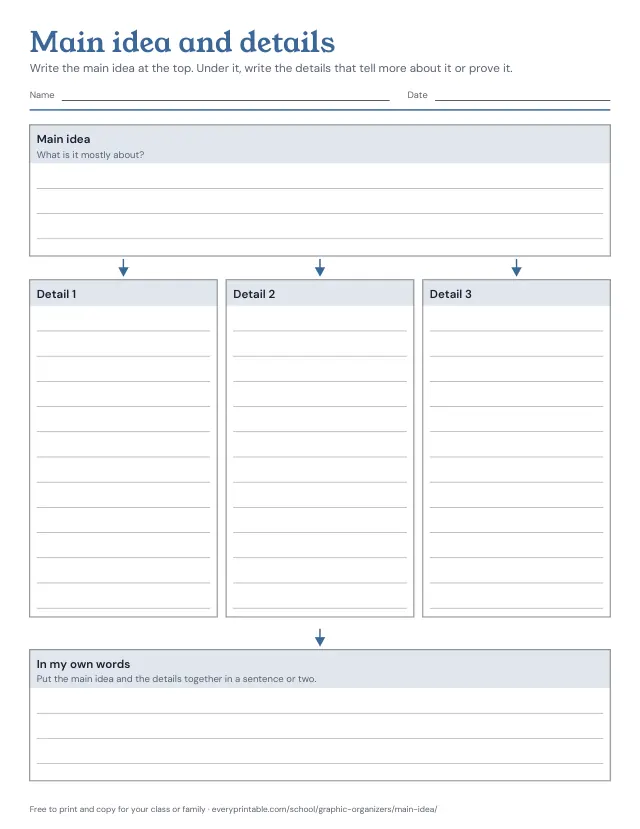
The central idea at the top, the details that carry it, and a summary.
Common Core RI.6.2
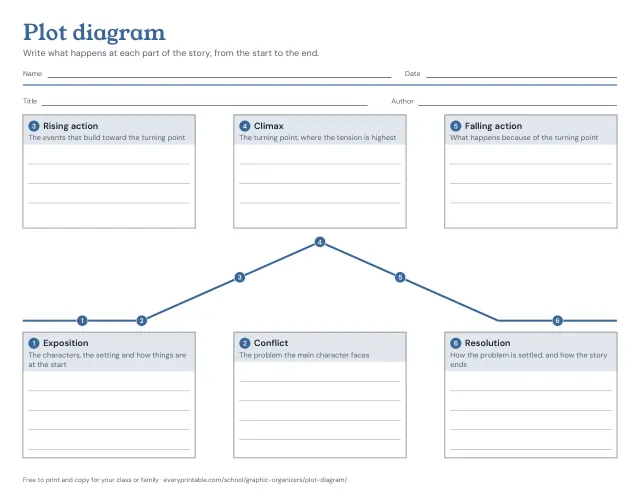
The story mountain, from the conflict up to the climax and down to the resolution.
Common Core RL.6.3
No sheets match that. Try a shorter word.
Each passage is placed by the three things the Common Core weighs in a text: a readability score (Flesch-Kincaid, whose range for the grades 6 to 8 band is 6.51 to 10.34; these read at about 7.2 to 8.8), how the text is built and the words it uses, and what the questions ask of the reader. A child who reads easily can go on to the next grade’s page, and one who needs more practice can go back a grade; choose by how the child reads, not only by grade.
Every passage has four questions. The first asks for the theme or the main idea, or a detail found in the text; the second asks what a word means as the passage uses it, and which words around it show that; the third asks why something happened, in what order, or how two things compare; the last asks for the reader’s own answer, backed by the passage, so the key gives a sample. The answer key follows each passage, and in the whole set the keys come together at the back. The card names the standard the questions practise: RL.6.1 and RI.6.1 for reading closely and answering from the text.
Grade 6 asks a reader to find a text’s central idea and how the details carry it, and to follow how a story’s plot unfolds and how its characters change. The main idea organizer takes the central idea and its details; the plot diagram takes a story from its conflict up to the climax and down to the resolution.
The set prints every sheet on this page once, in the order shown, after a contents page that lists them with their page numbers. The answer keys come together at the back, so you can hand out the passages and keep the keys apart. On its own page, each passage can be printed alone, in bold type for a young reader, or on A4.