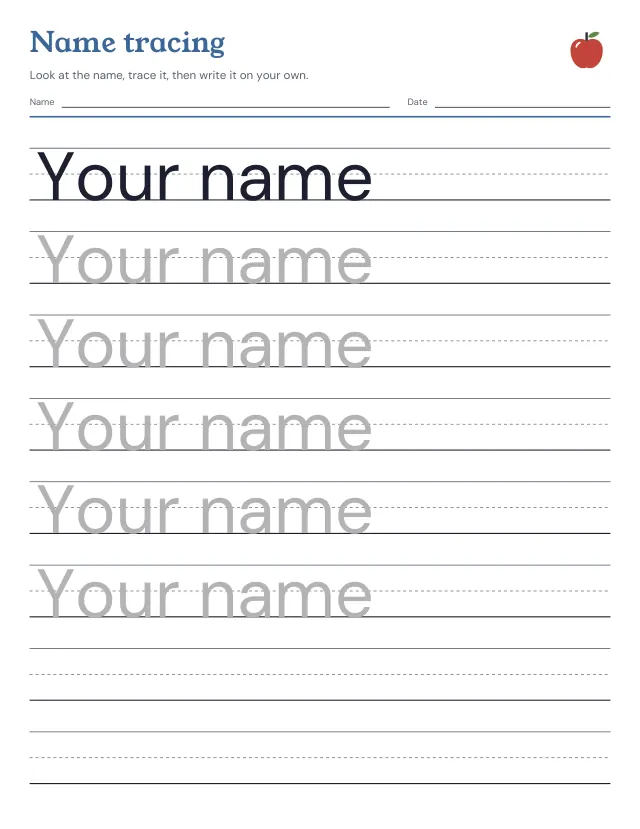
Name tracing worksheet
Type a name to repeat it in pale letters between writing guides.
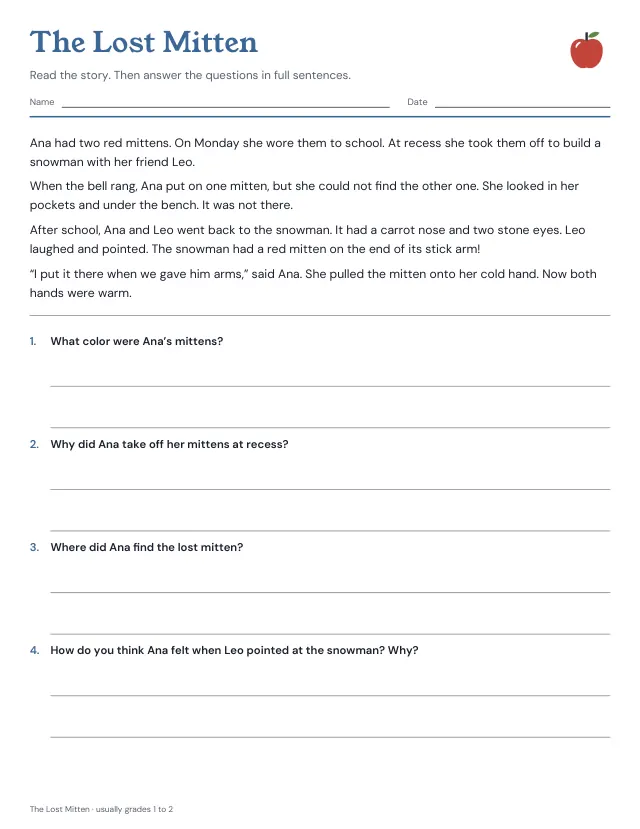
Six short stories written for this site, from a lost mitten for grades 1 and 2 to a grandfather’s map for grades 3 and 4, and fifty-one short fact passages on space, the Earth and its weather, animals and plants, and American places and history. Each prints on one page with four questions and lines to answer on, and the answers on a second page: two to find in the text, one about what happened and why, and one to think about.
2 pages · US Letter · Portrait
Free, with no account, email or watermark. Print at 100% or Actual size.
Ready-made PDF (Letter) · Free to print and share copies · Check your print size
The Lost Mitten and Sam’s Bean Plant are short, with everyday words, and usually suit grades 1 and 2. Maya’s Library Card and A Rainy Saturday are longer and usually suit grades 2 and 3. The Class Plant Sale and Grandpa’s Map have more to keep track of, numbers in the first, and usually suit grades 3 and 4. The fact passages teach something as well: the ones on clouds and the weather and on what a plant needs, short and in everyday words, usually suit grades 1 and 2; those on the Moon, the Sun, Mercury, Mars, Jupiter, Saturn, the water cycle, the bison of Yellowstone, the leopard frog, how a seed starts to grow, how a chick grows in its egg, ladybugs, how a pumpkin grows, how apples grow, wild turkeys, honey bees and garden spiders usually suit grades 2 and 3; those on Venus, the monarch’s trip, autumn leaves, the seasons, the blue sky, comets, lightning, the bald eagle, the leatherback turtle, volcanoes, the volcano that grew on a farm, how pollen gets around, your living bones, what a cell is, sea otters and the kelp forest, the Atlantic herring, earthquakes, hurricanes, the Grand Canyon, the inside of the Earth, solids, liquids and gases, the three kinds of rock, the six simple machines, corals, the Statue of Liberty, the Liberty Bell, the three branches of government, the Bill of Rights, the first airplane flight, the four forces of flight, the counties of the states and Mount Rushmore grades 3 and 4. Every fact in them comes from NASA, NOAA, the National Weather Service, the National Park Service, the U.S. Fish and Wildlife Service, the U.S. Geological Survey, the National Cancer Institute, the U.S. National Library of Medicine, USAGov, the National Archives, SUNY’s College of Environmental Science and Forestry, the Missouri Botanical Garden, the Missouri Department of Conservation, Poultry Extension, or the Extension services of Ohio State, NC State and the Universities of Maryland, Illinois, Minnesota and Florida, listed on the sources page. Choose by how the child reads, not by grade.
Read the story or passage once for fun, aloud or alone, then read it again with the questions in mind. The first two questions are answered in the text itself; the third asks what happened or why; the last has no single right answer, so the key gives a sample. Ask the child to point to the sentence that helped.
Type a name to repeat it in pale letters between writing guides.
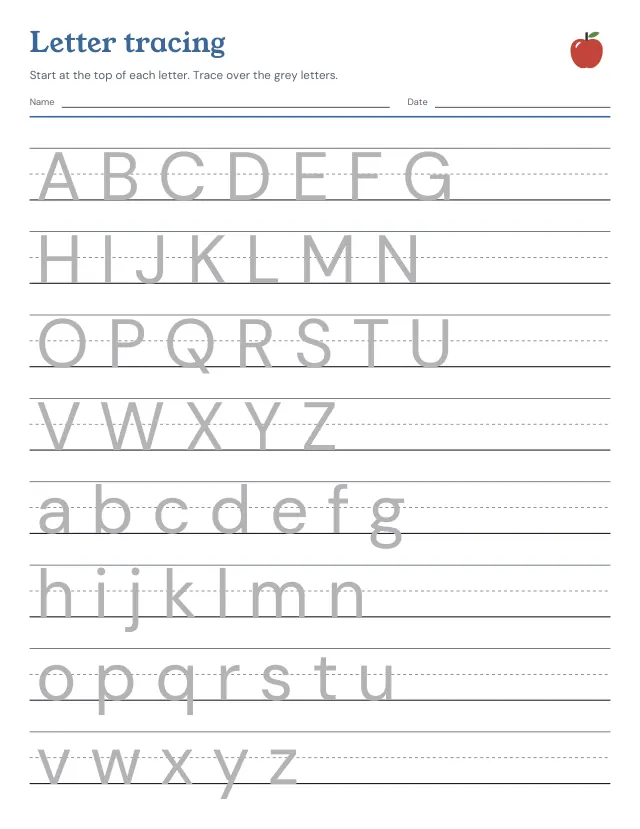
Trace pale uppercase and lowercase letters, A to Z and a to z, on eight rows of handwriting guide lines, starting at the top of each letter. Or print one letter a page: the letter to look at, rows to trace, then rows to write it alone.
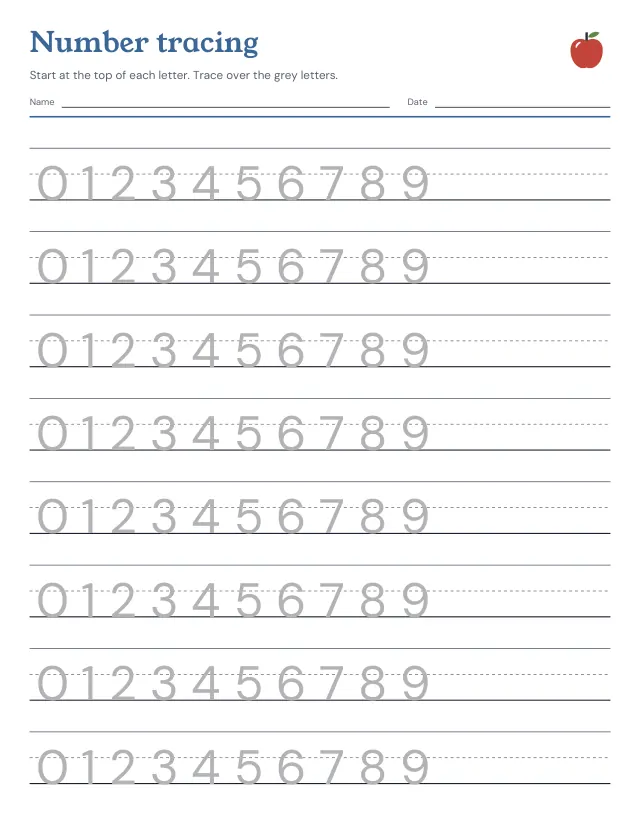
Trace the digits 0 to 9, a full row of them on each of eight rows of handwriting guide lines. Or print one number a page, 0 to 20: the number and its word to look at, counters to count, rows to trace, then rows to write it alone.
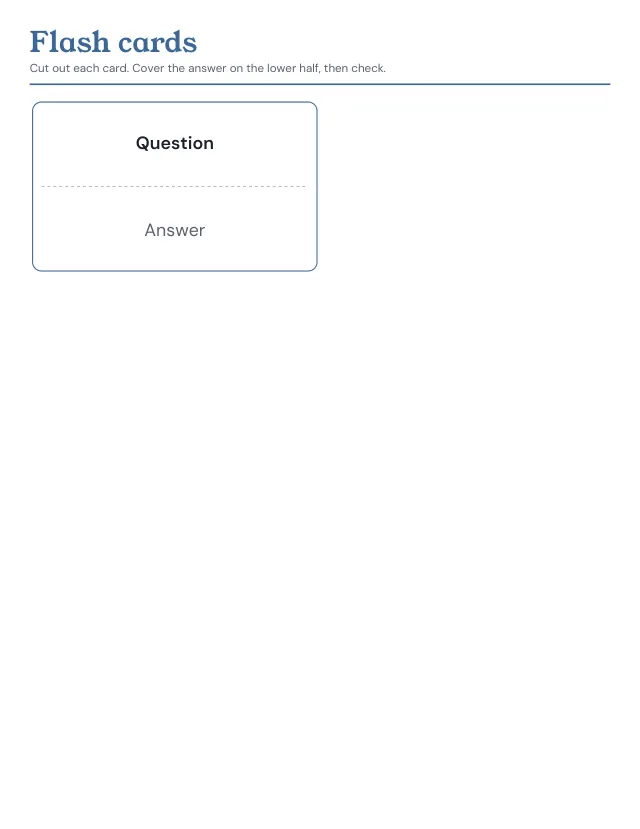
Type one question and answer per line, separated by a vertical bar. Cut out the cards to study.
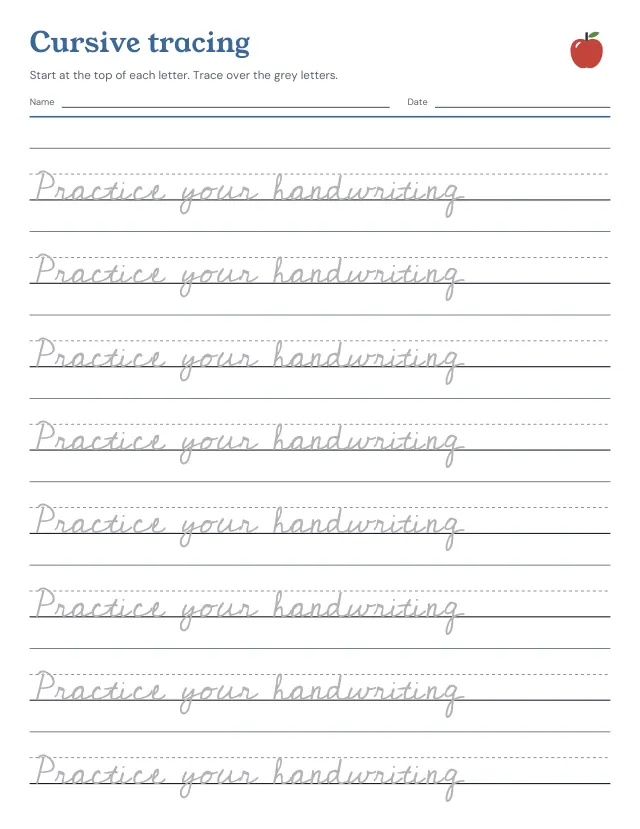
Type the words you want to practice. Pale cursive letters sit between writing guides.
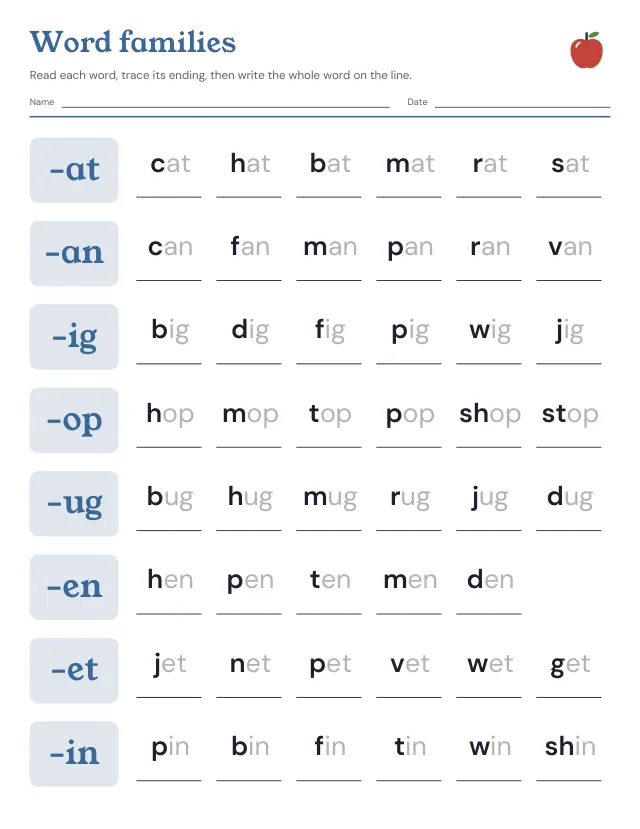
Eight short-vowel word families on one sheet, from -at and -an to -et and -in: each word has its first letters printed and its ending pale to trace, with a line below to write the whole word. Type your own endings and first letters to make another sheet.
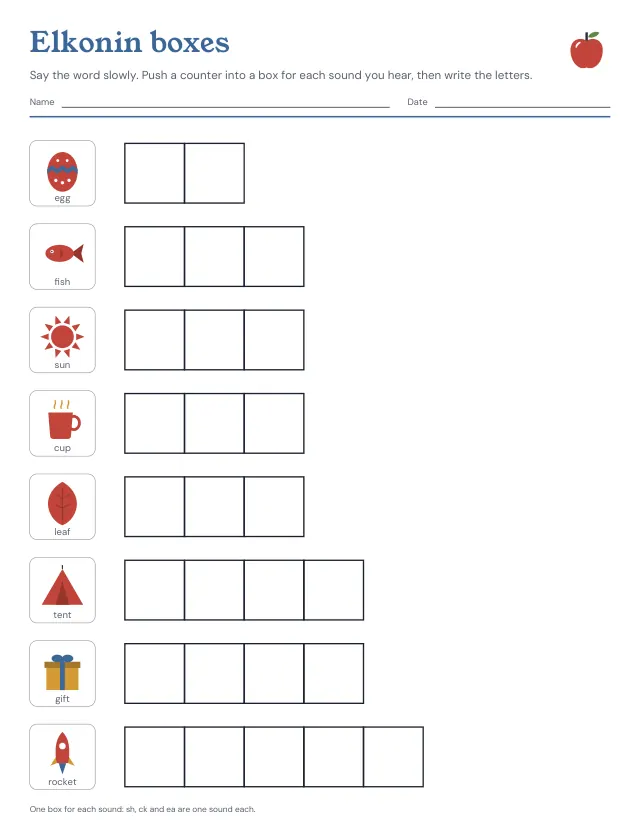
Elkonin boxes, or sound boxes: eight pictures to name, each with a box for every sound in its word, from egg with two sounds to rocket with five. Type your own words and how many sounds each has to make your own sheet.
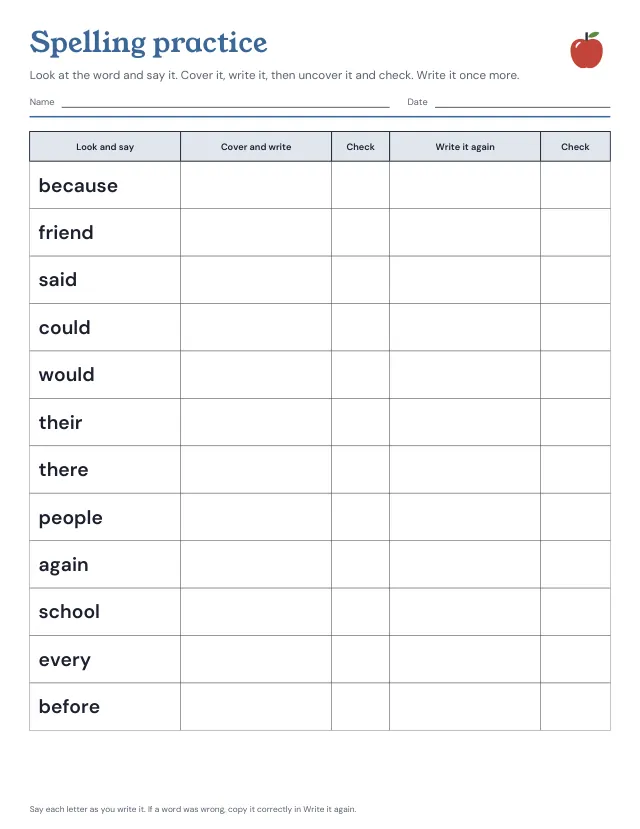
Look, say, cover, write, check: each word in the first column to read aloud, then columns to write it from memory, check it and write it again. Type this week’s spelling words, up to 15 a sheet, or print the twelve everyday words it opens on.
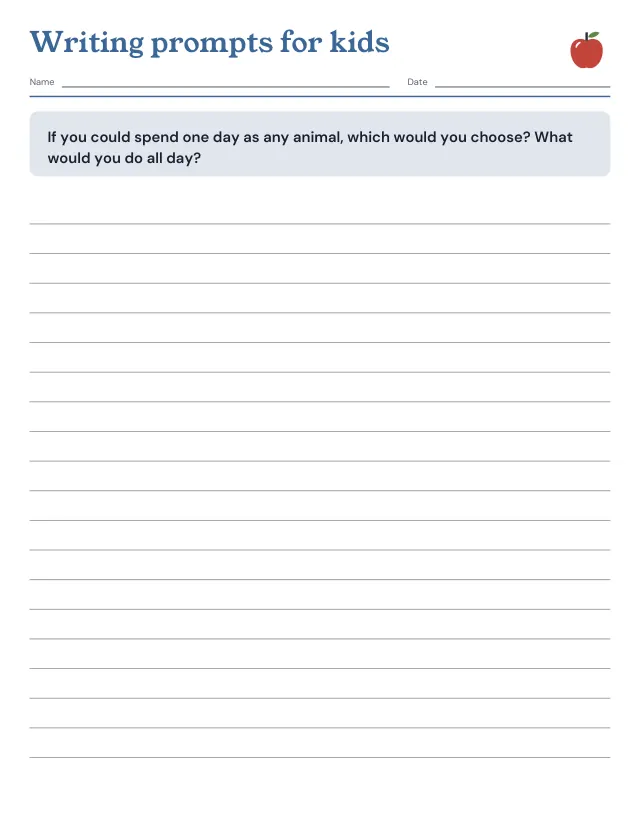
Ten writing prompts for children, one a page, each in a box at the top with ruled lines below to write on: a door that was never there, a pet that talks for a day, a new holiday to invent. Add a space to draw for younger writers, or type your own prompts.
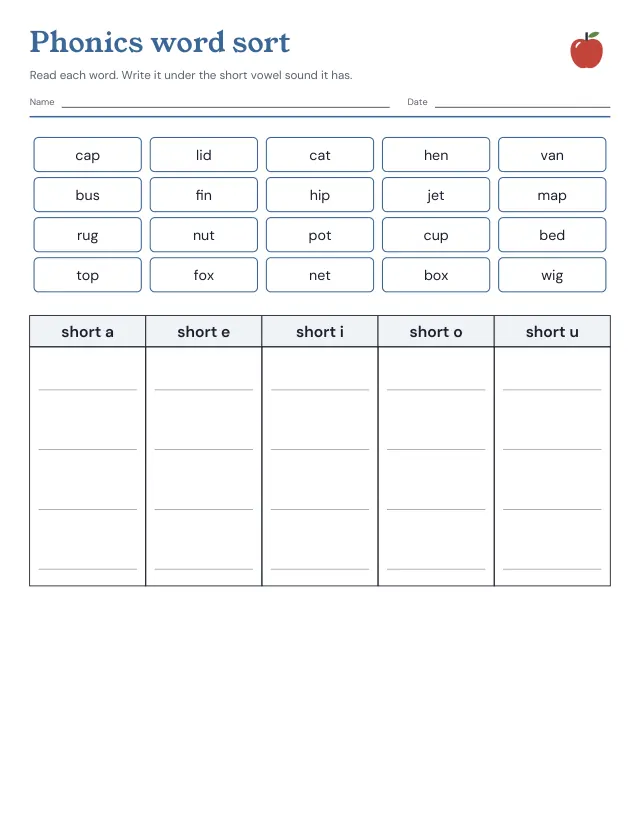
A bank of words to read and sort, four for each sound, and a column for each sound to write them in: short vowels (cat, bed, pig, dog, sun), the digraphs sh, ch, th and wh, the blends bl, cr, st and fl, or long vowel spellings (cake, tree, bike, bone, cube). The key fills in the columns. New words each time.
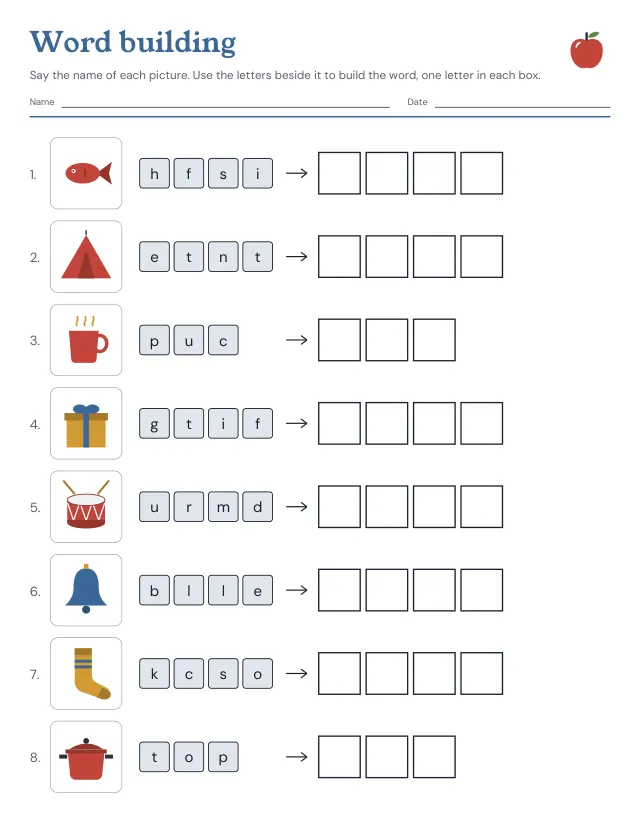
Eight pictures a page, each with its letters jumbled in tiles beside it and a box for each letter: say the name of the picture, then build the word from the tiles. Short vowel words such as sun, cup and fish, or on the harder sheet words with ee, oo, ea, ar and ir, such as tree, moon and bird. The key gives the words. Each sheet draws eight of sixteen words, so the words, their order and the tiles change each time.
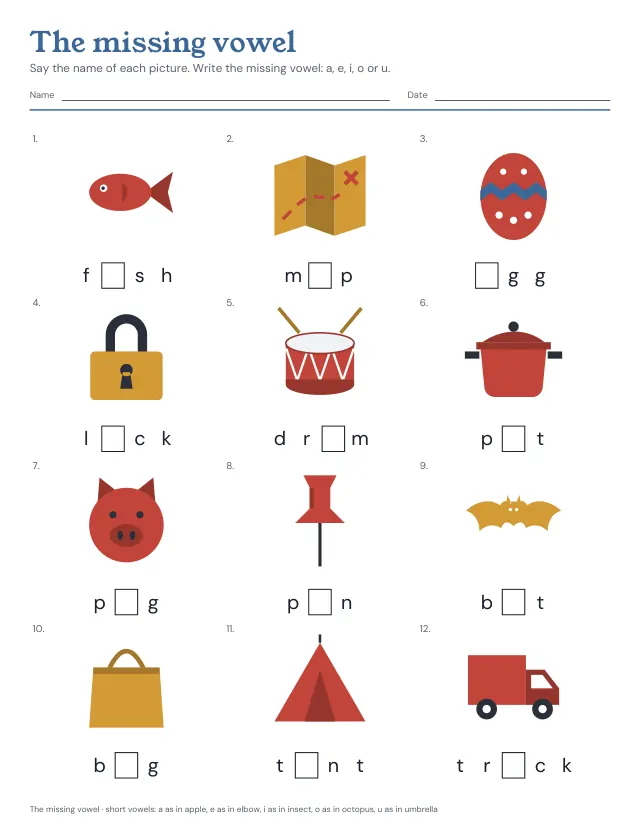
Twelve pictures a page, each a short word with a short vowel: write the missing vowel under each picture, circle the vowel sound you hear, or find the pictures with one vowel’s sound, a, e, i, o or u. The answer key follows. Each copy draws new pictures.
No sheets match that. Try a shorter word.
Use the same paper size in the PDF and printer settings. Choose Actual size or 100%. Print a sample before making copies.