Name tracing worksheet
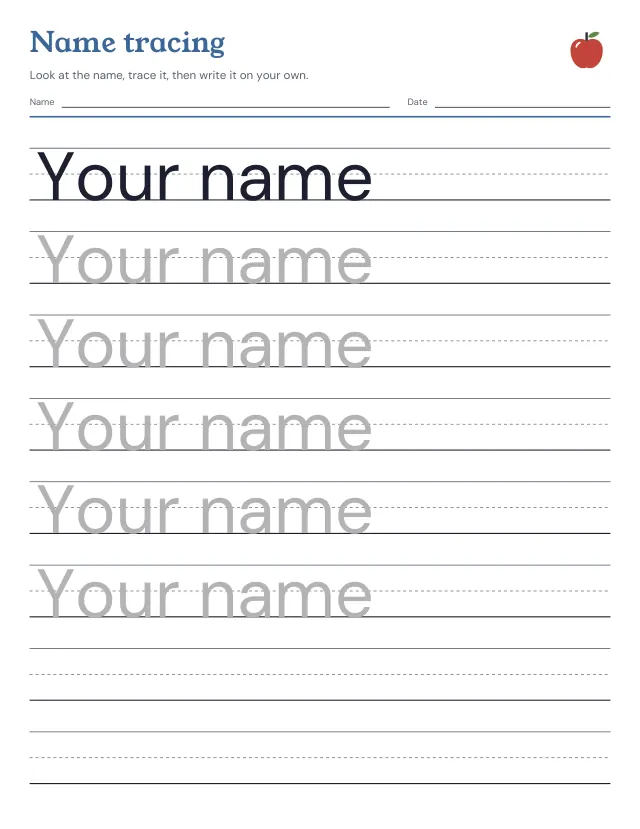
Type a name to repeat it in pale letters between writing guides.
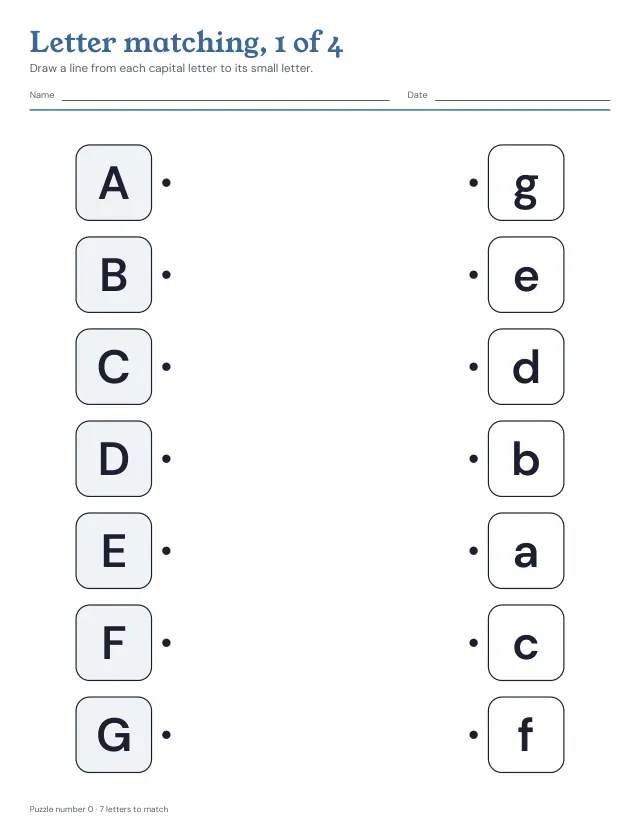
Capital letters down one side and small letters down the other, in a shuffled order, to join with a line. Choose the letters, A to Z or just the ones a child is learning, and which way round; seven pairs fit on a page and the answer key follows.
8 pages · US Letter · Portrait
Free, with no account, email or watermark. Print at 100% or Actual size.
Ready-made PDF (Letter) · Free to print and share copies · Check your print size
The child says each capital letter’s name and sound, finds the small letter that goes with it and draws a line between their dots. Start with letters that look alike in both forms, such as C and c, O and o, S and s, then the ones that differ, such as A and a, G and g, R and r. The answer key, with the lines drawn, follows the worksheet.
Type the letters to match: the whole alphabet prints on four pages, or type a few, such as the letters of the child’s name or this week’s letters, for one page. Small letters to capitals turns the sheet round, and Shuffle the letters gives a new order, with its puzzle number at the foot to print it again.
Type a name to repeat it in pale letters between writing guides.
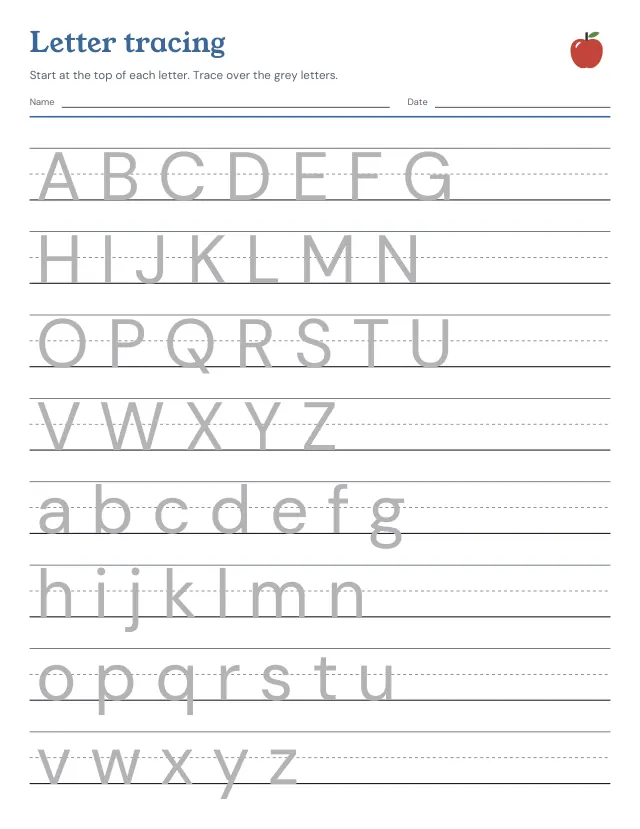
Trace pale uppercase and lowercase letters, A to Z and a to z, on eight rows of handwriting guide lines, starting at the top of each letter. Or print one letter a page: the letter to look at, rows to trace, then rows to write it alone.
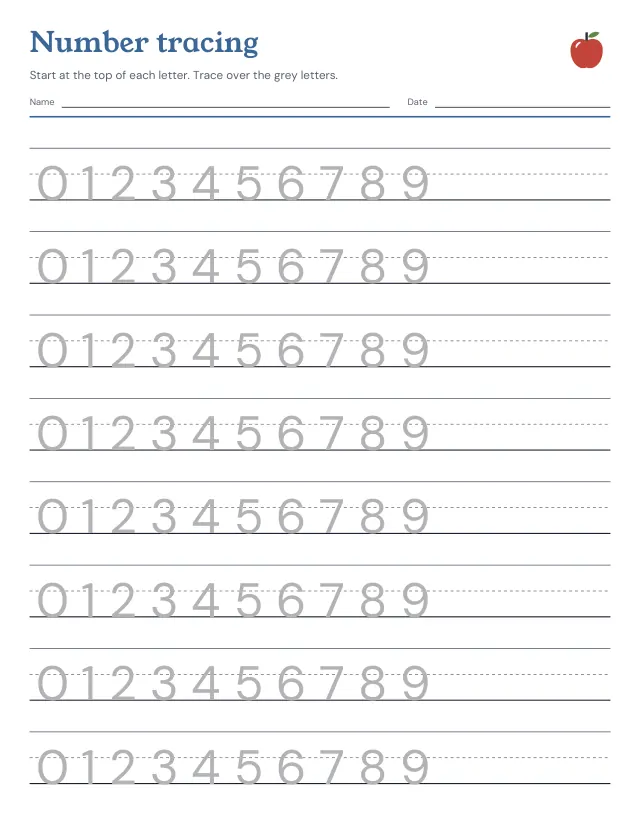
Trace the digits 0 to 9, a full row of them on each of eight rows of handwriting guide lines. Or print one number a page, 0 to 20: the number and its word to look at, counters to count, rows to trace, then rows to write it alone.
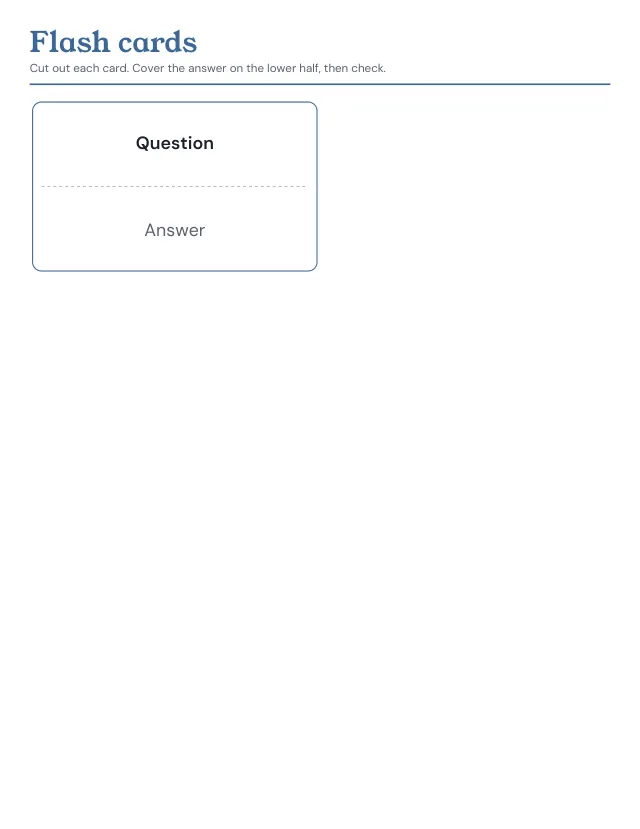
Type one question and answer per line, separated by a vertical bar. Cut out the cards to study.
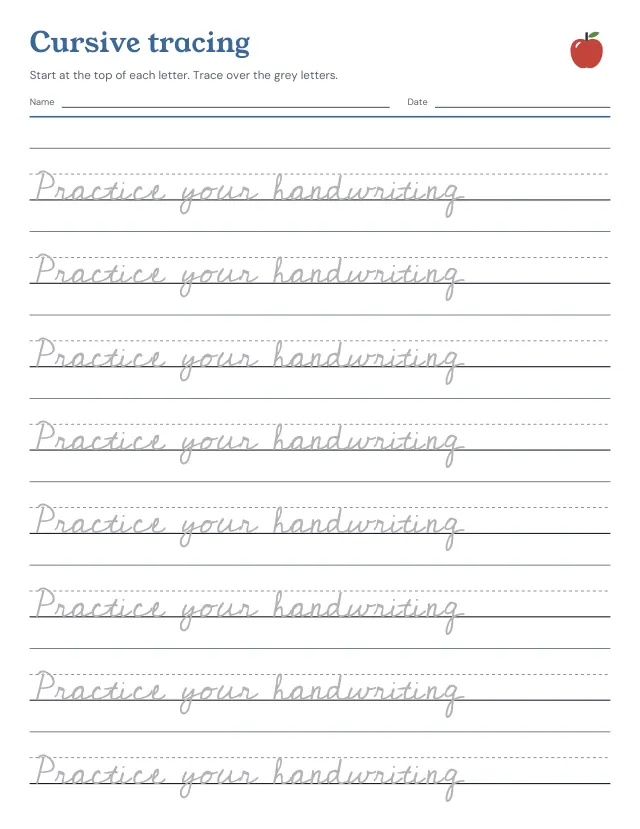
Type the words you want to practice. Pale cursive letters sit between writing guides.
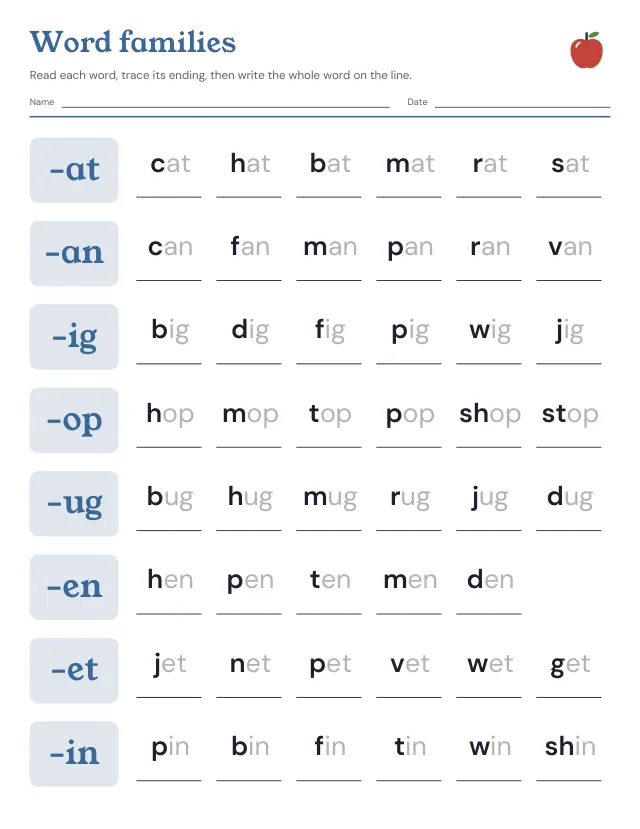
Eight short-vowel word families on one sheet, from -at and -an to -et and -in: each word has its first letters printed and its ending pale to trace, with a line below to write the whole word. Type your own endings and first letters to make another sheet.
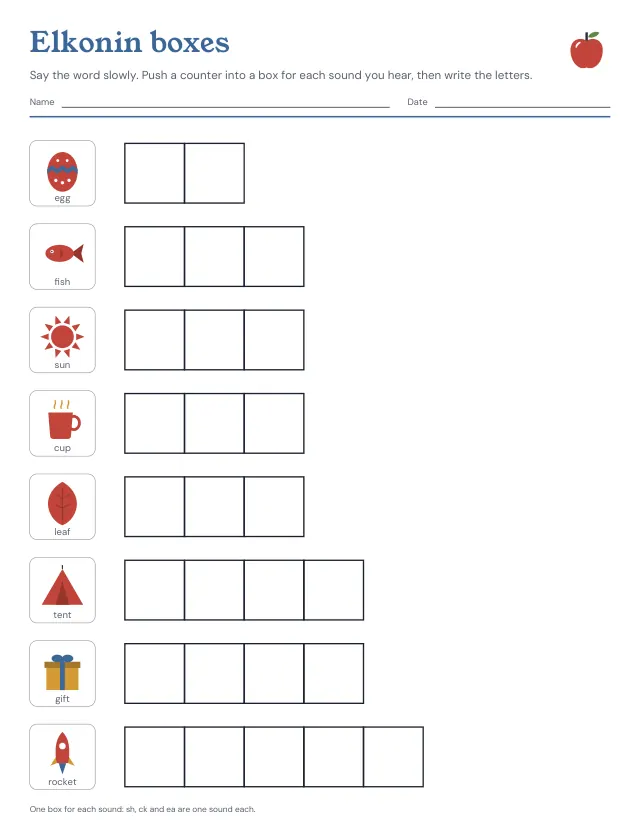
Elkonin boxes, or sound boxes: eight pictures to name, each with a box for every sound in its word, from egg with two sounds to rocket with five. Type your own words and how many sounds each has to make your own sheet.
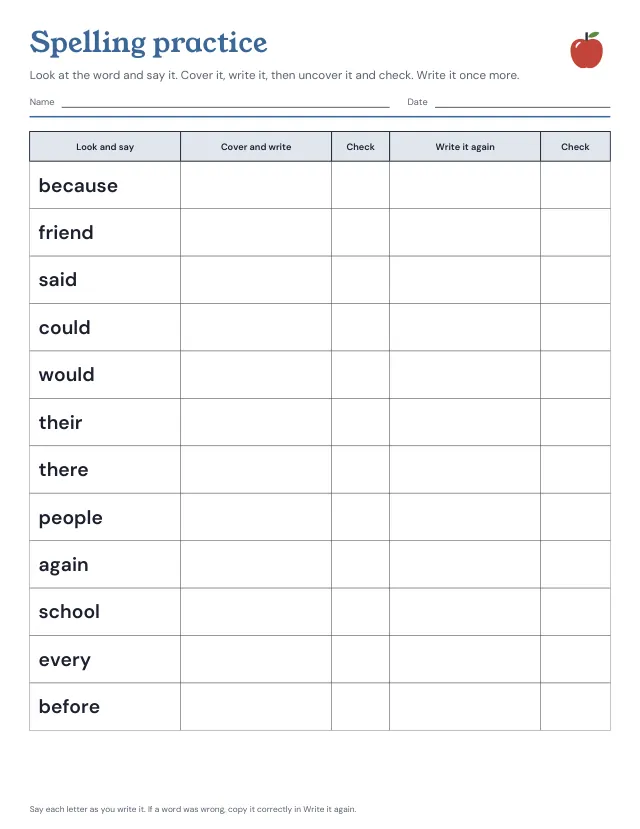
Look, say, cover, write, check: each word in the first column to read aloud, then columns to write it from memory, check it and write it again. Type this week’s spelling words, up to 15 a sheet, or print the twelve everyday words it opens on.
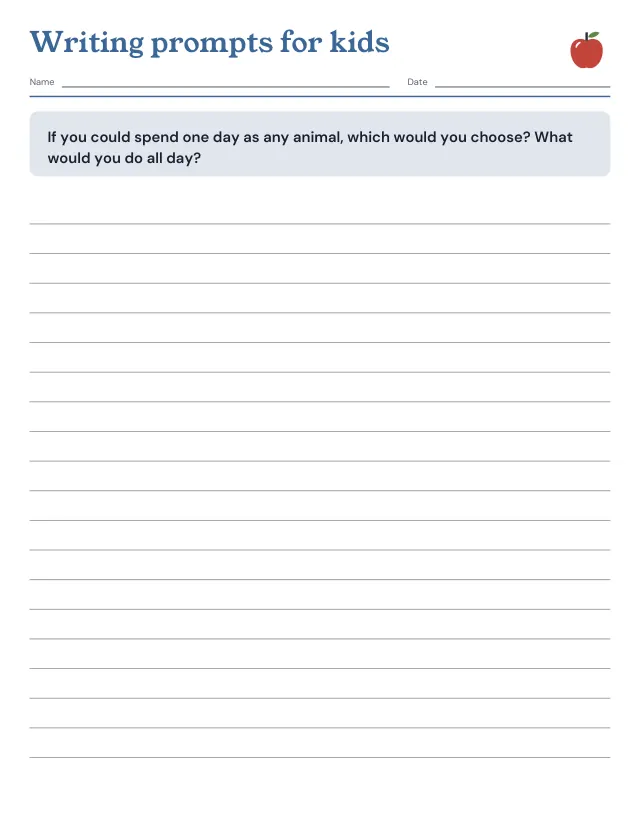
Ten writing prompts for children, one a page, each in a box at the top with ruled lines below to write on: a door that was never there, a pet that talks for a day, a new holiday to invent. Add a space to draw for younger writers, or type your own prompts.
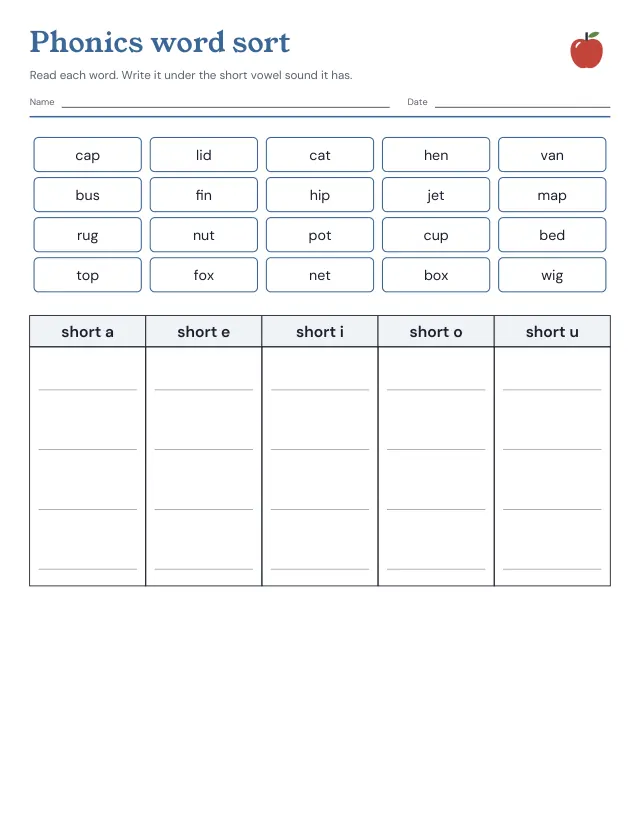
A bank of words to read and sort, four for each sound, and a column for each sound to write them in: short vowels (cat, bed, pig, dog, sun), the digraphs sh, ch, th and wh, the blends bl, cr, st and fl, or long vowel spellings (cake, tree, bike, bone, cube). The key fills in the columns. New words each time.
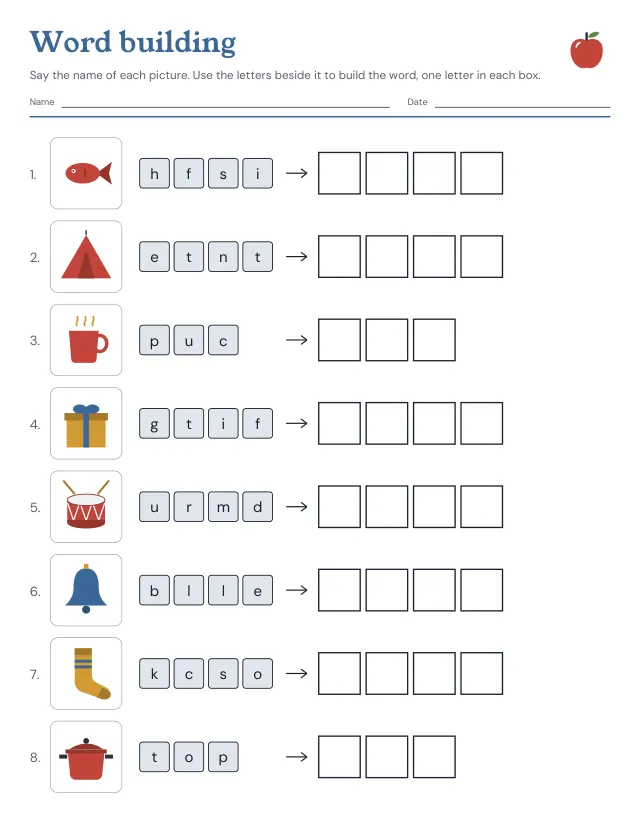
Eight pictures a page, each with its letters jumbled in tiles beside it and a box for each letter: say the name of the picture, then build the word from the tiles. Short vowel words such as sun, cup and fish, or on the harder sheet words with ee, oo, ea, ar and ir, such as tree, moon and bird. The key gives the words. Each sheet draws eight of sixteen words, so the words, their order and the tiles change each time.
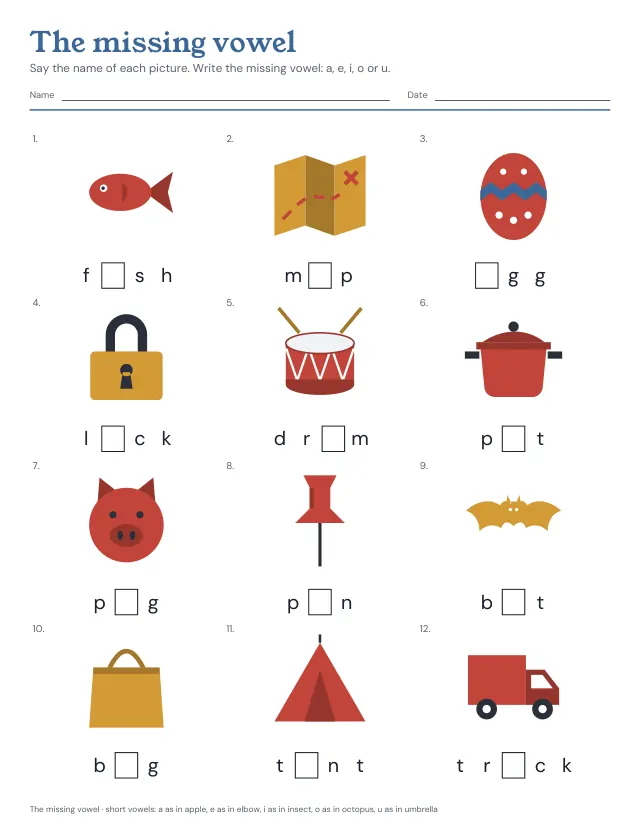
Twelve pictures a page, each a short word with a short vowel: write the missing vowel under each picture, circle the vowel sound you hear, or find the pictures with one vowel’s sound, a, e, i, o or u. The answer key follows. Each copy draws new pictures.
No sheets match that. Try a shorter word.
Use the same paper size in the PDF and printer settings. Choose Actual size or 100%. Print a sample before making copies.