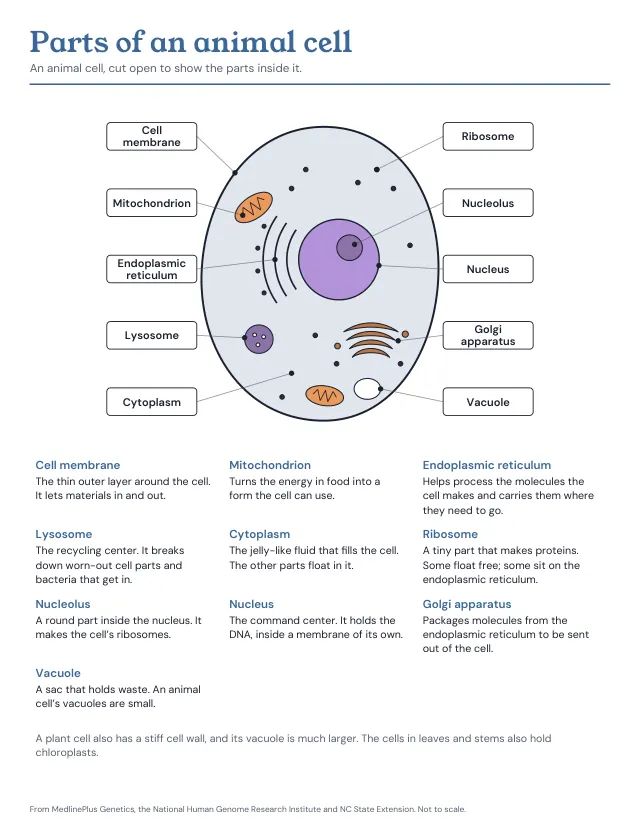
An animal cell and a plant cell, each cut open to show ten parts. Both have a cell membrane, cytoplasm, a nucleus, mitochondria, ribosomes, the endoplasmic reticulum, the Golgi apparatus and a vacuole; the animal cell also shows the nucleolus and a lysosome, the plant cell its cell wall and chloroplasts. Print either one labelled, with what each part is; to label, with empty boxes, a word bank and three questions; or with the names to cut out and glue in. The labelled sheet follows as the answer key.
What you will print
215.9 mm · 8.5 in279.4 mm
1 page · US Letter · Portrait
US Letter · 1 page
Free, with no account, email or watermark. Print at 100% or Actual size.
Make it yours
Paper size, margins and lines
Add to a planner refill
Opens the refill builder with this sheet in your page order, at your planner size.
The Sheet menu prints the animal cell or the plant cell. Labelled names the ten parts on the picture, each joined to its part by a line, and puts a sentence on each under it. To label leaves a numbered, empty box for each part, puts the names in a word bank and, on Letter and A4 in portrait, asks three questions that the answer key answers. To cut and glue prints the names in dashed tiles to cut out and glue into the boxes, then the labelled sheet as the key. In Colour the nucleus prints lavender, the mitochondria orange and the cell wall and chloroplasts green; Ink saver prints the cells as outlines, to colour in.
How a plant cell differs from an animal cell
Both have a cell membrane, cytoplasm, a nucleus and other organelles. A plant cell also has a stiff cell wall outside its membrane, made of cellulose, which helps the plant keep its shape, and a large vacuole that stores water and nutrients and can fill most of the cell; an animal cell’s vacuoles are small. The cells of leaves and stems also hold chloroplasts, with the green chlorophyll that captures sunlight to make sugar, so the plant cell on the sheet is a leaf cell. Each sheet says the difference under its picture, so a class that prints both can compare them.
One mitochondrion, many mitochondria
Mitochondria is the plural; one of them is a mitochondrion, the name the sheet gives its part. A cell has many, and cells that need more energy, such as muscle cells, have more of them. Mitochondria also have their own DNA, separate from the DNA in the nucleus, and it is generally passed down only from the mother. This follows MedlinePlus Genetics and the National Human Genome Research Institute’s Talking Glossary.
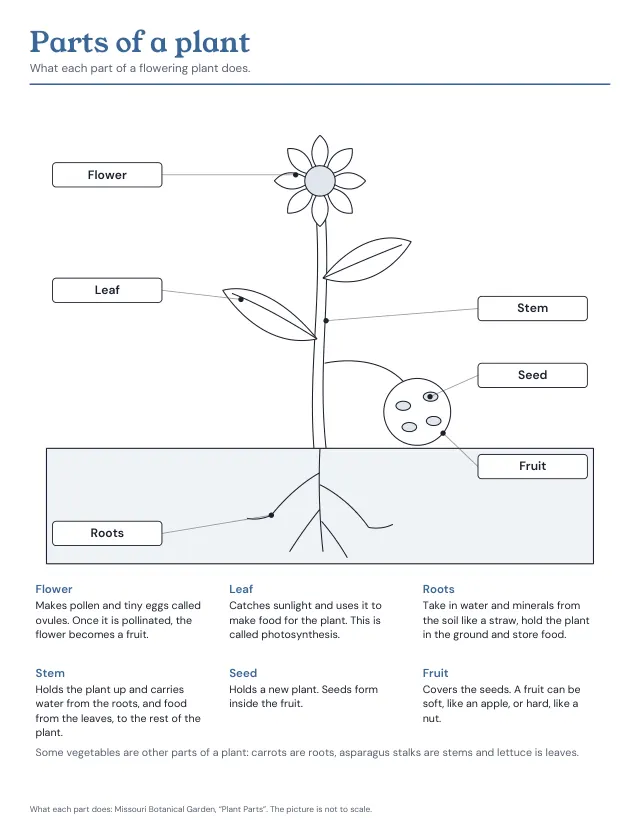
A flowering plant to label and colour: the flower, a leaf, the stem and the roots, and a fruit cut open to show its seeds. Print it labelled, with what each part does, or with empty boxes and a word bank, and the labelled sheet after it as the answer key.
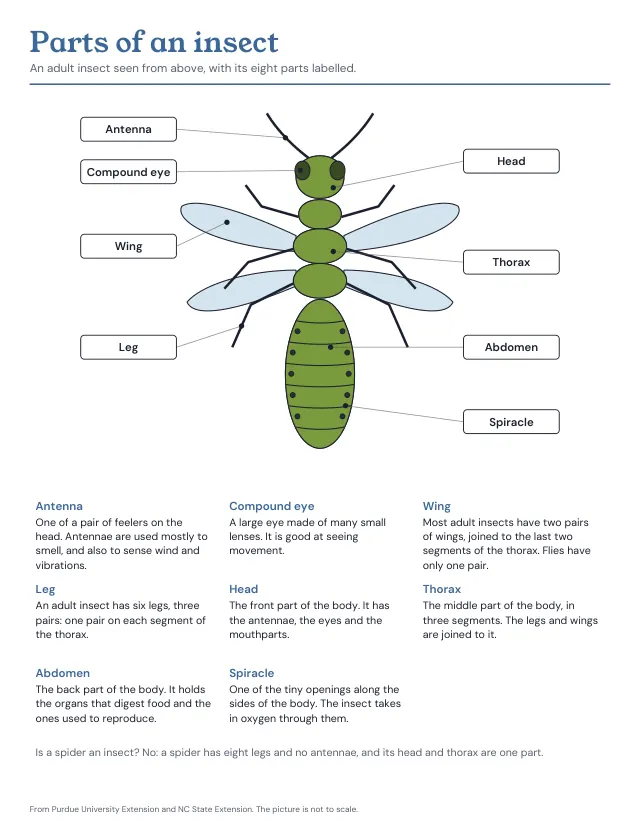
An adult insect seen from above, with its eight parts to learn: the head, an antenna, a compound eye, the thorax and the abdomen, a leg, a wing and the spiracles it breathes through. Print it labelled, with what each part is, or with empty boxes, a word bank and three questions, and the labelled sheet after it as the answer key.
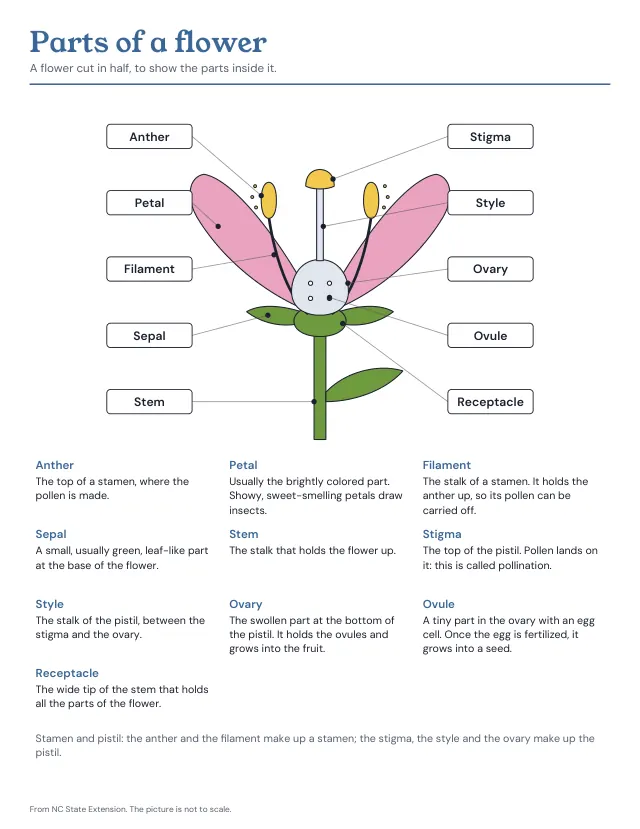
A flower cut in half to show its ten parts: the petal, the sepal, the anther and the filament of a stamen, the stigma, the style and the ovary of the pistil, the ovules inside it, the receptacle and the stem. Print it labelled, with what each part is, or with empty boxes, a word bank and four questions, and the labelled sheet after it as the answer key.
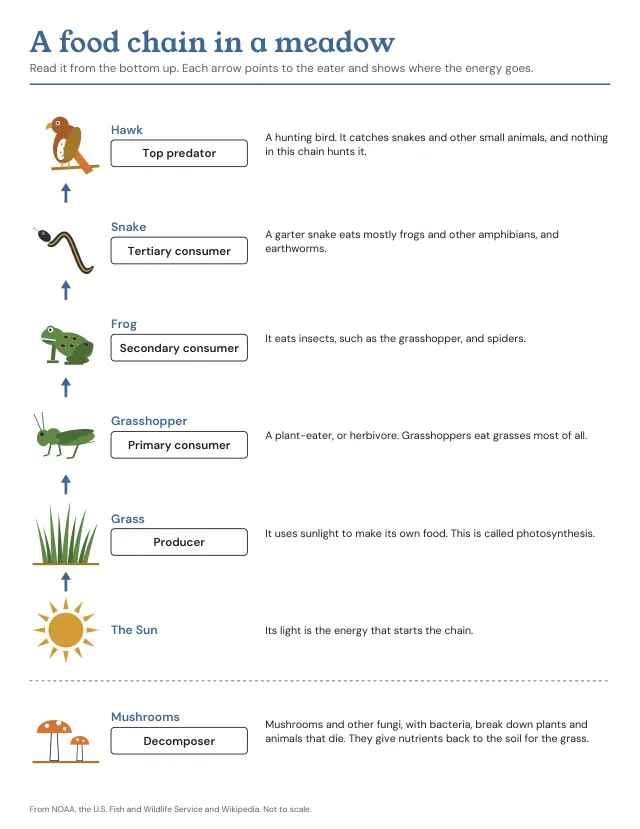
Two food chains, each read from the bottom up. In a meadow: the Sun, grass, a grasshopper, a frog, a snake and a hawk, with the mushrooms that break down whatever dies. In a kelp forest: the Sun, kelp, sea urchins and sea otters, with bacteria. Print either one labelled; to label, with a word bank and three questions; or to cut and glue in order. The labelled sheet follows as the answer key.
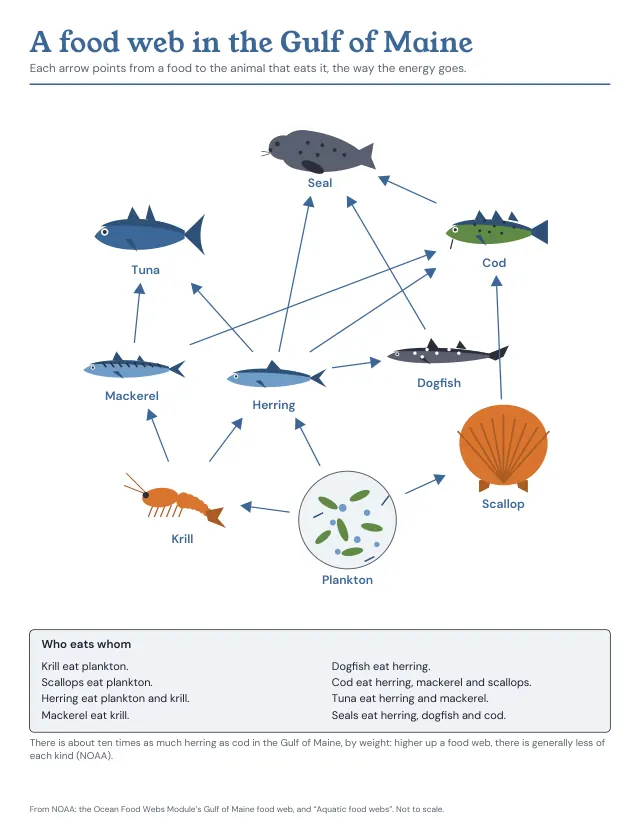
NOAA’s food web for the Gulf of Maine: plankton, krill, scallops, herring, mackerel, dogfish, cod, tuna and seals, each arrow from a food to the animal that eats it. Print it labelled, with five questions, or with the arrows left out to draw from the clues. The labelled sheet is the answer key. Or draw your own web, from a place you know.
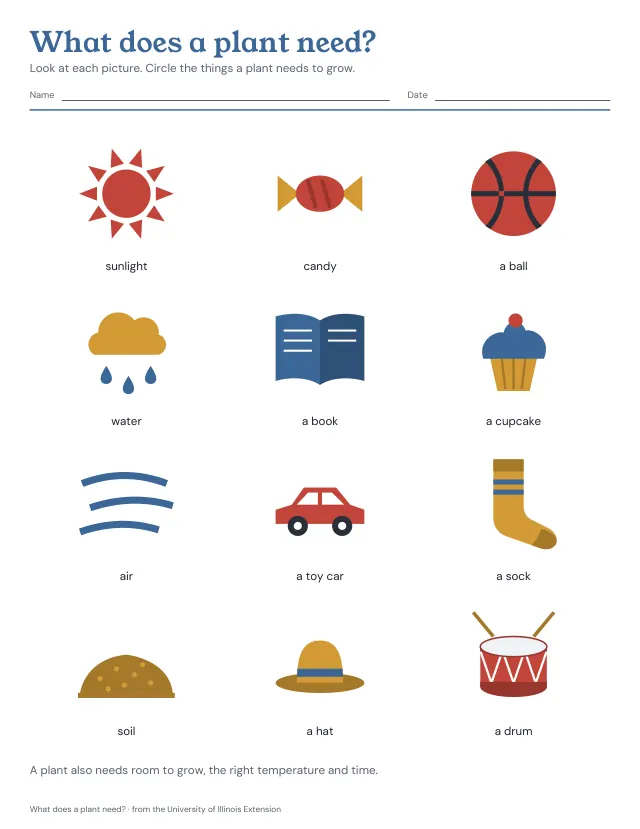
What a plant needs to grow, three ways: twelve pictures to circle the things a plant needs, with the key; the seven needs round a seedling in its pot, labelled or to label; and a two-week test of whether a plant needs light.
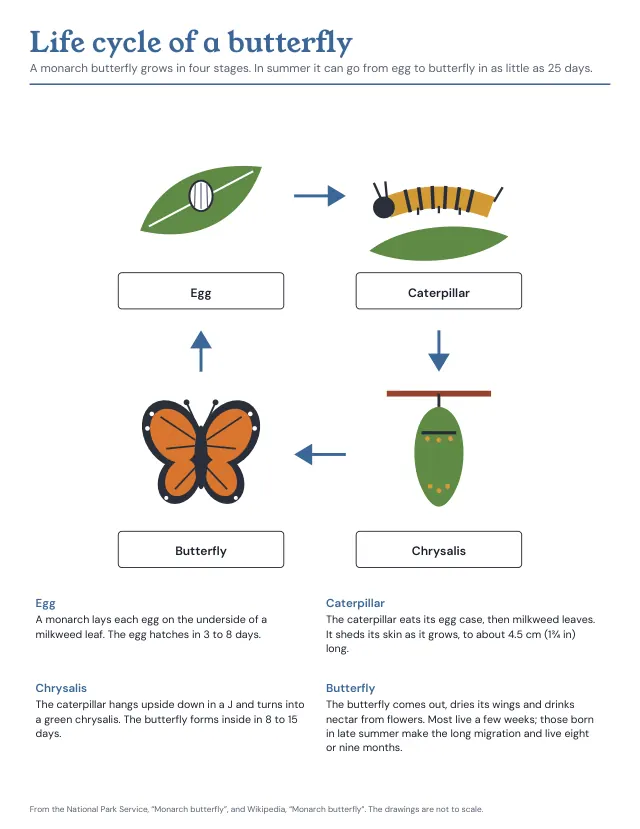
The four stages of a monarch butterfly drawn in a cycle, egg, caterpillar, chrysalis and butterfly, with an arrow from each to the next and what happens at each stage. Print it labelled, to label with a word bank, or with the four pictures to cut out and glue in order; the answer key follows.
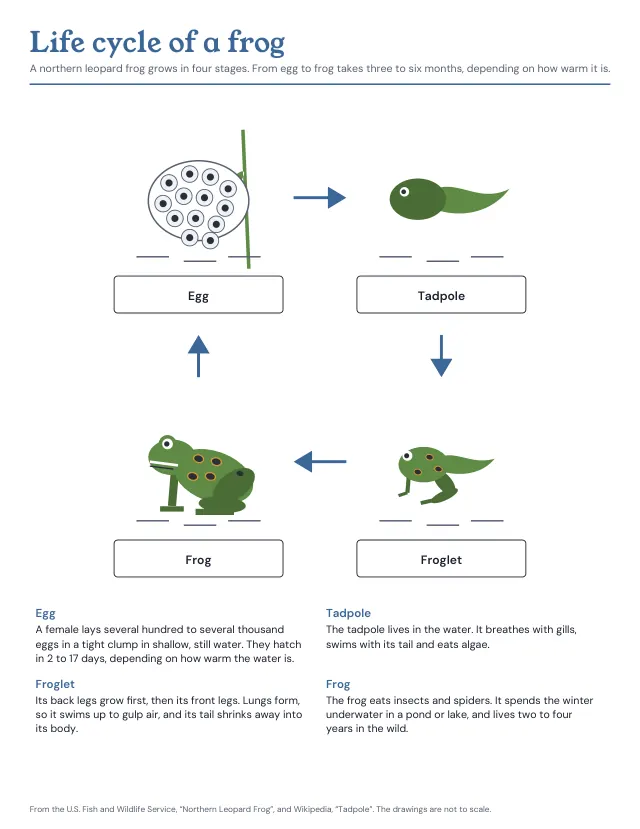
The four stages of a northern leopard frog drawn in a cycle, egg, tadpole, froglet and frog, with an arrow from each to the next and what happens at each stage. Print it labelled, to label with a word bank, or with the four pictures to cut out and glue in order; the answer key follows.
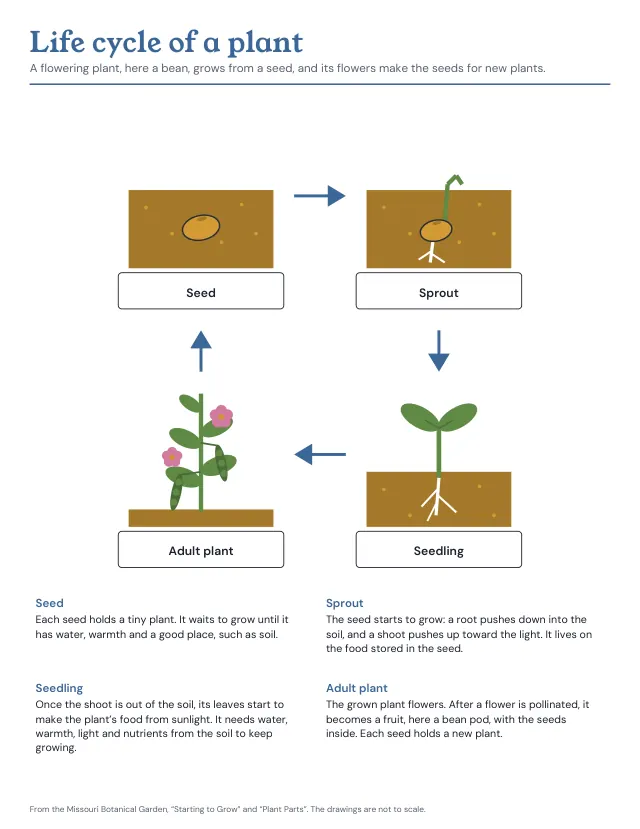
The life cycle of a flowering plant, a bean, drawn in four stages, seed, sprout, seedling and adult plant with its flowers and pods, with an arrow from each to the next and back to the seed. Print it labelled, with what happens at each stage, to label with a word bank, or to cut and glue in order; the answer key follows.
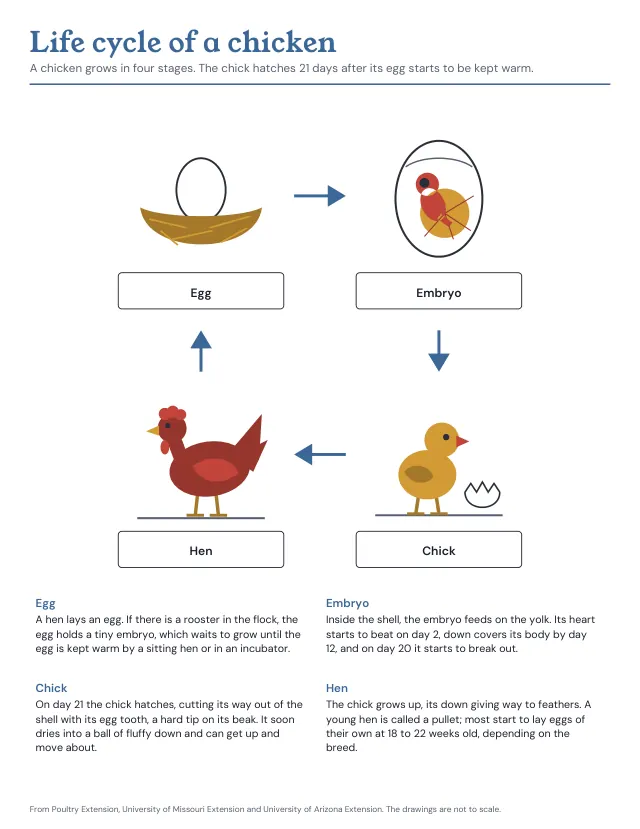
The four stages of a chicken drawn in a cycle, egg, embryo, chick and hen, with an arrow from each to the next and what happens at each stage, the days counted from the egg. Print it labelled, to label with a word bank, or with the four pictures to cut out and glue in order; the answer key follows.
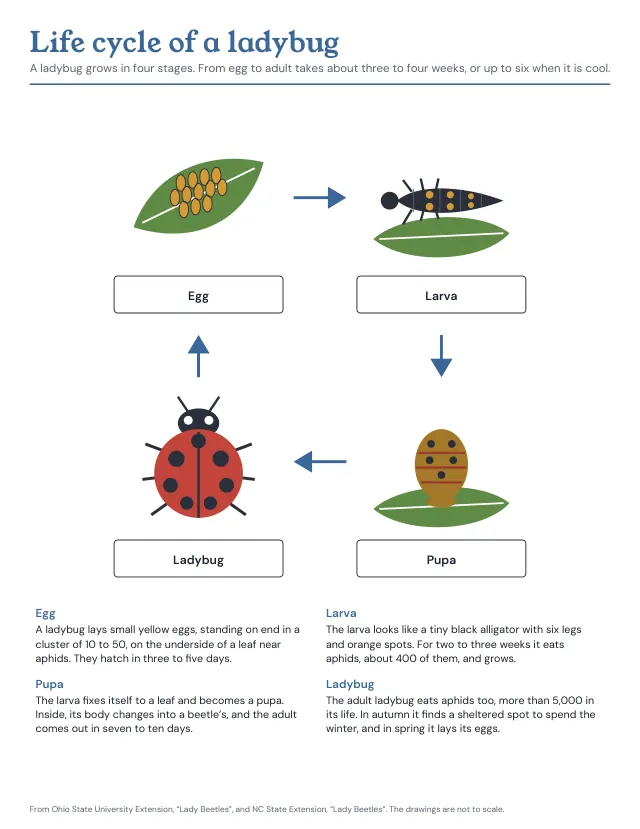
The four stages of a ladybug drawn in a cycle, eggs, larva, pupa and adult, with an arrow from each to the next and what happens at each stage. Print it labelled, to label with a word bank, or with the four pictures to cut out and glue in order; the answer key follows.
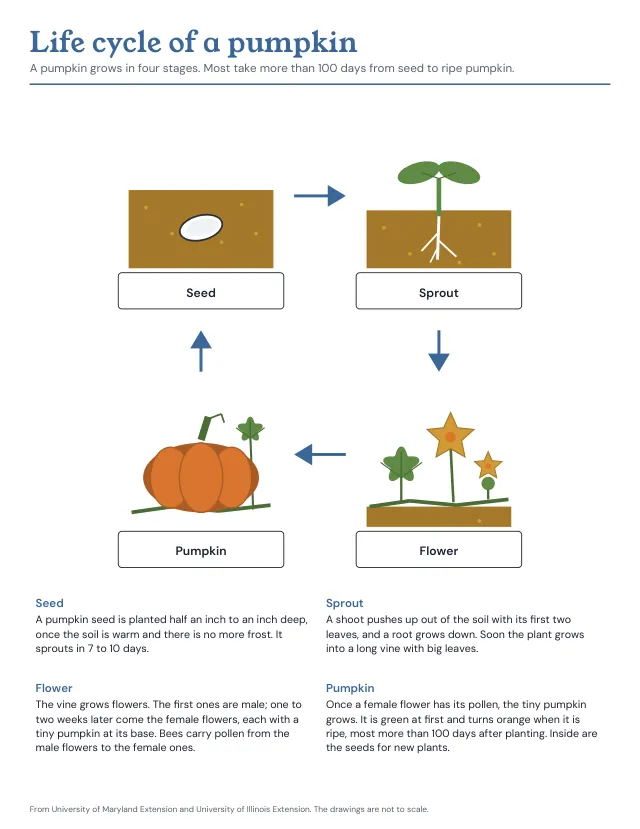
The four stages of a pumpkin drawn in a cycle, seed, sprout, flower and pumpkin, with an arrow from each to the next and back to the seed. Print it labelled, with what happens at each stage, to label with a word bank, or with the four pictures to cut out and glue in order; the answer key follows.