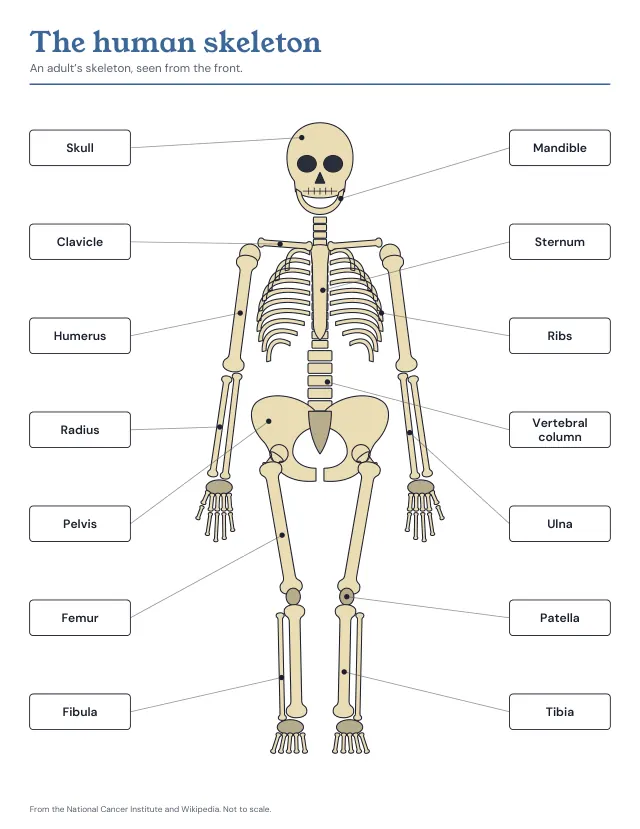
An adult’s skeleton seen from the front, with fourteen bones to name: the skull and the mandible; the clavicle, the sternum and the ribs; the vertebral column and the pelvis; the humerus, the radius and the ulna in the arm; and the femur, the patella, the tibia and the fibula in the leg. Print it labelled, with what each bone is; to label, with empty boxes, a word bank that gives each bone’s everyday name and three questions; or with the names to cut out and glue in. The labelled sheet follows as the answer key.
215.9 mm · 8.5 in279.4 mm
2 pages · US Letter · Portrait
US Letter · 2 pages
Free, with no account, email or watermark. Print at 100% or Actual size.
Make it yours
Paper size, margins and lines
Add to a planner refill
Opens the refill builder with this sheet in your page order, at your planner size.
Labelled names the fourteen bones on the picture, each joined to its bone by a line, and puts a sentence on each, with how many bones an adult has, on the page after it. To label leaves a numbered, empty box for each bone, puts the names in a word bank and, on Letter and A4 in portrait, asks three questions that the answer key answers. To cut and glue prints the names in dashed tiles to cut out and glue into the boxes, then the labelled sheet as the key. In Colour the bones print a pale ivory; Ink saver prints the skeleton as outlines, to colour in.
Science names and everyday names
Most of these bones have an everyday name as well as a science name: the clavicle is the collarbone, the sternum the breastbone, the femur the thigh bone, the patella the kneecap, the tibia the shinbone and the fibula the calf bone. The word bank prints both, so a child who knows where the kneecap is can find the patella; the answer key gives the science name. The radius and the ulna have no everyday names of their own: they are the two bones of the forearm. The skeleton stands with its palms forward, as anatomy books draw it, so the radius is on the thumb side, away from the body, and the ulna on the little finger side.
How many bones are in the human body?
An adult usually has 206 named bones, which the National Cancer Institute’s SEER Training Modules list one by one: 80 in the head, the backbone, the ribs and the breastbone, and 126 in the shoulders, arms, hips and legs. More than half of them are in the hands and feet: 54 in the two hands and 52 in the two feet. A baby is born with about 270 bones, and some of them join together on the way to the adult’s 206 (Wikipedia, “Human skeleton”).
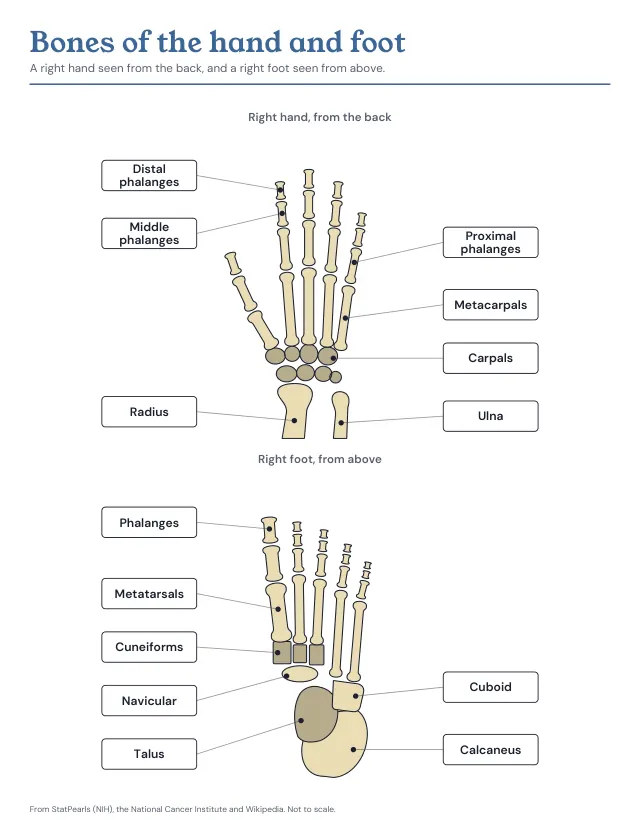
A right hand seen from the back and a right foot seen from above, with fourteen bones and groups of bones to name, from the fingertips to the heel bone. Print it labelled, to label with a word bank, or to cut and glue; the labelled sheet is the answer key.
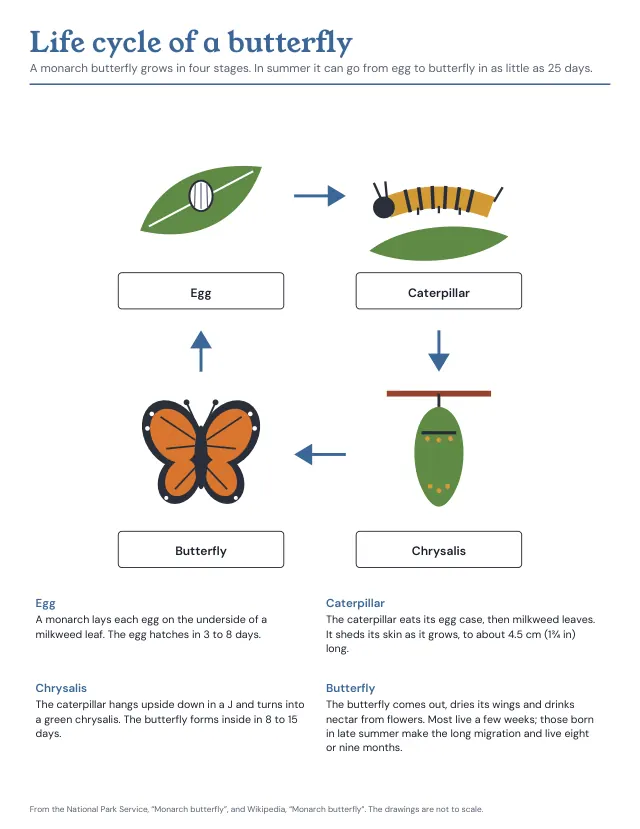
The four stages of a monarch butterfly drawn in a cycle, egg, caterpillar, chrysalis and butterfly, with an arrow from each to the next and what happens at each stage. Print it labelled, to label with a word bank, or with the four pictures to cut out and glue in order; the answer key follows.
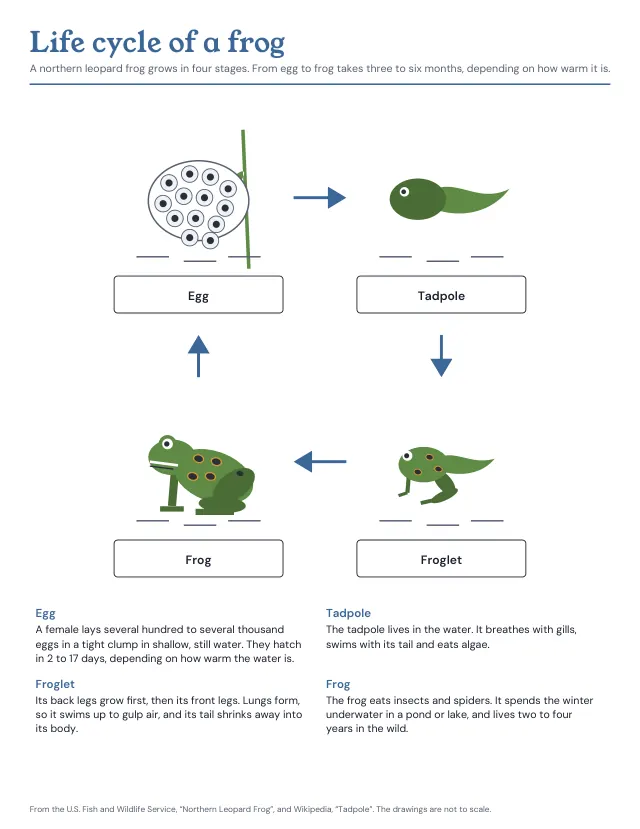
The four stages of a northern leopard frog drawn in a cycle, egg, tadpole, froglet and frog, with an arrow from each to the next and what happens at each stage. Print it labelled, to label with a word bank, or with the four pictures to cut out and glue in order; the answer key follows.
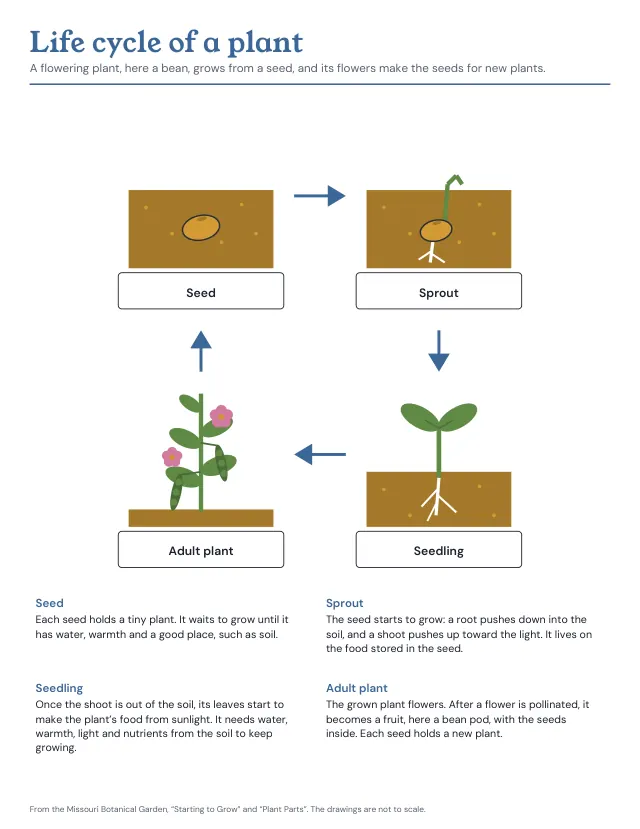
The life cycle of a flowering plant, a bean, drawn in four stages, seed, sprout, seedling and adult plant with its flowers and pods, with an arrow from each to the next and back to the seed. Print it labelled, with what happens at each stage, to label with a word bank, or to cut and glue in order; the answer key follows.
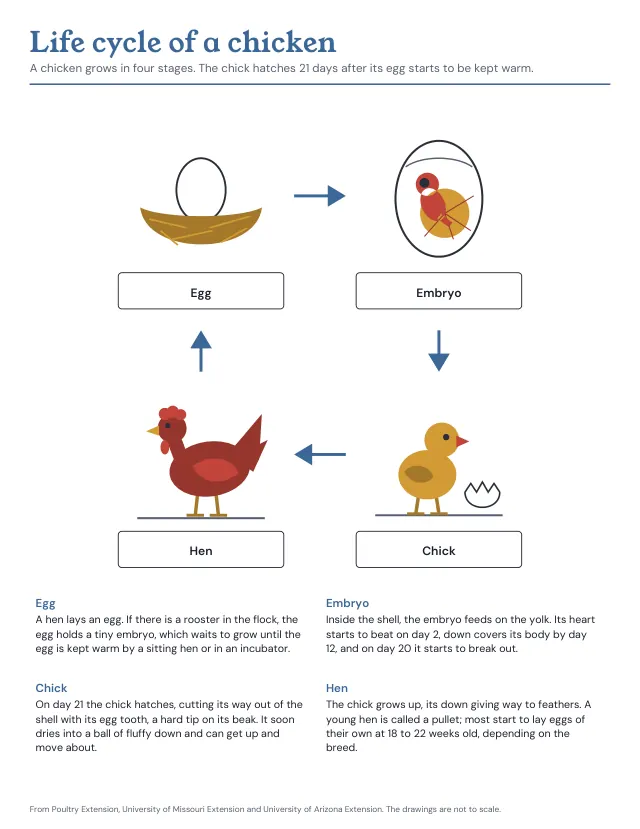
The four stages of a chicken drawn in a cycle, egg, embryo, chick and hen, with an arrow from each to the next and what happens at each stage, the days counted from the egg. Print it labelled, to label with a word bank, or with the four pictures to cut out and glue in order; the answer key follows.
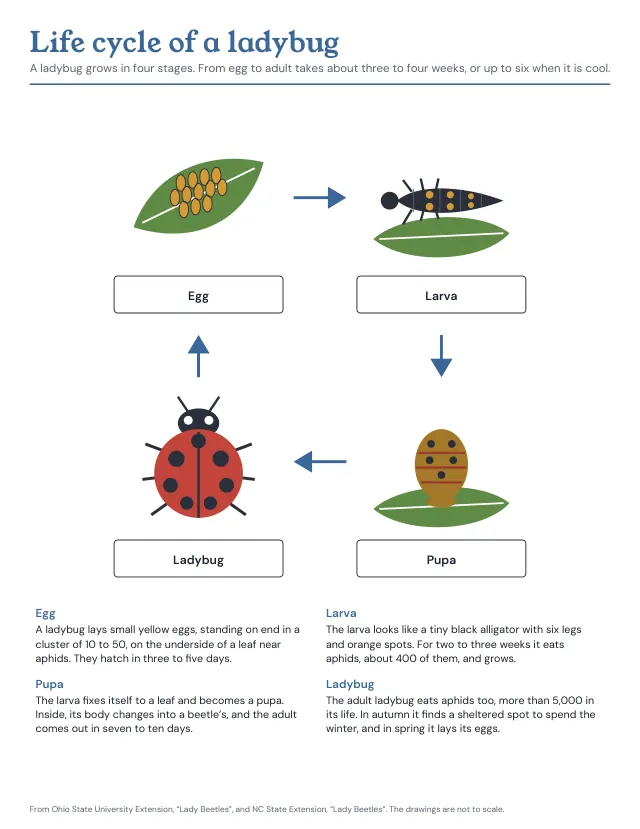
The four stages of a ladybug drawn in a cycle, eggs, larva, pupa and adult, with an arrow from each to the next and what happens at each stage. Print it labelled, to label with a word bank, or with the four pictures to cut out and glue in order; the answer key follows.
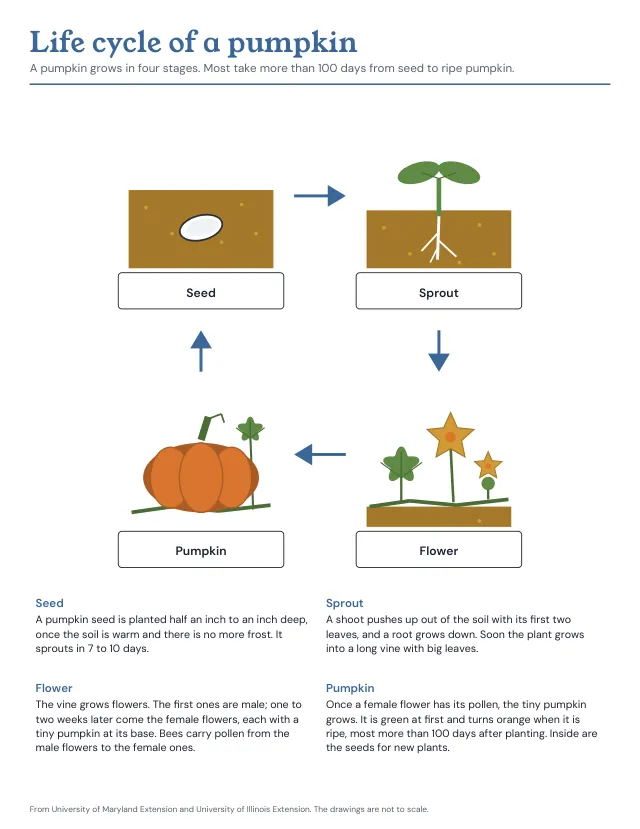
The four stages of a pumpkin drawn in a cycle, seed, sprout, flower and pumpkin, with an arrow from each to the next and back to the seed. Print it labelled, with what happens at each stage, to label with a word bank, or with the four pictures to cut out and glue in order; the answer key follows.
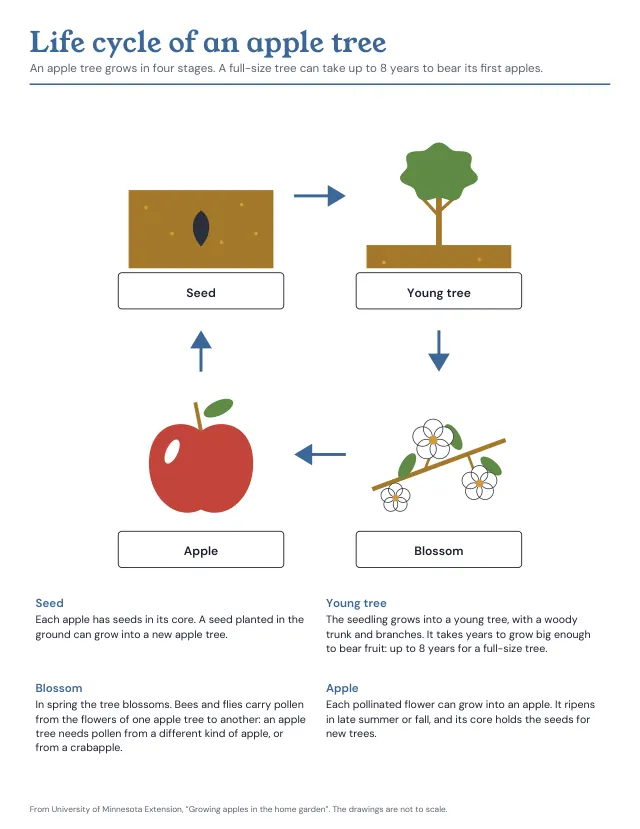
The four stages of an apple tree drawn in a cycle, seed, young tree, blossom and apple, with an arrow from each to the next and back to the seed. Print it labelled, with what happens at each stage, to label with a word bank, or with the four pictures to cut out and glue in order; the answer key follows.
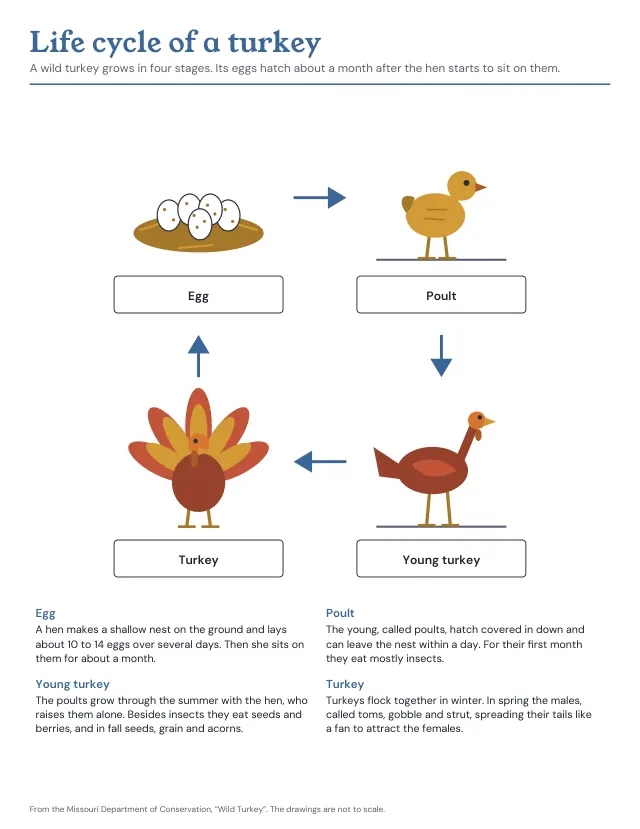
The four stages of a wild turkey drawn in a cycle, eggs in a nest, poult, young turkey and a tom with his tail spread, with an arrow from each to the next and what happens at each stage. Print it labelled, to label with a word bank, or with the four pictures to cut out and glue in order; the answer key follows.
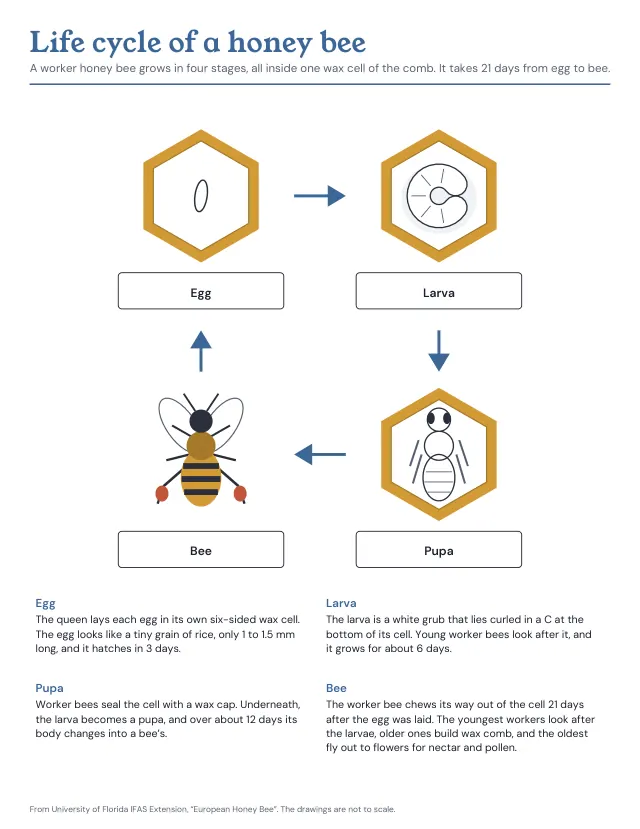
The four stages of a worker honey bee drawn in a cycle, egg, larva, pupa and bee, each in its wax cell, with an arrow from each to the next and what happens at each stage. Print it labelled, to label with a word bank, or with the four pictures to cut out and glue in order; the answer key follows.
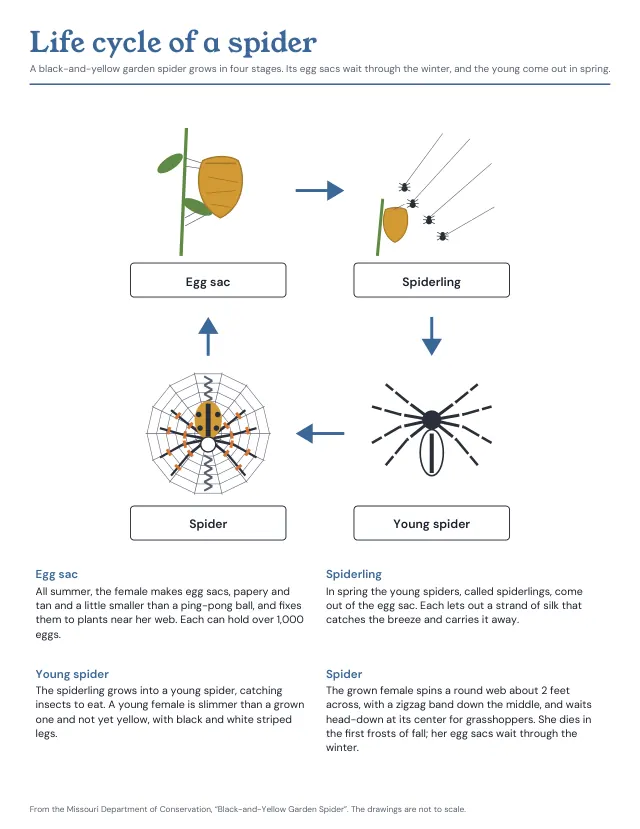
The four stages of a black-and-yellow garden spider drawn in a cycle, egg sac, spiderling, young spider and the grown spider on her web, with an arrow from each to the next and what happens at each stage. Print it labelled, to label with a word bank, or with the four pictures to cut out and glue in order; the answer key follows.
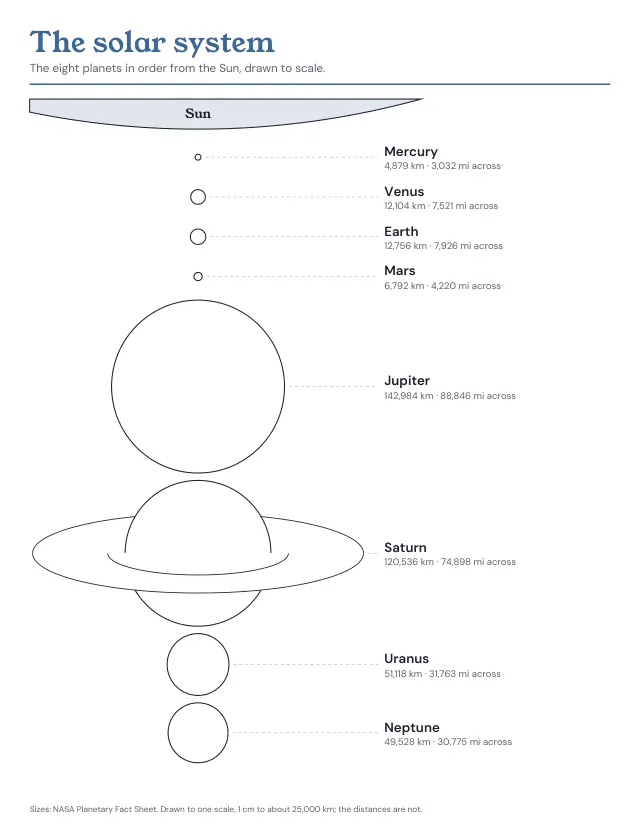
The eight planets in order from the Sun, drawn to one scale down the page, with the edge of the Sun across the top. Print them named with their sizes, with a table of facts, or with the names to write in and an answer key; the planets are left white to colour.