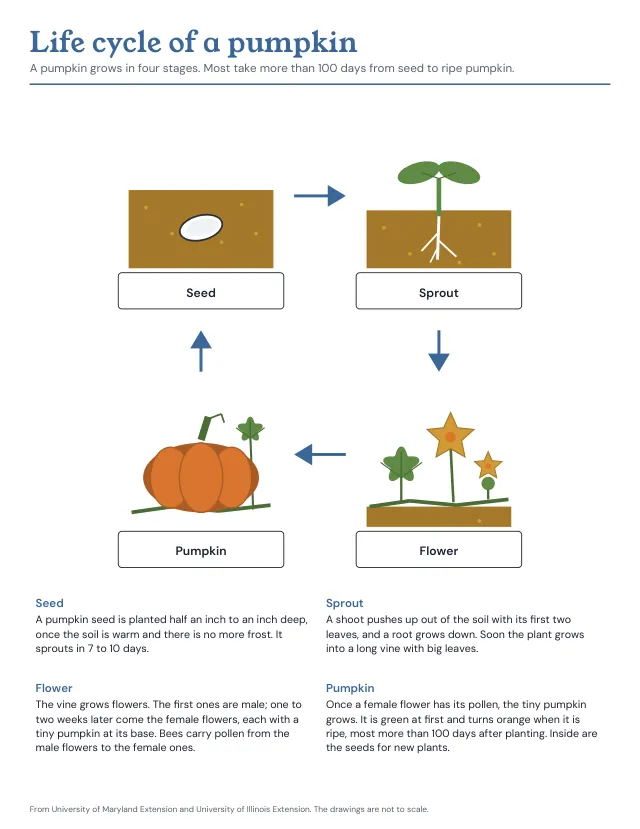
The four stages of a pumpkin drawn in a cycle, seed, sprout, flower and pumpkin, with an arrow from each to the next and back to the seed. Print it labelled, with what happens at each stage, to label with a word bank, or with the four pictures to cut out and glue in order; the answer key follows.
What you will print
215.9 mm · 8.5 in279.4 mm
1 page · US Letter · Portrait
US Letter · 1 page
Free, with no account, email or watermark. Print at 100% or Actual size.
Make it yours
Paper size, margins and lines
Add to a planner refill
Opens the refill builder with this sheet in your page order, at your planner size.
The labelled sheet explains the four stages and how long a pumpkin takes. To label, a child writes seed, sprout, flower or pumpkin in each box, with the word bank under the pictures. To cut and glue, the child cuts out the four pictures and glues them in order, following the arrows from the seed in box 1: a good first sheet for a child who is not yet writing. To cut and glue prints the labelled sheet after it as the answer key, and so does To label, then the answer key. The log is for a pumpkin grown in the garden: a child writes the day the seed was planted, then the date each stage first appears and the days since the one before, and draws it in the box.
Why the first flowers fall off
A family growing a pumpkin often worries when the first flowers drop without making one. That is normal: the first flowers are almost always male, and each blooms for one day and falls off. Their pollen brings the bees, which carry it to the female flowers that open later. A female flower has a tiny pumpkin at its base; a male flower has none. This follows University of Illinois Extension.
Growing one for Halloween
To have a pumpkin ready for Halloween, plant it from late May in the north to early July in the far south, once the soil is warm and the frost is over. Planted too early, a pumpkin may soften and rot before Halloween, as University of Illinois Extension warns. The seeds inside a jack-o’-lantern close the cycle: a class can scoop them out and count them. Saved and planted next spring, they may not grow the same pumpkin. Bees carry pollen a mile or more, so the flower may have had pollen from a squash or another pumpkin nearby, and a cross like that shows only in the plants its seeds grow, as University of Illinois Extension explains. Every apple seed grows a different apple, too.
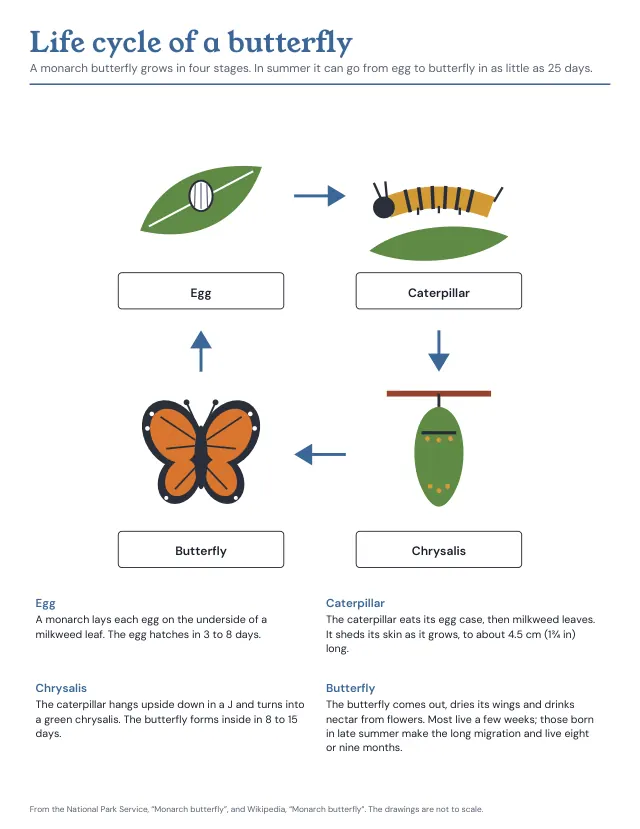
The four stages of a monarch butterfly drawn in a cycle, egg, caterpillar, chrysalis and butterfly, with an arrow from each to the next and what happens at each stage. Print it labelled, to label with a word bank, or with the four pictures to cut out and glue in order; the answer key follows.
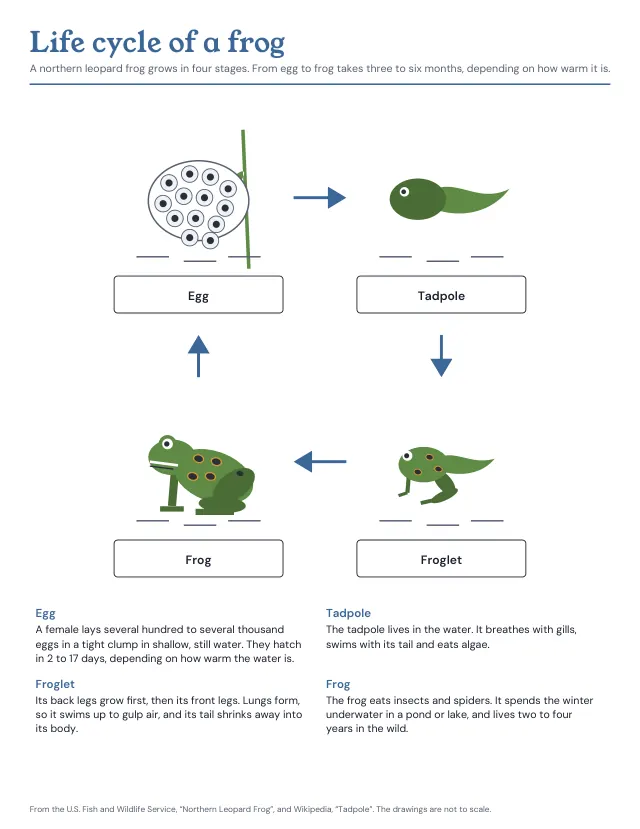
The four stages of a northern leopard frog drawn in a cycle, egg, tadpole, froglet and frog, with an arrow from each to the next and what happens at each stage. Print it labelled, to label with a word bank, or with the four pictures to cut out and glue in order; the answer key follows.
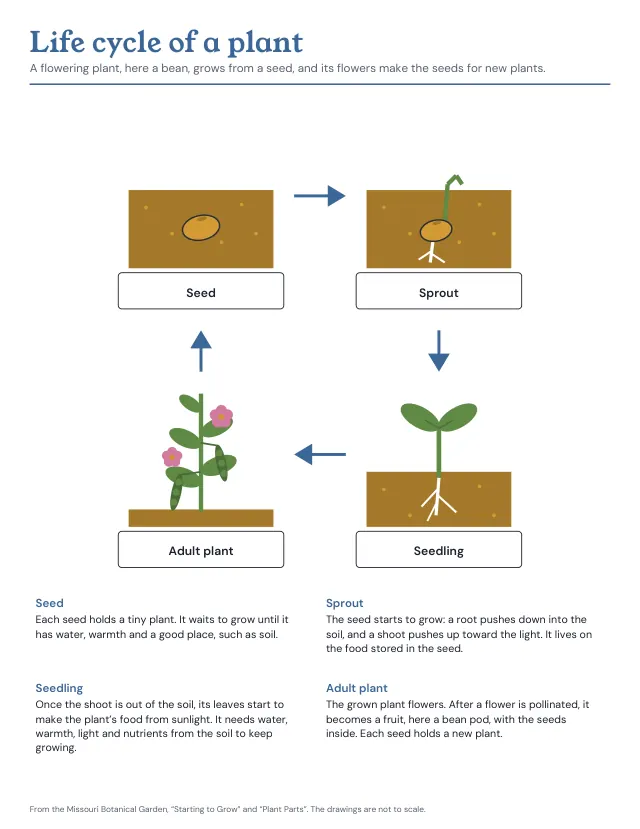
The life cycle of a flowering plant, a bean, drawn in four stages, seed, sprout, seedling and adult plant with its flowers and pods, with an arrow from each to the next and back to the seed. Print it labelled, with what happens at each stage, to label with a word bank, or to cut and glue in order; the answer key follows.
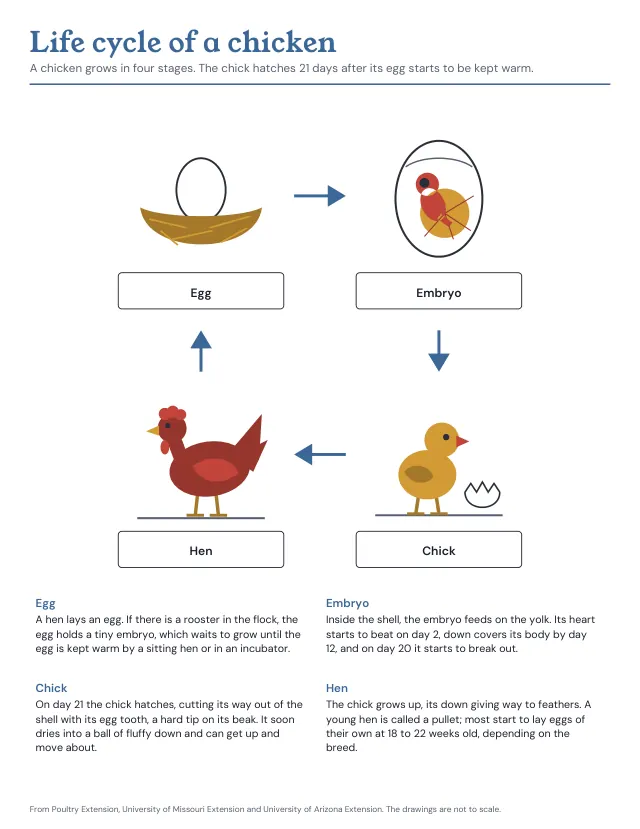
The four stages of a chicken drawn in a cycle, egg, embryo, chick and hen, with an arrow from each to the next and what happens at each stage, the days counted from the egg. Print it labelled, to label with a word bank, or with the four pictures to cut out and glue in order; the answer key follows.
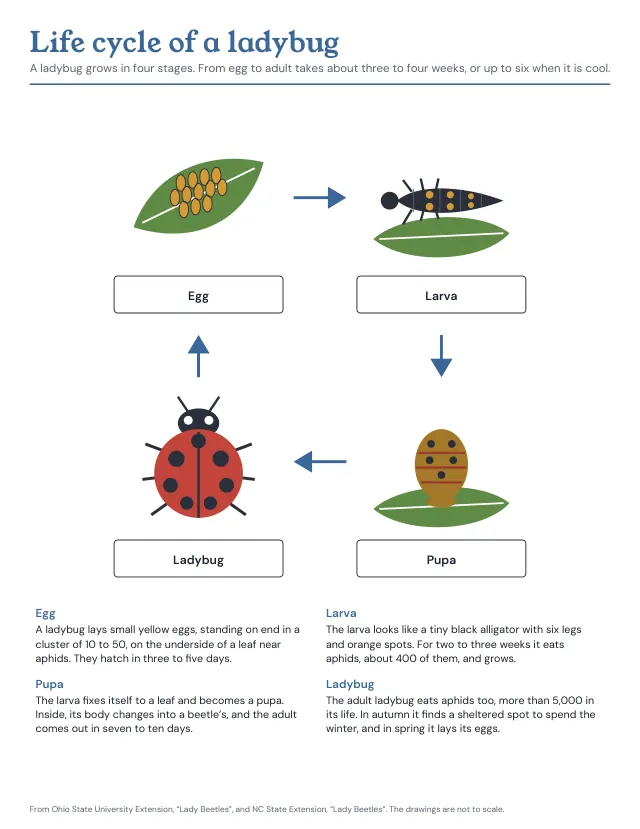
The four stages of a ladybug drawn in a cycle, eggs, larva, pupa and adult, with an arrow from each to the next and what happens at each stage. Print it labelled, to label with a word bank, or with the four pictures to cut out and glue in order; the answer key follows.
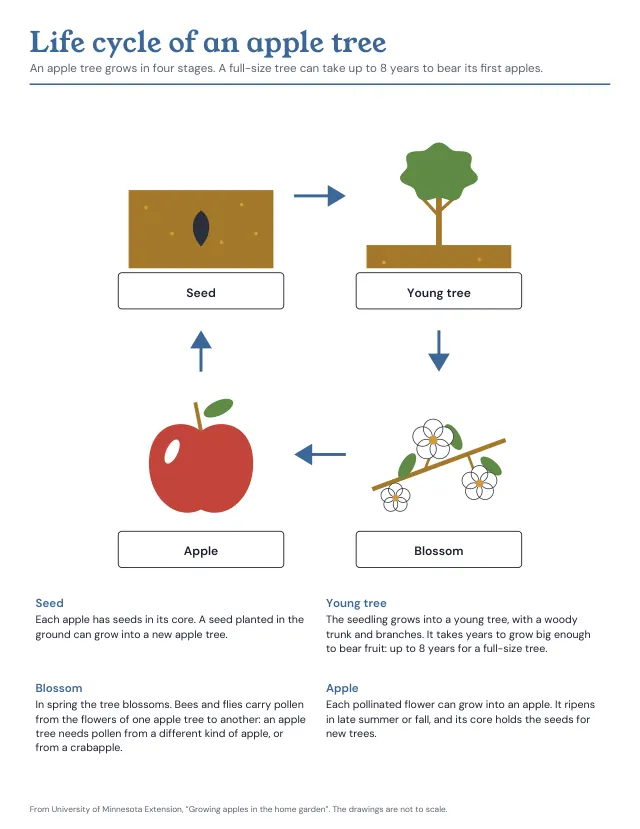
The four stages of an apple tree drawn in a cycle, seed, young tree, blossom and apple, with an arrow from each to the next and back to the seed. Print it labelled, with what happens at each stage, to label with a word bank, or with the four pictures to cut out and glue in order; the answer key follows.
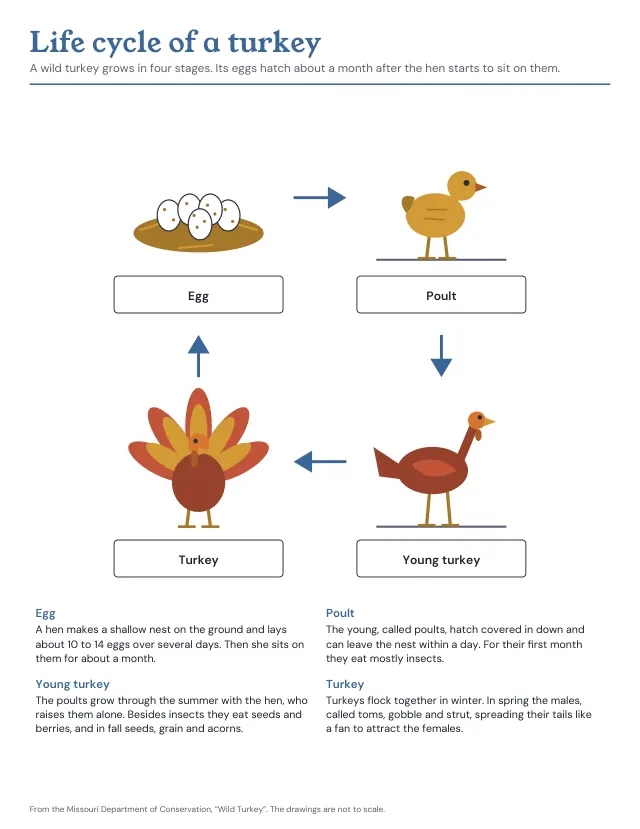
The four stages of a wild turkey drawn in a cycle, eggs in a nest, poult, young turkey and a tom with his tail spread, with an arrow from each to the next and what happens at each stage. Print it labelled, to label with a word bank, or with the four pictures to cut out and glue in order; the answer key follows.
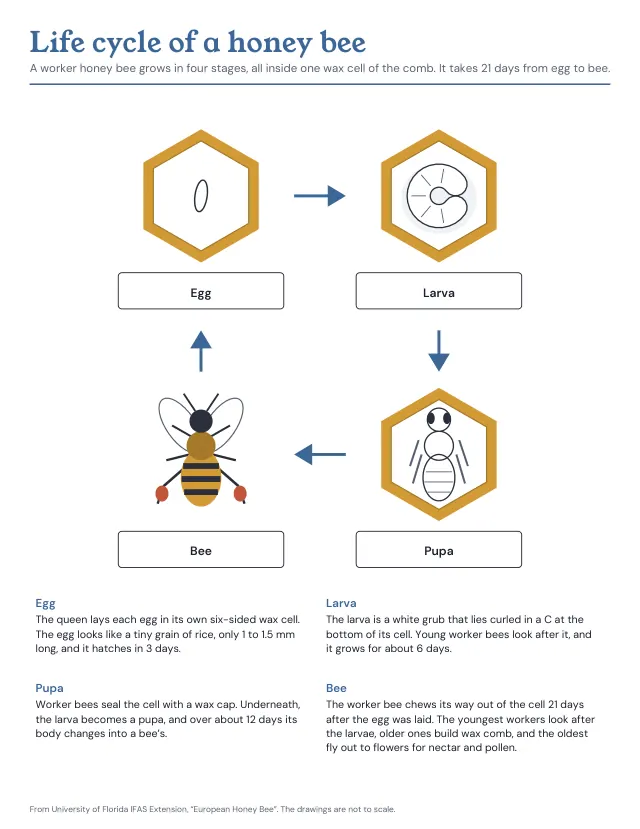
The four stages of a worker honey bee drawn in a cycle, egg, larva, pupa and bee, each in its wax cell, with an arrow from each to the next and what happens at each stage. Print it labelled, to label with a word bank, or with the four pictures to cut out and glue in order; the answer key follows.
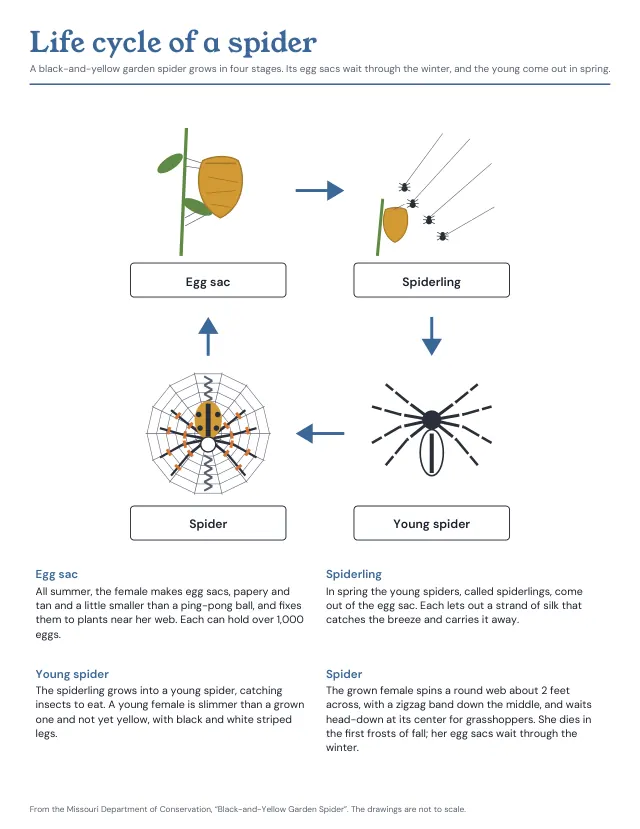
The four stages of a black-and-yellow garden spider drawn in a cycle, egg sac, spiderling, young spider and the grown spider on her web, with an arrow from each to the next and what happens at each stage. Print it labelled, to label with a word bank, or with the four pictures to cut out and glue in order; the answer key follows.
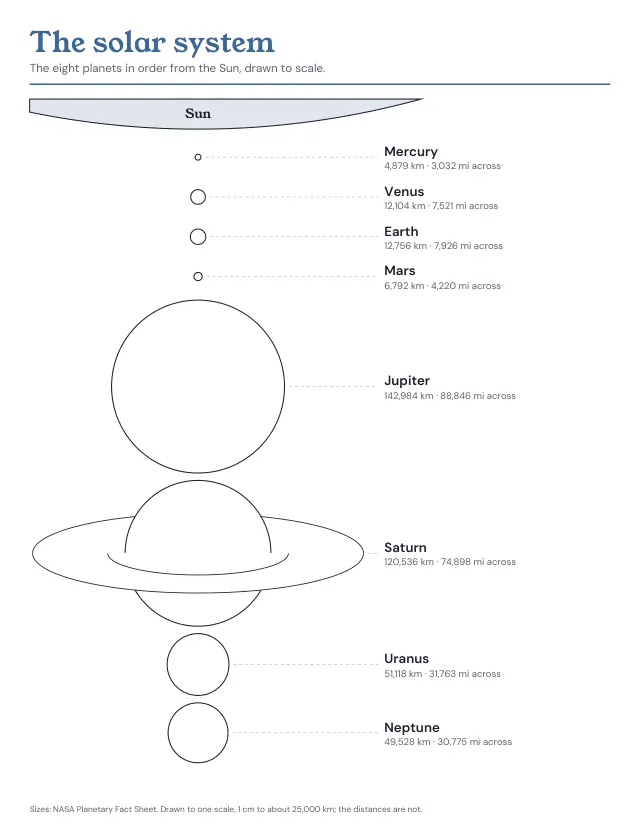
The eight planets in order from the Sun, drawn to one scale down the page, with the edge of the Sun across the top. Print them named with their sizes, with a table of facts, or with the names to write in and an answer key; the planets are left white to colour.
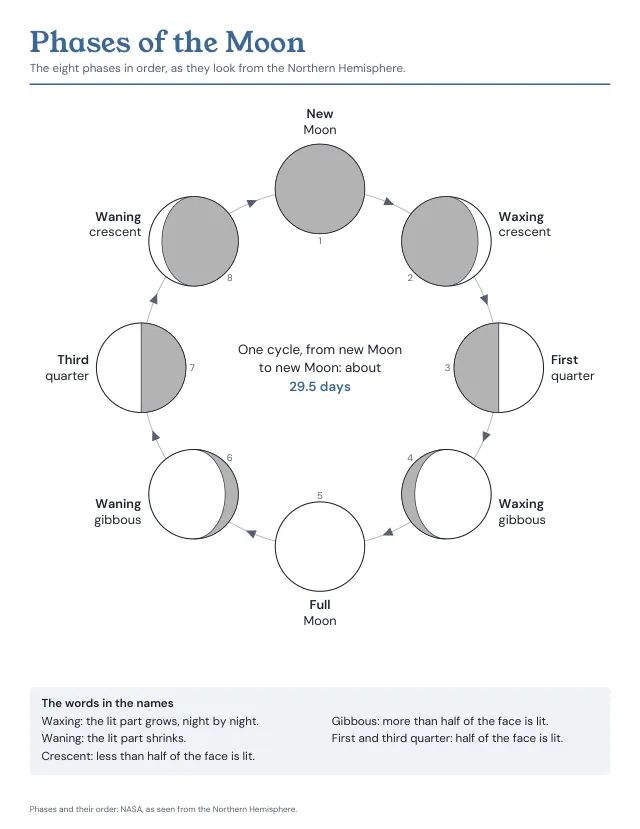
The eight phases of the Moon in order round a ring, from the new Moon to the waning crescent, with the 29.5 days one cycle takes in the middle. Print them named, to name with a word bank and an answer key, or to shade, or print a Moon journal to draw the real Moon on 30 nights.
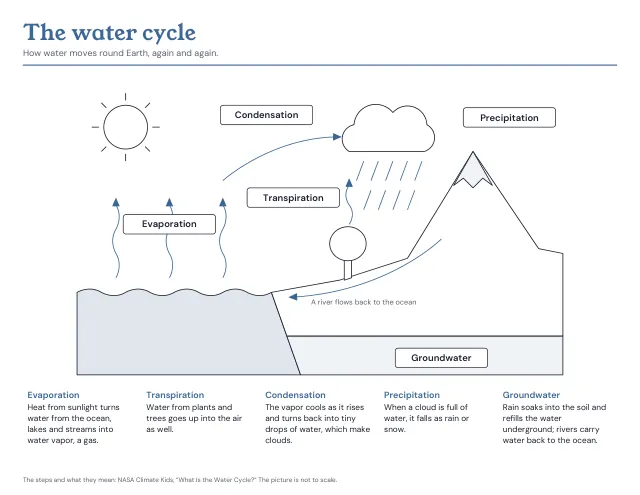
A picture of the water cycle to print: the ocean, the land, a tree, a mountain, a cloud and the Sun, with evaporation, transpiration, condensation, precipitation and groundwater marked on it and what each step means under it. Print it labelled, or with empty boxes and a word bank, and the labelled one after it as the answer key.