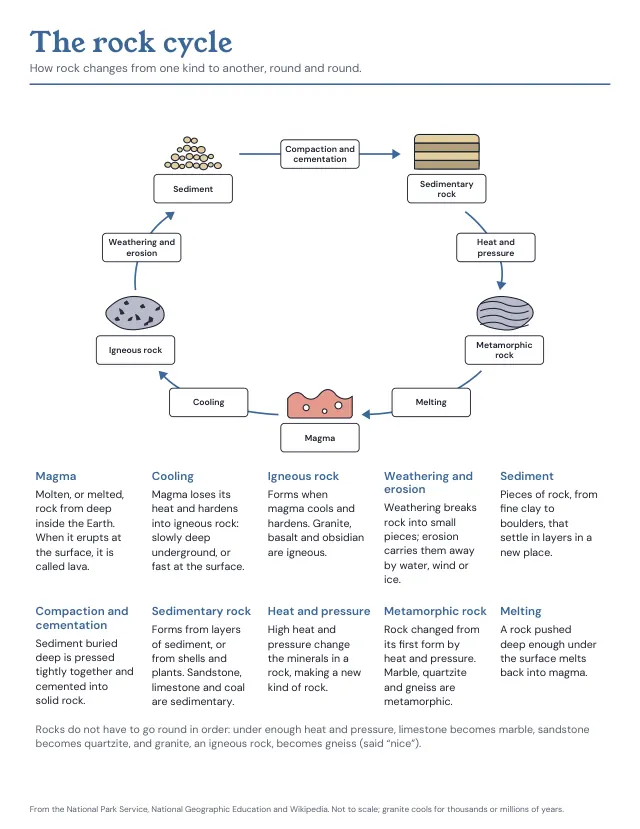
Magma, igneous rock, sediment, sedimentary rock and metamorphic rock round one loop, with the change between each on its arrow. Print it labelled, to label, to cut and glue, or to sort, each with its key.
What you will print
215.9 mm · 8.5 in279.4 mm
1 page · US Letter · Portrait
US Letter · 1 page
Free, with no account, email or watermark. Print at 100% or Actual size.
Make it yours
Paper size, margins and lines
Add to a planner refill
Opens the refill builder with this sheet in your page order, at your planner size.
Labelled names the five stops and the five changes on the picture and puts a sentence on each under it, in the order the cycle runs, or on the page after it where the paper is too small for both. To label leaves a numbered, empty box for each, numbered round the loop from the magma, puts the names in a word bank, and on Letter and A4 upright asks three questions that the answer key answers. To cut and glue prints the names in dashed tiles to cut out and glue into the boxes, then the labelled sheet as the key. Sort the rocks lists the ten rocks the sheet names, from granite to gneiss, to write in a column for each kind under its picture and what makes a rock that kind, with one more line in each column than the most it needs, so the lines do not give the count away; on Letter and A4 upright it asks three questions, the first about granite turning into gneiss, and the key writes each rock in its column. Ink saver prints the rocks as outlines, to colour in.
The three kinds of rock
The National Park Service sorts rocks by how they form. Igneous rocks form when magma, molten rock from deep within the Earth, cools and hardens. Sedimentary rocks form from pieces of older rock, or of once-living things such as shells and plants: the pieces are loosened by weathering, carried away by erosion, and when buried deep, pressed together and cemented into rock. Metamorphic rocks are rocks changed from their first form by high heat, high pressure, hot fluids rich in minerals, or a mix of these.
Slow and fast cooling
Magma that cools deep underground hardens very slowly, so its mineral grains have time to grow large, the National Park Service explains; granite, speckled with them, spent thousands or millions of years cooling, National Geographic Education adds. Lava cools faster at the surface, so basalt has very small grains, and obsidian cools so quickly that it turns into volcanic glass. Pumice is full of holes, left by gas bubbles trapped as it cooled.
Which way round?
The sheet’s arrows show one way round, from magma back to magma, but rocks can take other paths. Under enough heat and pressure, limestone becomes marble and sandstone quartzite, and granite, an igneous rock, turns into gneiss, said “nice”, without ever becoming sediment. Any rock pushed deep enough under the surface can melt into magma and start again.
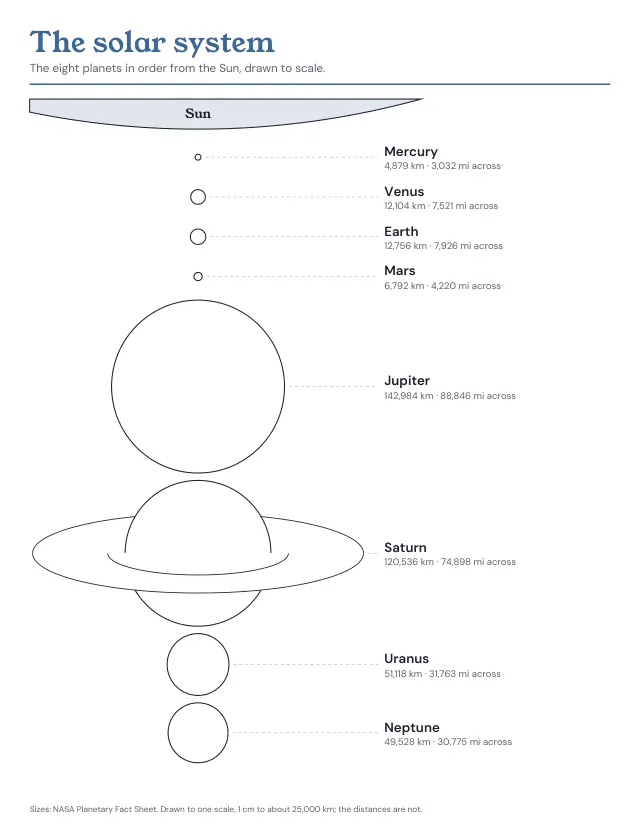
The eight planets in order from the Sun, drawn to one scale down the page, with the edge of the Sun across the top. Print them named with their sizes, with a table of facts, or with the names to write in and an answer key; the planets are left white to colour.
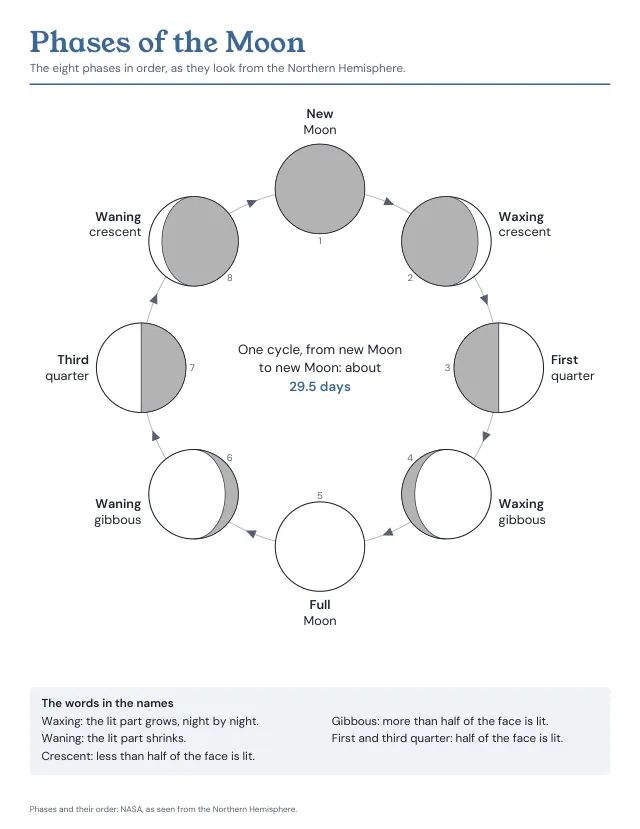
The eight phases of the Moon in order round a ring, from the new Moon to the waning crescent, with the 29.5 days one cycle takes in the middle. Print them named, to name with a word bank and an answer key, or to shade, or print a Moon journal to draw the real Moon on 30 nights.
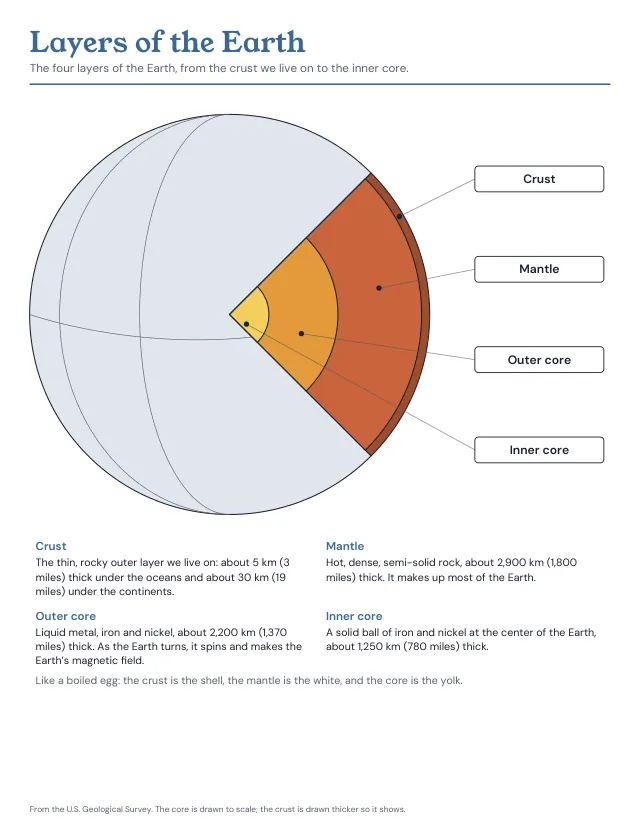
The Earth cut open to show its four layers, the crust, the mantle, the outer core and the inner core, with the core drawn to scale. Print it labelled, with what each layer is and how thick, or with empty boxes and a word bank, and the labelled sheet after it as the answer key. For grades 6 to 8, the same sheets come with six layers, the lithosphere and the asthenosphere added.
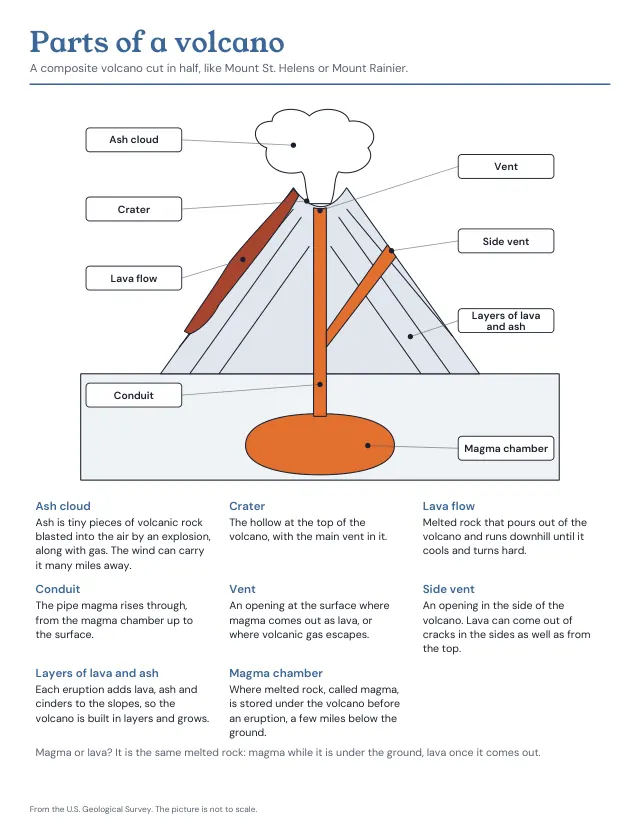
A volcano cut in half to show its eight parts: the magma chamber, the conduit, the vent and the crater, a side vent, a lava flow, the ash cloud and the layers it is built of. Print it labelled, with what each part is, or with empty boxes and a word bank, and the labelled sheet after it as the answer key. A second sheet draws the four kinds of volcano side by side: a cinder cone, a composite volcano, a shield volcano and a lava dome.
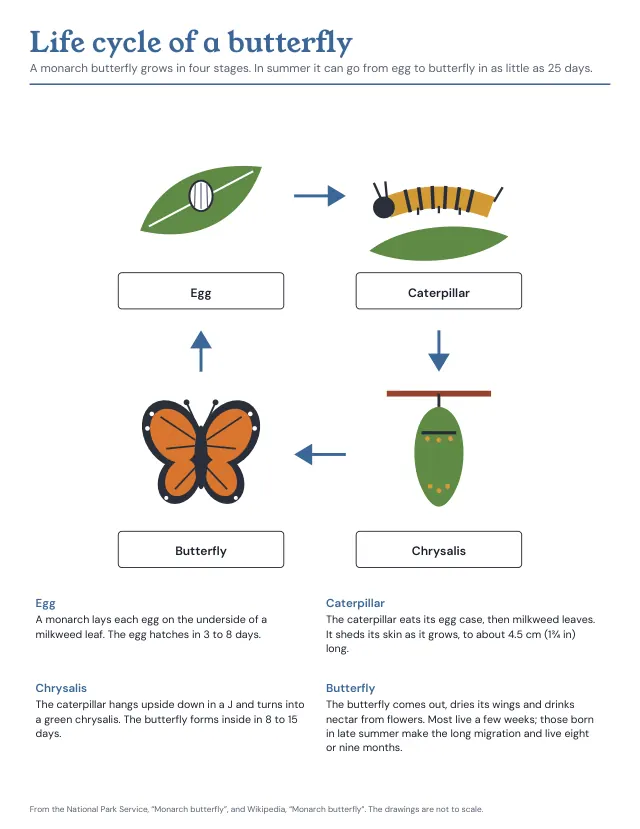
The four stages of a monarch butterfly drawn in a cycle, egg, caterpillar, chrysalis and butterfly, with an arrow from each to the next and what happens at each stage. Print it labelled, to label with a word bank, or with the four pictures to cut out and glue in order; the answer key follows.
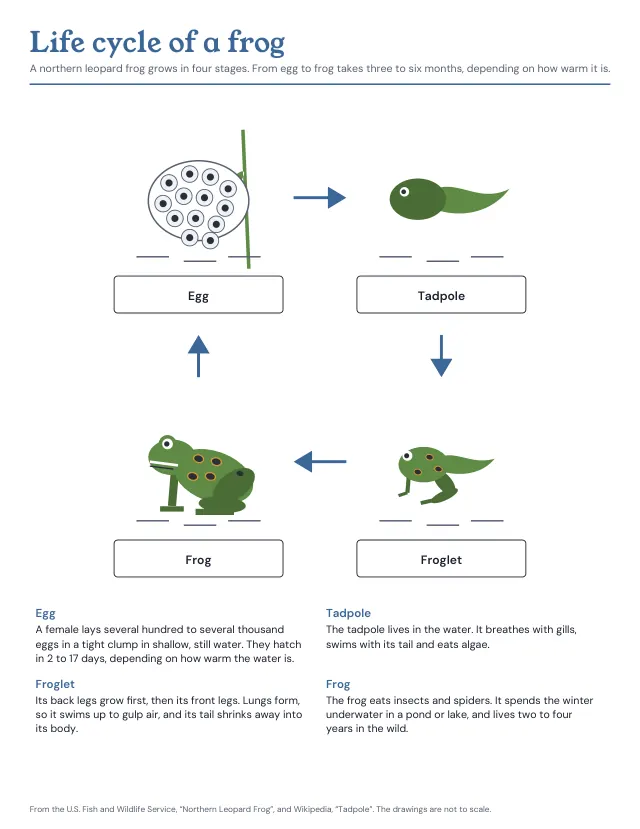
The four stages of a northern leopard frog drawn in a cycle, egg, tadpole, froglet and frog, with an arrow from each to the next and what happens at each stage. Print it labelled, to label with a word bank, or with the four pictures to cut out and glue in order; the answer key follows.
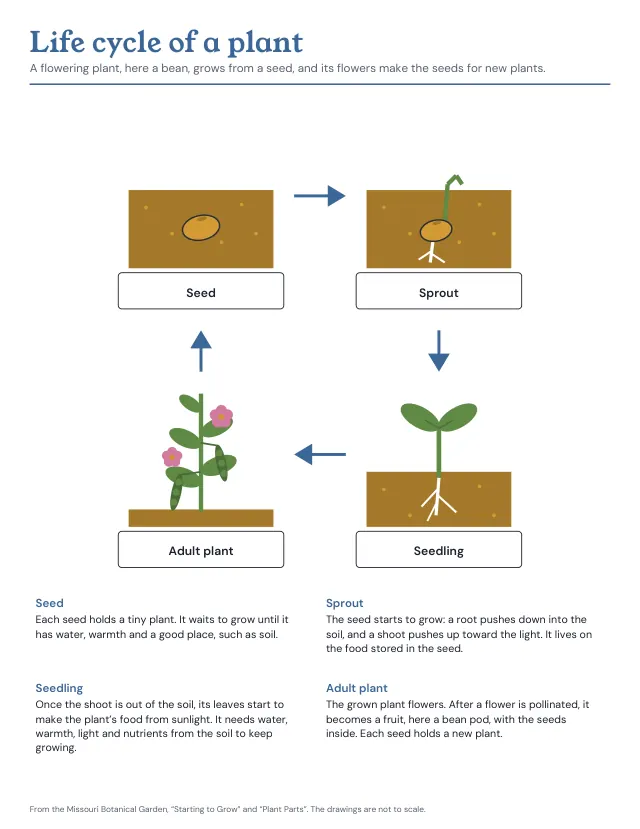
The life cycle of a flowering plant, a bean, drawn in four stages, seed, sprout, seedling and adult plant with its flowers and pods, with an arrow from each to the next and back to the seed. Print it labelled, with what happens at each stage, to label with a word bank, or to cut and glue in order; the answer key follows.
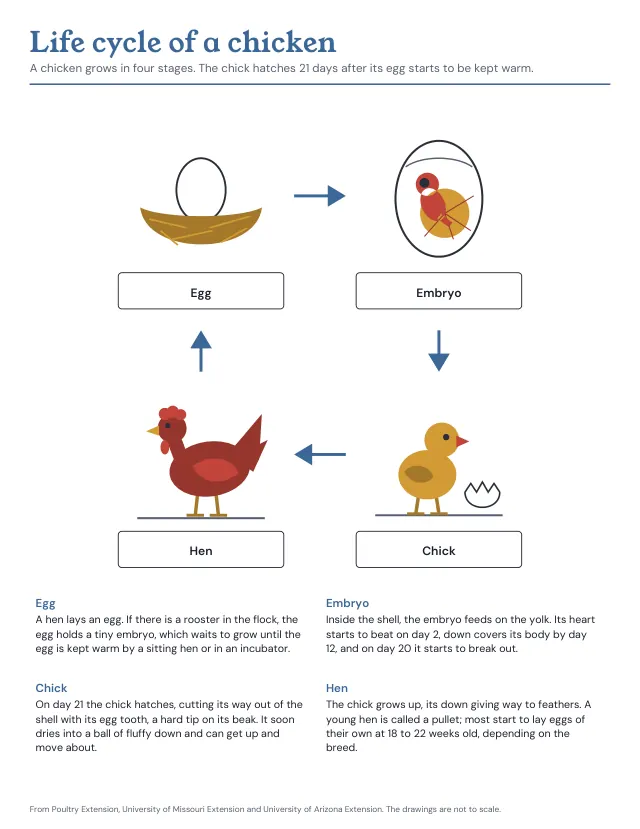
The four stages of a chicken drawn in a cycle, egg, embryo, chick and hen, with an arrow from each to the next and what happens at each stage, the days counted from the egg. Print it labelled, to label with a word bank, or with the four pictures to cut out and glue in order; the answer key follows.
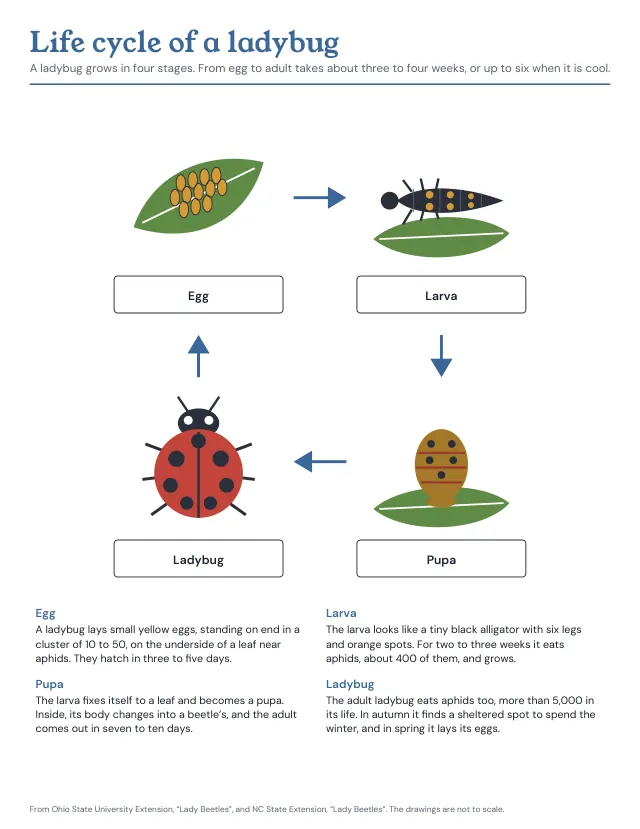
The four stages of a ladybug drawn in a cycle, eggs, larva, pupa and adult, with an arrow from each to the next and what happens at each stage. Print it labelled, to label with a word bank, or with the four pictures to cut out and glue in order; the answer key follows.
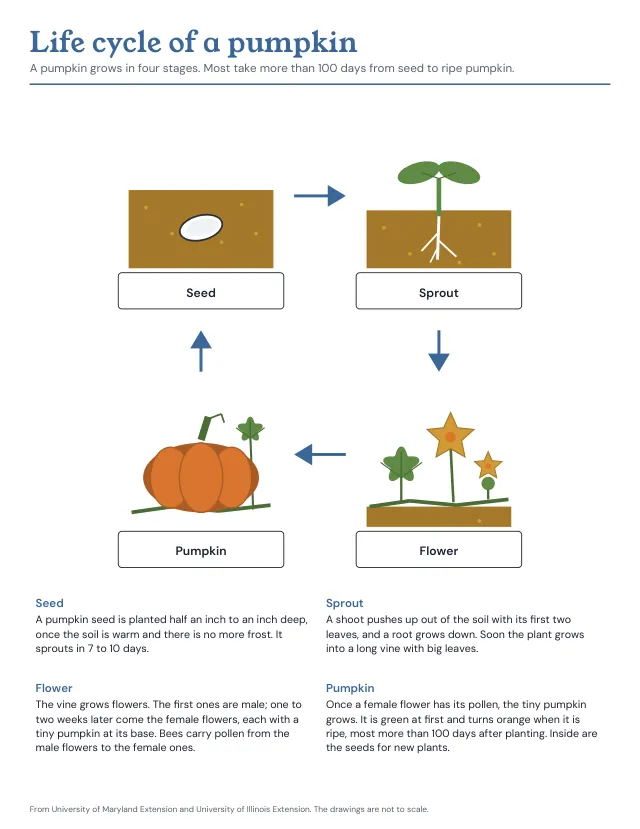
The four stages of a pumpkin drawn in a cycle, seed, sprout, flower and pumpkin, with an arrow from each to the next and back to the seed. Print it labelled, with what happens at each stage, to label with a word bank, or with the four pictures to cut out and glue in order; the answer key follows.
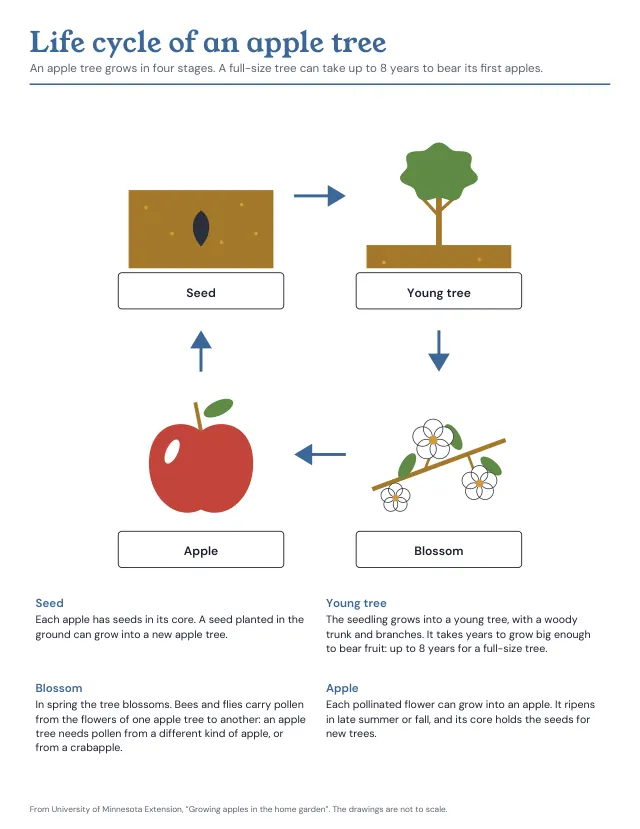
The four stages of an apple tree drawn in a cycle, seed, young tree, blossom and apple, with an arrow from each to the next and back to the seed. Print it labelled, with what happens at each stage, to label with a word bank, or with the four pictures to cut out and glue in order; the answer key follows.
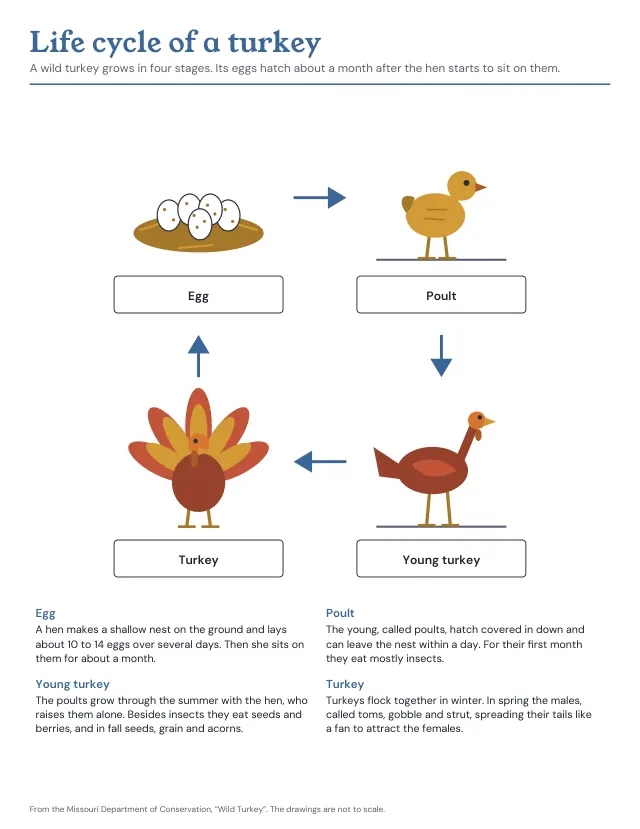
The four stages of a wild turkey drawn in a cycle, eggs in a nest, poult, young turkey and a tom with his tail spread, with an arrow from each to the next and what happens at each stage. Print it labelled, to label with a word bank, or with the four pictures to cut out and glue in order; the answer key follows.