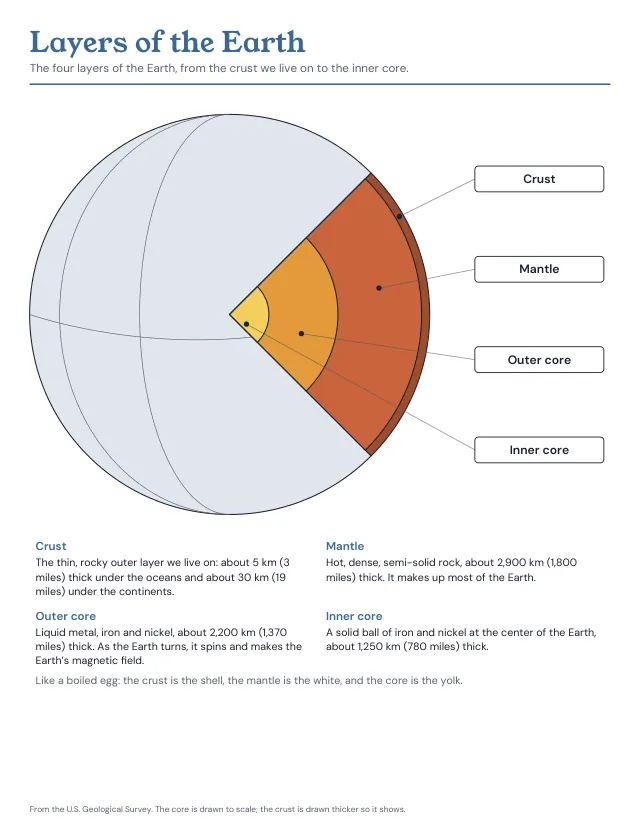
The Earth cut open to show its four layers, the crust, the mantle, the outer core and the inner core, with the core drawn to scale. Print it labelled, with what each layer is and how thick, or with empty boxes and a word bank, and the labelled sheet after it as the answer key. For grades 6 to 8, the same sheets come with six layers, the lithosphere and the asthenosphere added.
What you will print
215.9 mm · 8.5 in279.4 mm
1 page · US Letter · Portrait
US Letter · 1 page
Free, with no account, email or watermark. Print at 100% or Actual size.
Make it yours
Paper size, margins and lines
Add to a planner refill
Opens the refill builder with this sheet in your page order, at your planner size.
Labelled, with what each layer is names the four layers on the picture, each joined to its layer by a line, and puts a sentence on each under it, with how thick it is in kilometers and miles. To label leaves a numbered, empty box for each layer and puts the names in a word bank; with the answer key, the labelled sheet follows as a second page. In Colour the layers print brown, red-orange, orange and yellow, as science books show them; Ink saver prints them as outlines, to colour in.
Six layers, for grades 6 to 8
Middle school science adds two layers at the top of the mantle. The lithosphere is the crust and the cooler, rigid top of the mantle together, at least 80 km (50 miles) thick over much of the Earth, and it is broken into the moving plates; a bracket on the sheet shows it takes in the crust. Under it, the asthenosphere is a narrow zone of hot, semi-solid rock that can soften and flow very slowly, and the plates move on it. To label on Letter and A4 in portrait, the six-layer sheet also asks three questions under the word bank, and the answer key answers them. The two layers follow the same U.S. Geological Survey page as the other four.
Drawn to scale, except the crust
The inner and outer core are drawn to scale from the U.S. Geological Survey’s figures, so the picture shows how far out the core reaches: more than halfway from the center to the surface. The crust cannot be. On a Letter sheet the Earth here is about 13 cm across, and at that scale the crust under the continents, about 30 km thick, would be less than a third of a millimeter, thinner than a pencil line. It is drawn thicker so it shows, and the sheet says so.
How scientists know what is inside
No one has ever seen the bottom of the crust. Much of what scientists know about the layers comes from earthquake waves, which change speed as they pass through different kinds of rock. One kind of wave cannot pass through the outer core at all, which is why scientists think it is liquid. This follows the U.S. Geological Survey’s “The Interior of the Earth”, which also says the mantle makes up 84 percent of the Earth’s volume and the core 15 percent. For a reading lesson before the sheet, the passage “Inside the Earth” takes the same facts, with four questions and an answer key.
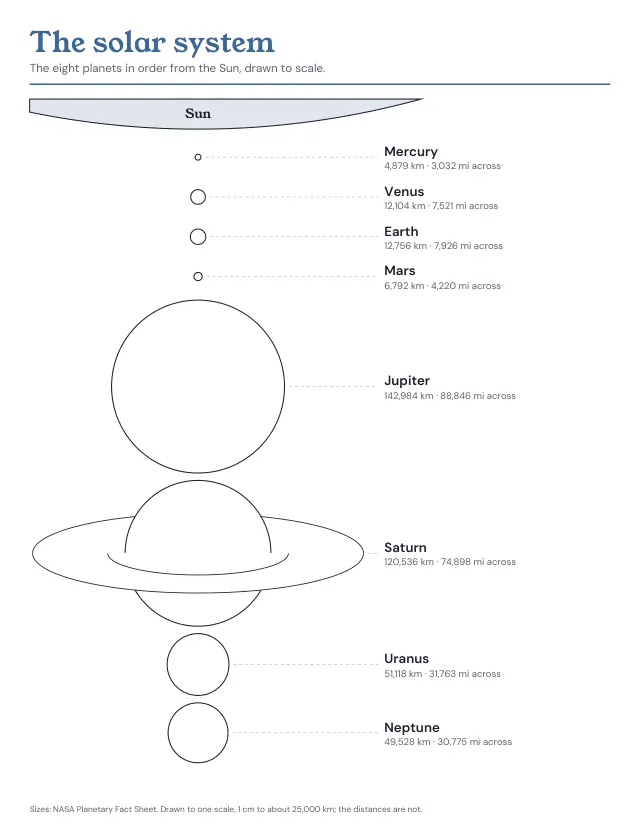
The eight planets in order from the Sun, drawn to one scale down the page, with the edge of the Sun across the top. Print them named with their sizes, with a table of facts, or with the names to write in and an answer key; the planets are left white to colour.
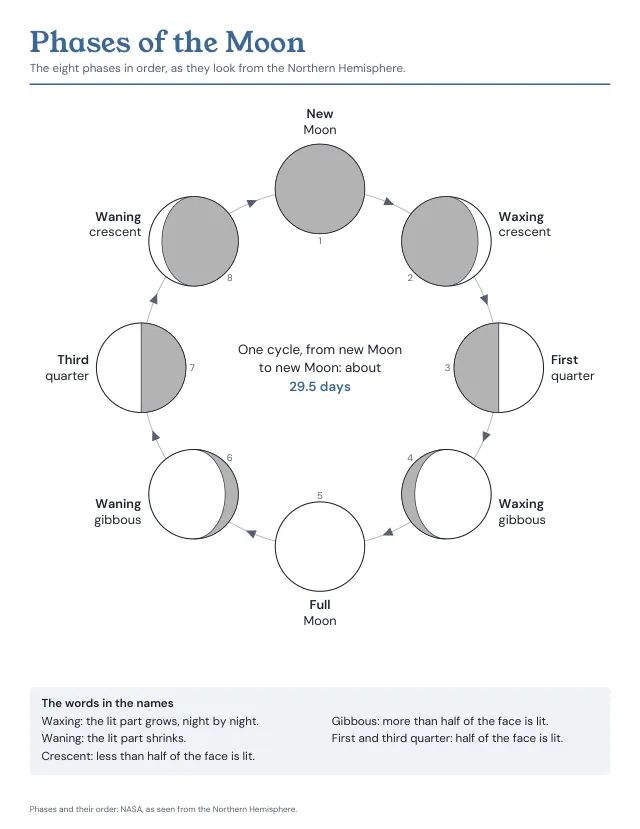
The eight phases of the Moon in order round a ring, from the new Moon to the waning crescent, with the 29.5 days one cycle takes in the middle. Print them named, to name with a word bank and an answer key, or to shade, or print a Moon journal to draw the real Moon on 30 nights.
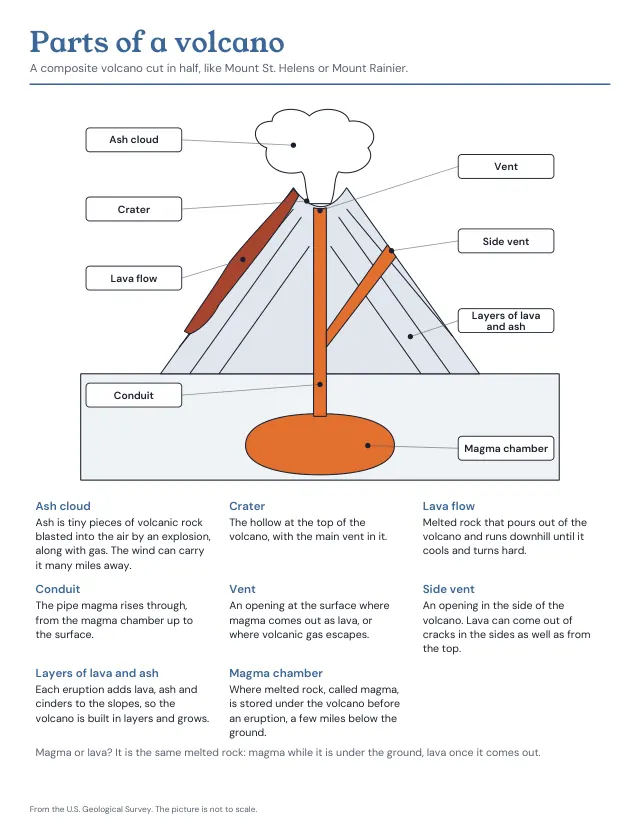
A volcano cut in half to show its eight parts: the magma chamber, the conduit, the vent and the crater, a side vent, a lava flow, the ash cloud and the layers it is built of. Print it labelled, with what each part is, or with empty boxes and a word bank, and the labelled sheet after it as the answer key. A second sheet draws the four kinds of volcano side by side: a cinder cone, a composite volcano, a shield volcano and a lava dome.
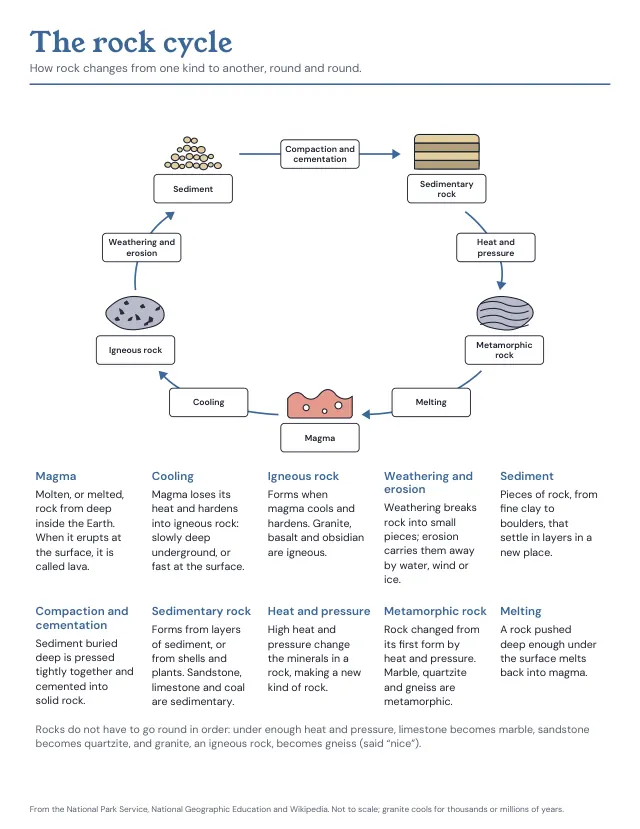
Magma, igneous rock, sediment, sedimentary rock and metamorphic rock round one loop, with the change between each on its arrow. Print it labelled, to label, to cut and glue, or to sort, each with its key.
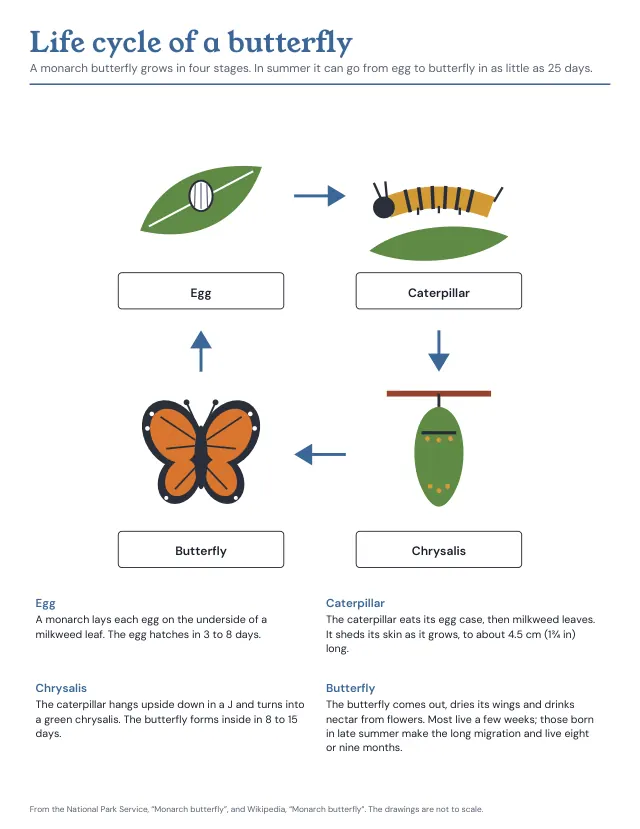
The four stages of a monarch butterfly drawn in a cycle, egg, caterpillar, chrysalis and butterfly, with an arrow from each to the next and what happens at each stage. Print it labelled, to label with a word bank, or with the four pictures to cut out and glue in order; the answer key follows.
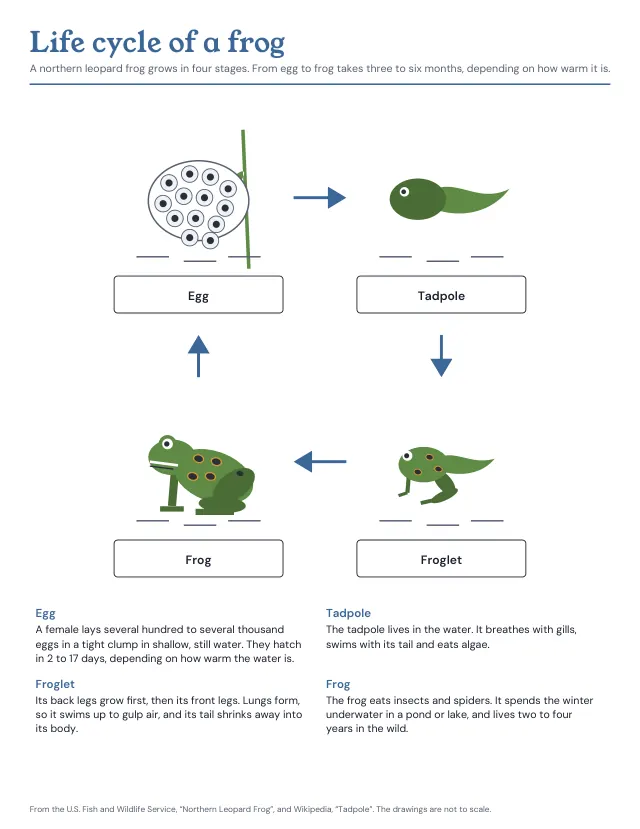
The four stages of a northern leopard frog drawn in a cycle, egg, tadpole, froglet and frog, with an arrow from each to the next and what happens at each stage. Print it labelled, to label with a word bank, or with the four pictures to cut out and glue in order; the answer key follows.
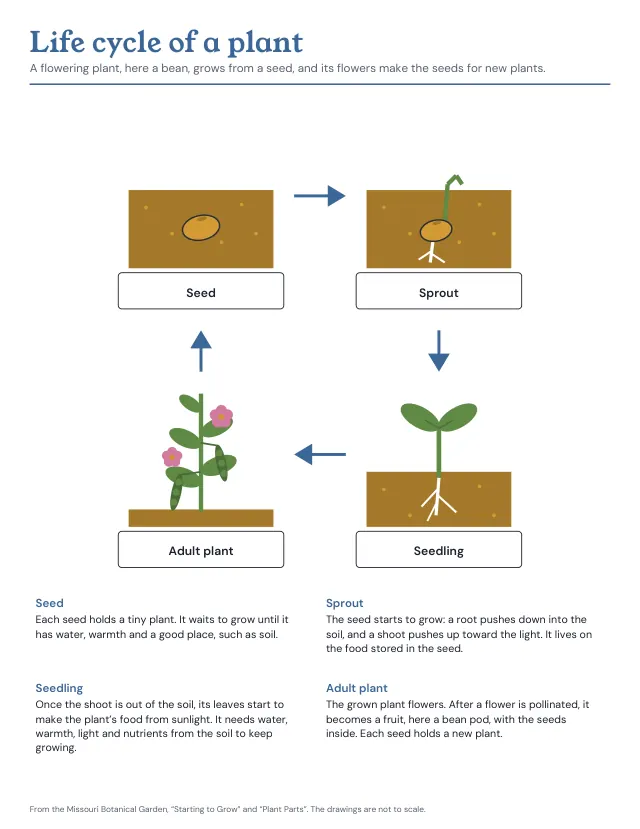
The life cycle of a flowering plant, a bean, drawn in four stages, seed, sprout, seedling and adult plant with its flowers and pods, with an arrow from each to the next and back to the seed. Print it labelled, with what happens at each stage, to label with a word bank, or to cut and glue in order; the answer key follows.
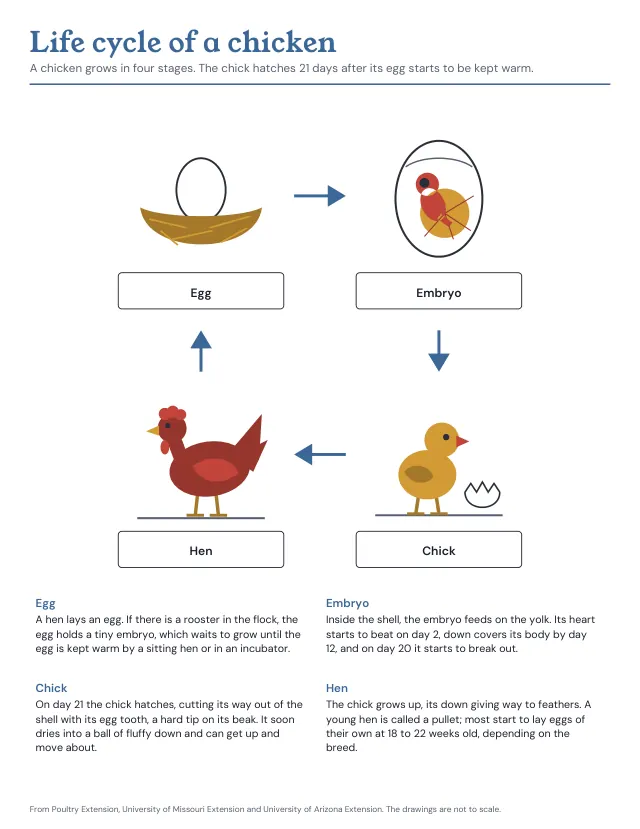
The four stages of a chicken drawn in a cycle, egg, embryo, chick and hen, with an arrow from each to the next and what happens at each stage, the days counted from the egg. Print it labelled, to label with a word bank, or with the four pictures to cut out and glue in order; the answer key follows.
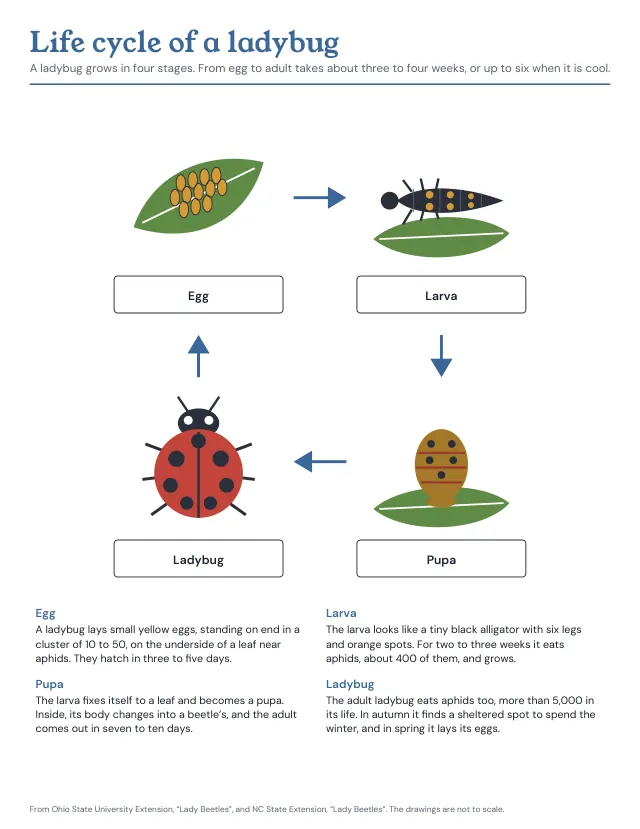
The four stages of a ladybug drawn in a cycle, eggs, larva, pupa and adult, with an arrow from each to the next and what happens at each stage. Print it labelled, to label with a word bank, or with the four pictures to cut out and glue in order; the answer key follows.
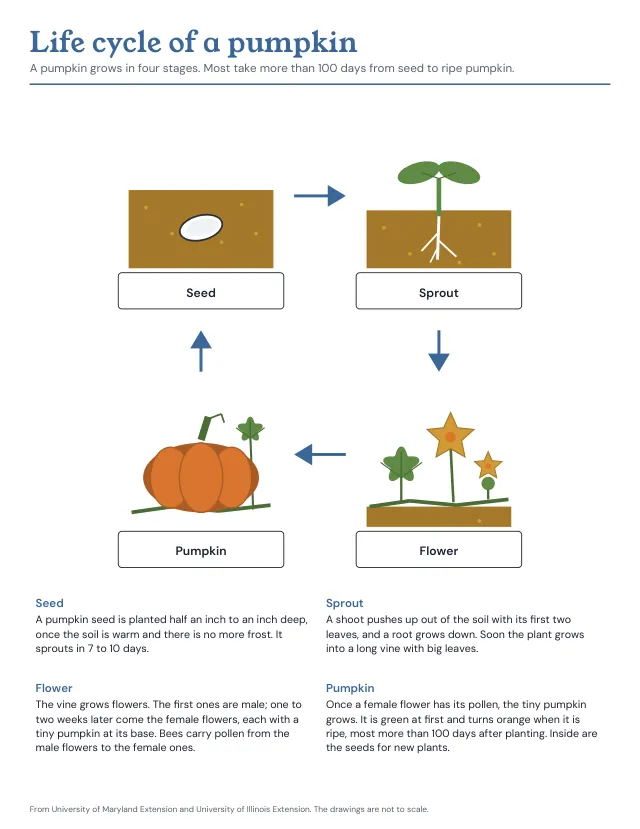
The four stages of a pumpkin drawn in a cycle, seed, sprout, flower and pumpkin, with an arrow from each to the next and back to the seed. Print it labelled, with what happens at each stage, to label with a word bank, or with the four pictures to cut out and glue in order; the answer key follows.
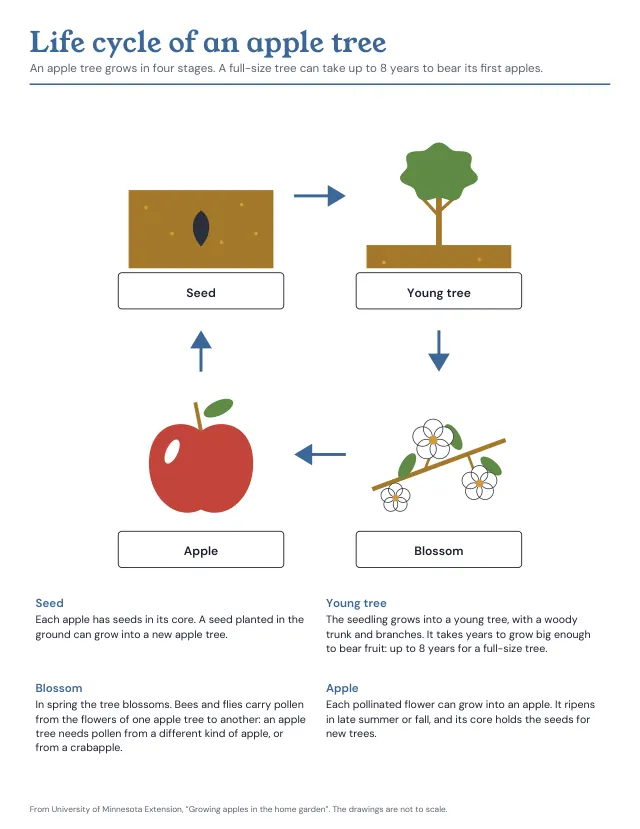
The four stages of an apple tree drawn in a cycle, seed, young tree, blossom and apple, with an arrow from each to the next and back to the seed. Print it labelled, with what happens at each stage, to label with a word bank, or with the four pictures to cut out and glue in order; the answer key follows.
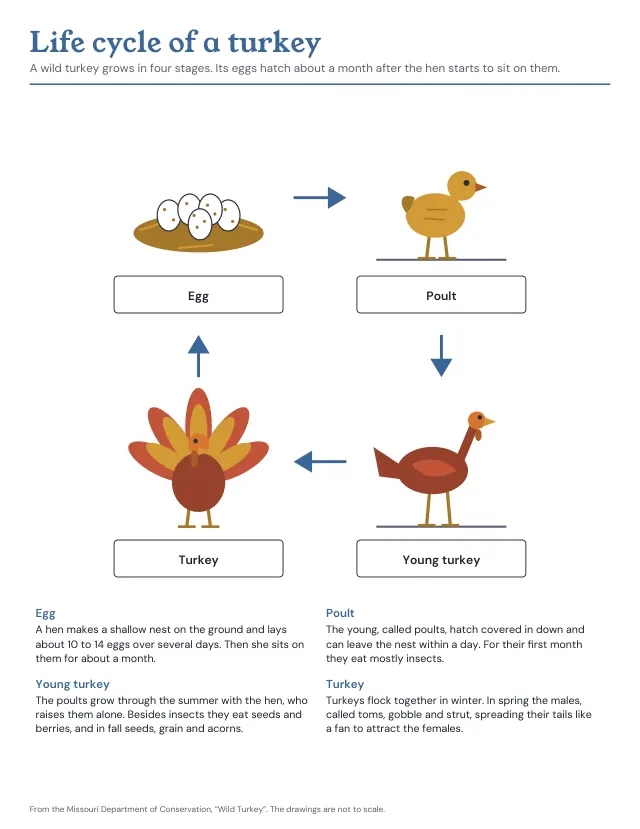
The four stages of a wild turkey drawn in a cycle, eggs in a nest, poult, young turkey and a tom with his tail spread, with an arrow from each to the next and what happens at each stage. Print it labelled, to label with a word bank, or with the four pictures to cut out and glue in order; the answer key follows.